The Lunar Leap: Why Chinese AI Firms Are Rushing Model Releases Before the New Year
The global Artificial Intelligence race is often viewed through quarterly earnings reports and major international conferences. However, a critical, time-sensitive dynamic is currently unfolding in one of the world’s most crucial technology hubs: China. Reports indicate that leading Chinese AI companies are aggressively pushing to ship major foundational model updates right before the Lunar New Year holiday begins. This isn't just about beating a calendar deadline; it is a revealing signal about the intense pressure cooker of innovation, regulation, and competition shaping the future of AI.
As an AI technology analyst, this pre-holiday crunch suggests a confluence of strategic objectives far beyond routine product cycles. It implies urgent market capture, a race to meet anticipated governmental benchmarks, and perhaps even a strategic deployment window dictated by global supply chain uncertainty. To truly understand what this means for the future of AI, we must look beyond the headline and examine the underlying forces driving this temporal squeeze.
The Three Forces Accelerating the Timeline
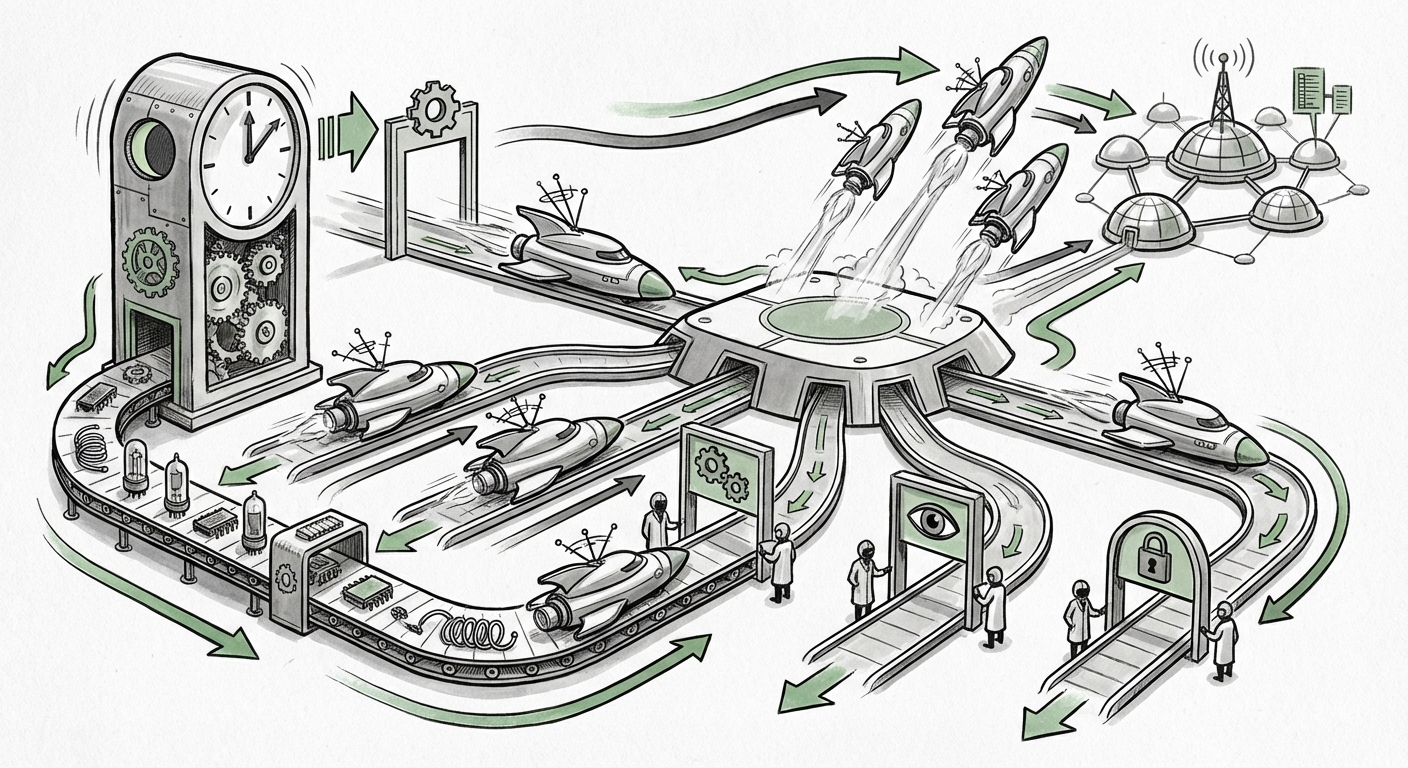
The rush to deploy significant AI model updates before the Lunar New Year—a period traditionally associated with market slowdowns—is rarely coincidental. Based on corroborating industry observations regarding competition, regulation, and hardware, we can isolate three primary drivers:
- Intense Domestic Competition: The Chinese AI ecosystem is incredibly dynamic. Companies like Baidu, Alibaba, Tencent, and specialized startups are locked in a fierce battle for mindshare, developer adoption, and enterprise contracts. A new model released just before the holiday forces competitors to immediately start testing and benchmarking the updates during a time when they might otherwise pause development. This preemptive strike captures mindshare and sets the baseline performance metrics for the coming year. If Company A launches a superior vision model on February 5th, Company B’s entire Q1 roadmap is instantly reactive.
- Regulatory Alignment Windows: China’s government has established clear frameworks for regulating generative AI. Model providers must achieve specific levels of safety, data governance, and functionality to receive official approval for public deployment. The Lunar New Year often acts as an unofficial, yet powerful, fiscal or operational cutoff point. There is a strong incentive to ensure compliance and gain deployment approval *before* the holiday, allowing the models to gather real-world usage data and feedback during the slow period, thereby positioning them perfectly for accelerated scaling once the Q1 business cycle resumes.
- Hardware Supply Chain Anxiety: Access to cutting-edge AI hardware, particularly advanced GPUs from companies like Nvidia, remains a persistent challenge due to export controls. If firms anticipate stricter chip allocations or looming trade restrictions, they must maximize the utilization of their current hardware capacity. Deploying the latest models now ensures that expensive compute clusters are generating value and proving their utility before any potential future bottleneck halts expansion.
Drilling Down: Context from the Front Lines
To confirm the significance of this temporal pressure, analysts must investigate specific external contexts. My research suggests examining the intersection of these dynamics:
1. The Benchmark Race: Measuring Up Against Peers
The race isn't just about having a model; it's about having the best model. Tracking reports detailing the performance benchmarks from Q4 2023 and early Q1 2024 across metrics like reasoning, coding, and multilingual fluency is crucial. If recent releases show massive jumps in performance, it confirms the competitive pressure is forcing breakthroughs, not just iterative updates. This competitive fervor directly impacts the quality ceiling for AI tools available to Chinese businesses.
Target Audience Insight: For AI Product Managers, this means that any model launched during this period likely incorporates the most advanced techniques available domestically, offering a real-time look at the cutting edge of non-Western AI development.
2. The Policy Clock: Navigating Generative AI Interim Measures
China’s official guidelines for generative AI have been clear: models must be aligned with core socialist values and adhere to strict content moderation standards. The deadline for formal review and approval for new iterations is a critical business milestone. If a company has a model update ready, waiting until March could mean losing months of valuable market feedback. Therefore, the pre-holiday window becomes a pragmatic target to satisfy regulatory mandates and immediately begin data collection under the new frameworks (as suggested by searches into `"China generative AI regulations" AND "implementation deadline"`).
Target Audience Insight: Policy Analysts need to monitor if this rapid deployment leads to hasty compliance or if the companies have built robust safety layers into these rushed updates. The nature of the compliance is as important as the speed.
3. The Silicon Reality: Hardware and Compute Power
Underlying every successful model launch is massive compute power. The ability to train and deploy models rapidly is directly tied to access to high-end AI chips. If Chinese firms are rushing deployments, they are either confident in their domestic chip alternatives (like Huawei’s Ascend series) or are trying to exhaust existing inventory of restricted foreign hardware before new shipment limits take effect. This dynamic is vital for understanding the long-term scalability of Chinese AI innovation.
Target Audience Insight: Supply Chain Analysts must watch for related news regarding domestic chip fabrication capacity. If performance gains are achieved without relying on the latest foreign GPUs, it signals a breakthrough in hardware independence that has massive geopolitical implications.
Implications for the Future of Global AI
This synchronized, time-bound push has profound implications that extend far beyond the Chinese market:
Acceleration, Not Deceleration
In many Western markets, the period around major holidays often sees a deliberate slowing of high-stakes releases to ensure adequate support staffing. The Chinese approach signals a fundamental difference in technological urgency. For these firms, the holiday is not a pause but an opportunity to lock down market share while international competitors are comparatively less focused on deep benchmarking and deployment integration.
The future of AI development will increasingly be characterized by this unrelenting pace. Businesses must adapt to cycles where significant technological shifts can occur during traditionally quiet business periods.
Localization and Data Moats
Models released just before a major cultural holiday are inherently optimized for that specific cultural and linguistic context. This rush ensures that the AI models are deeply embedded in local enterprise workflows and consumer applications by the time the general economy reboots. This allows these models to build stronger "data moats"—proprietary datasets derived from real-world, high-volume use—making them harder for international competitors running on Western-centric models to displace later.
The International Pivot Strategy
As suggested by tracking international launch strategies, this domestic push serves as rigorous, large-scale beta testing. Once the models are hardened on domestic data and have survived the competitive gauntlet, the focus shifts outward. The Lunar New Year break for China effectively becomes a period of intense, low-profile refinement before a coordinated, high-impact international release targeting global markets once the Western world fully returns to work in Q1.
Actionable Insights for Global Stakeholders
What should businesses, investors, and policymakers take away from this strategic pre-holiday deployment?
For Enterprise Adopters: Prioritize Integration Now
If your business operates or plans to operate within the Chinese market, the models released now are likely the most mature versions available for integration for the next several months. Do not wait until Q2 to begin Proofs of Concept (PoCs). Begin immediate technical assessments to understand how these new capabilities—whether in customer service automation, content generation, or code assistance—can be incorporated into your workflow.
For Investors: Watch the Benchmarks, Not Just the Hype
Venture capitalists and corporate strategists should look past the press release language and focus on third-party benchmark comparisons. Which companies managed to leapfrog others? The winners of this pre-holiday sprint are likely those best positioned to secure larger enterprise contracts throughout the year. Funding decisions should follow performance gains achieved under this intense competitive pressure.
For Policymakers: Understanding Synchronization
Governments tracking the global AI race must recognize that innovation cycles are becoming decoupled from traditional Western calendars. Regulatory frameworks must be designed to accommodate rapid, iterative deployment cycles. A framework that takes six months to approve a model update will find itself constantly playing catch-up to models that iterated twice in the same period due to external scheduling pressures like holidays or political deadlines.
Conclusion: The Pace of Progress is Now Cultural
The rush by Chinese AI firms to ship major model updates before the Lunar New Year is more than a footnote in the tech calendar; it is a defining feature of the current state of global AI competition. It demonstrates that innovation is being driven not just by Moore’s Law, but by geopolitical tension, regulatory ambition, and fierce local market dynamics.
The implication is clear: the timeline for major AI advancements is accelerating, often dictated by non-traditional business cycles. The holiday season, traditionally a time for rest, is being weaponized as a strategic advantage to consolidate domestic leadership and refine global offerings. For the rest of the world, this signals that the next major wave of AI capability will arrive sooner than expected, requiring vigilance and agility from all participants in the global technology ecosystem.