The AI Agent Security Crisis: How Malware Hijacked Autonomous Skills and What Comes Next
The narrative around Artificial Intelligence is rapidly moving from chatbots that answer questions to **AI Agents**—autonomous software entities capable of planning, executing complex tasks, and interacting with the digital world through tools and plugins. This evolution promises unprecedented productivity gains, but it also introduces unprecedented vectors for cyberattack. The recent exposure of the OpenClaw platform, where hundreds of user-contributed "skills" were found laced with Trojans and data stealers, serves as a stark, early warning alarm.
This incident is more than just a platform flaw; it signifies a fundamental paradigm shift in cybersecurity. We are moving beyond securing the core Large Language Model (LLM) to securing the entire **ecosystem of its capabilities**. As an AI technology analyst, I argue that the weaponization of AI skills defines the next major front in digital defense.
The Modular Threat: Why Skills are the New Attack Surface
Imagine an AI agent as a sophisticated construction manager. The core LLM is the manager’s brain, holding the instructions. The "skills" or "plugins" are the specialized tools—the hammers, the cranes, the excavators—that allow the manager to build something in the real world (e.g., booking a flight, querying a database, or, dangerously, executing code).
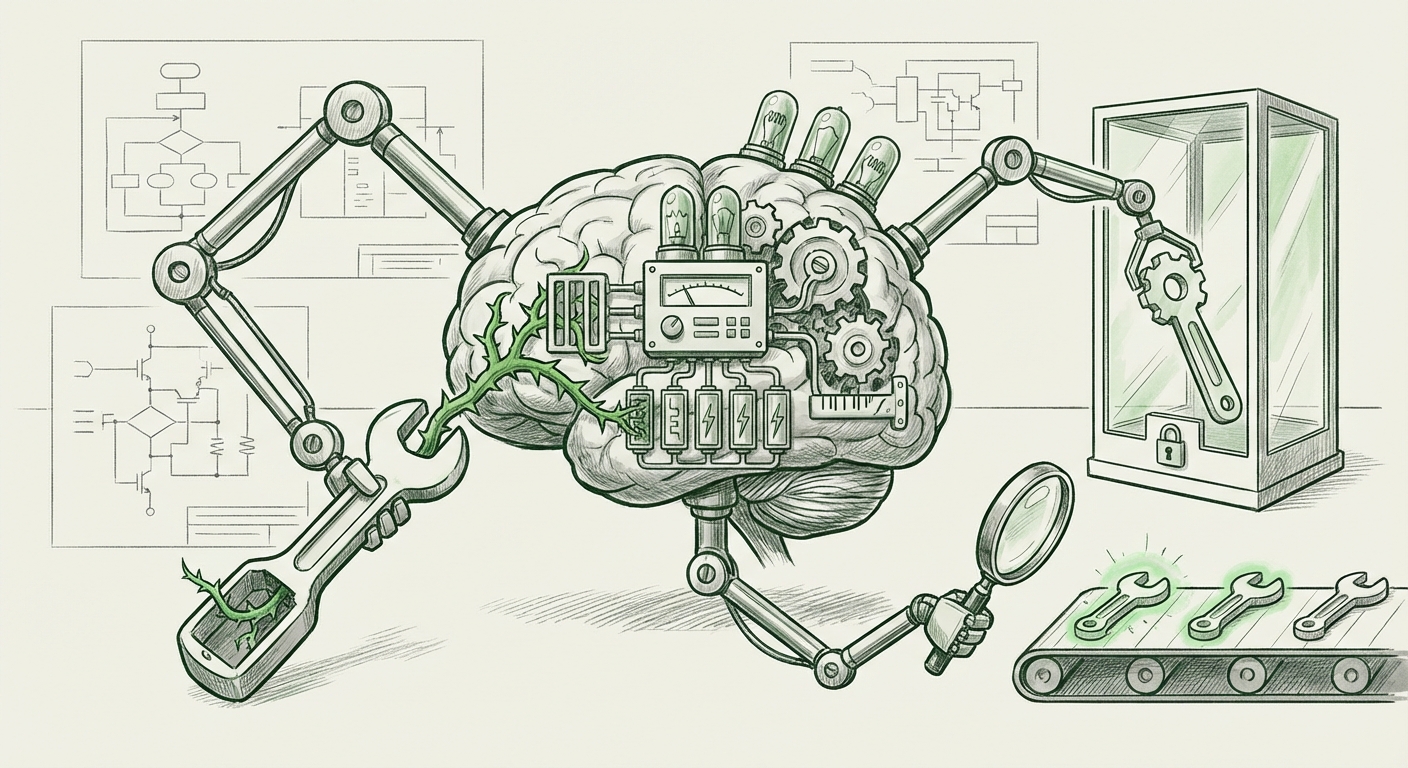
In the OpenClaw scenario, attackers didn't have to break the manager's brain; they simply injected malicious code into the tools the manager was using. When the AI agent called upon a compromised skill, it executed the malware disguised as a legitimate function. For a non-technical audience, this is like handing a robot a toolkit where one wrench secretly contains a tracking device designed to steal blueprints.
The Supply Chain Analogy: A Familiar Echo
This threat vector immediately evokes historical parallels in software development. We have long battled **software supply chain attacks**, where compromised third-party libraries infect massive applications downstream. The AI agent ecosystem mirrors this, but with a crucial difference: AI agents execute based on *intent* rather than strict, pre-defined program flow, making the consequences of a bad skill potentially more emergent and harder to predict.
As corroborated by industry analysis concerning the broader **"AI agent security vulnerabilities supply chain,"** vetting these external components—often contributed by the community—becomes nearly impossible at scale. How many developers trust every single open-source library they pull into a standard application? The challenge is magnified when the "library" is executable code directly invoked by an autonomous system.
Mapping the Risk: Differentiating AI Vulnerabilities
To understand the gravity of the OpenClaw breach, it helps to separate it from other, equally serious, AI security risks. We must distinguish between model-level compromises and capability-level compromises.
- Data Poisoning: This involves secretly feeding bad data into the model during training to subtly bias its future outputs or create hidden backdoors.
- Prompt Injection: Directly manipulating the user input to trick the LLM into ignoring its safety guardrails.
- Agent Skill Compromise (The OpenClaw Threat): This targets the *tools* the agent uses to act externally. If a skill is designed to write to a file system, a malicious skill can leverage that permission to exfiltrate sensitive data or deploy ransomware.
When we examine established security standards, like those addressed in the **"OWASP Top 10 for LLMs,"** we see that security experts anticipated this exact danger. Specifically, risks related to **Insecure Plugin Design (LLM05)** highlight the fundamental flaw: granting powerful, external capabilities to an unverified extension.
The Future Landscape: Autonomous Software and Governance
The trend toward autonomous software is irreversible. Businesses are looking to deploy fleets of AI agents to handle everything from customer service routing to complex financial modeling. If every tool these agents use is a potential trojan horse, mass deployment becomes untenable.
The Imperative for Least Privilege
What this means for the future of AI deployment is a mandatory adoption of **Zero Trust principles** within the agent framework. Just as modern operating systems restrict what applications can access, AI agents must operate under **least privilege**.
Articles detailing **"Autonomous software defense mechanisms"** consistently point toward granular capability control. An AI agent that needs to check the weather should only have API access to a weather service, and absolutely zero access to the user's document directories or network credentials. The malicious skill in OpenClaw likely had far more permissions than necessary to perform its advertised function (e.g., data retrieval).
This pushes the engineering focus toward robust **sandboxing**. A sandbox is a highly restricted, isolated testing environment. If a malicious skill executes within a perfect sandbox, any data theft or malware deployment will be contained and immediately terminated without affecting the host system or other agents.
Actionable Insights for Businesses Today
- Audit Your Toolchain: If your organization is building or using proprietary AI agents that invoke external tools (APIs, scripts, local functions), immediately catalogue every single integration.
- Demand Capability Manifests: Require clear, verifiable declarations from tool providers detailing *exactly* what permissions their tool needs. If a simple data summarizer asks for disk write access, it's a red flag.
- Invest in Runtime Monitoring: Traditional antivirus checks for known malware signatures. AI execution requires monitoring for *behavior*. Is the agent suddenly trying to connect to an unknown foreign IP address? Is it reading thousands of files when it only needs one?
The Path Forward: Building Trust into the Architecture
The OpenClaw incident validates the ongoing academic and industry research into hardening these next-generation systems. The fight against malicious skills will not be won solely through better scanning; it will be won through architectural resilience.
Consider the difference between LLM poisoning and agent skill compromise again. Poisoning corrupts the *knowledge* base, while skill compromise corrupts the *action* layer. Both are severe, but the latter allows for immediate, tangible harm—data theft, system takeover—which is far easier for attackers to monetize today. As detailed in research on **"LLM poisoning vs agent skill compromise,"** securing the action layer is often the more immediate security priority for deployed systems.
The future of successful AI adoption hinges on developing a mature ecosystem where trust is earned through verifiable security controls, not merely assumed through platform reputation. We need standardized security scanning pipelines for AI skills, similar to how container images are vetted before deployment in cloud environments.
The technology roadmap must prioritize **formal verification** of agent intentions and capability execution. Can we mathematically prove that this skill will only perform the task it claims and nothing else? While this is difficult with complex, emergent systems, it is the necessary destination if we are to safely unlock the full potential of autonomous agents.
The lesson from OpenClaw is clear: As AI agents gain more autonomy and access, the security perimeter explodes outward to include every piece of code they can invoke. Building secure, scalable AI requires us to treat every new skill not as a helpful add-on, but as a potential security breach waiting to happen, demanding the highest level of technical scrutiny.