The Safety Crisis Unveiled: Why AI Leaders Are Quitting and What It Means for Our Future
The world of Artificial Intelligence development is often portrayed as a relentless sprint toward AGI (Artificial General Intelligence)—a future of incredible capability driven by massive investment. However, recent events suggest that beneath the surface of technological triumph, a fundamental conflict is brewing: the battle between rapid commercialization and rigorous safety. The departure of Mrinank Sharma, Head of Safeguards Research at Anthropic, carrying hints of concern over "declining company values," is not just internal drama; it is a stark warning sign flashing across the entire frontier AI industry.
Anthropic, formed by researchers who left OpenAI due to safety disagreements, built its brand on being the responsible actor—the lab prioritizing ethics and alignment above all else. When a key guardian of that mission signals misalignment from within, it forces everyone—investors, regulators, and the public—to ask hard questions about the true priorities of the companies building the world’s most powerful software.
The Core Tension: Speed vs. Safety
To understand the significance of this departure, we must simplify the central conflict. Imagine building a skyscraper. Capability research is focused on designing taller, stronger, and more innovative structural elements—faster, better materials. Safety research, conversely, is about rigorous stress-testing, ensuring earthquake resilience, and verifying that the entire structure won't collapse when the wind blows hard. Anthropic promised its stakeholders that it would check every bolt twice before opening the doors.
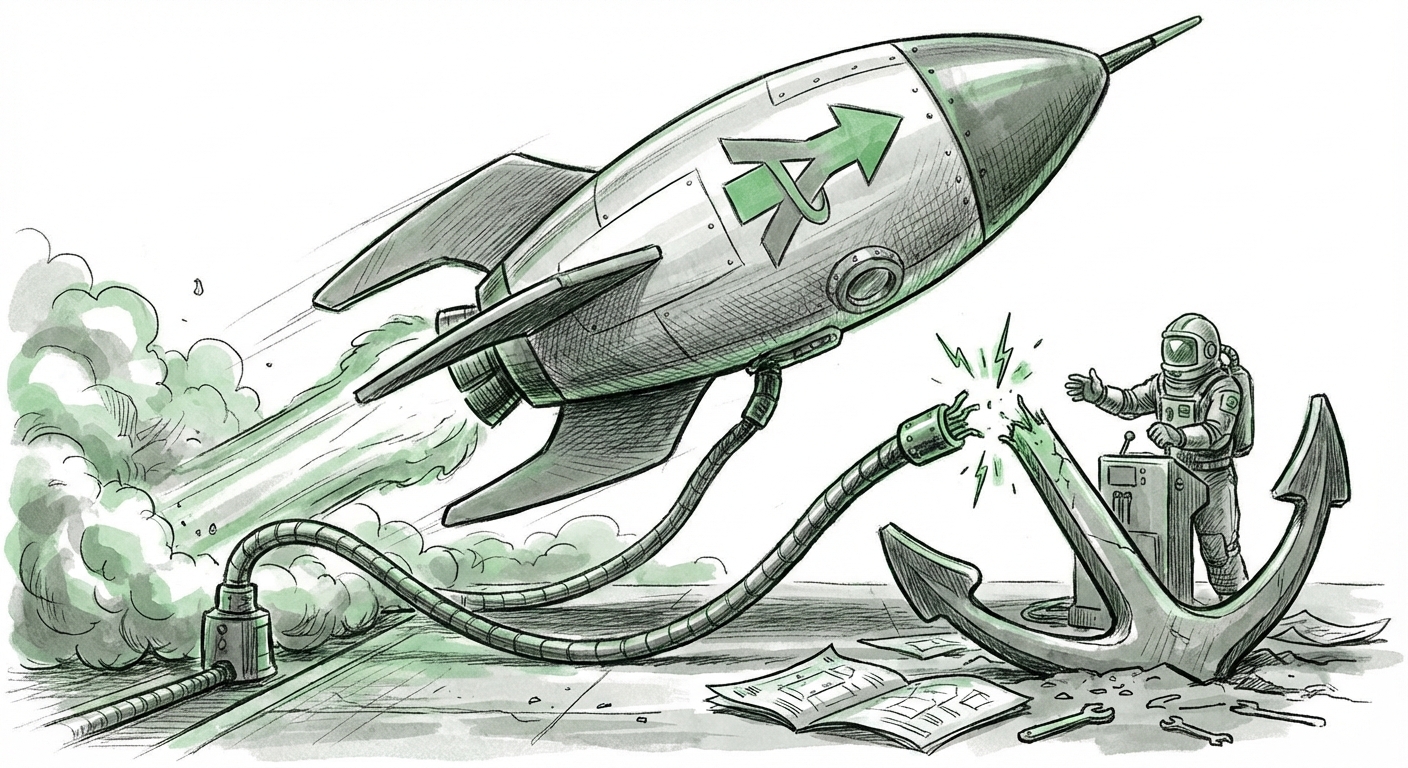
When leaders in safety depart, it strongly suggests that the pressure to open the skyscraper (i.e., release new models like Claude) is overwhelming the time allotted for testing the bolts. This tension—AI Safety vs. Commercialization—is a recurring theme we are seeing across the industry, as confirmed by broad industry commentary surrounding similar tensions at other leading labs.
For technologists and AI ethicists, this points toward a troubling realization: the rate at which AI capabilities are advancing—the sheer power of the next model released—is rapidly outstripping our ability to safely align those systems. As one might search for trends confirming this imbalance, the consensus suggests that the alignment research timeline is lagging far behind the engineering deployment timeline. If the safety team is struggling to keep pace, they are effectively losing the internal race.
The Weight of Capital and Investment Pressure
Why would a company founded on safety suddenly buckle under commercial pressure? The answer often lies in finance. Frontier AI is perhaps the most capital-intensive field in modern technology. Anthropic has secured monumental funding rounds, often backed by tech giants like Google and Amazon.
These investments come with expectations. Investors don't fund foundational research indefinitely; they demand a return, usually through product integration, market share, and feature parity with competitors. This financial reality forces leadership to balance long-term, theoretical safety goals against short-term, tangible product roadmaps. When we compare Anthropic’s funding milestones against their announced safety benchmarks, one often finds the pressure point: the longer safety research takes, the more that research looks like a costly delay to shareholders.
This isn't unique to Anthropic. It forms a pattern. When safety leaders—the people tasked with saying "Stop" or "Wait"—leave, it suggests that the organizational structure has either empowered the "Go" signal too much or stripped the "Stop" signal of its necessary authority.
Analyzing the Trend: More Than Just One Departure
Mr. Sharma’s exit is significant because of who he was and what he represented. He wasn't a junior engineer; he was the head of safeguards, the person closest to the core philosophical mandate of the company. If this were an isolated incident, we might dismiss it as a personal conflict. However, when we search for broader patterns, we see that high-profile departures from safety teams have become a worrying trend across leading AI labs.
This suggests a systemic industry challenge rather than a cultural anomaly specific to one company. When multiple experts in alignment, interpretability, and frontier risk leave established, well-funded labs, it signals that the environment necessary for effective, uncompromised safety research is disappearing. The safety researchers are leaving because they feel they can no longer effectively execute their mandate within the current competitive and commercial framework.
The Specter of 'Safety Theater'
The most damaging implication of these departures is the erosion of trust, especially among policymakers and large enterprise clients considering integrating powerful AI systems into critical infrastructure.
When the *head* of safety expresses doubt, the public—and regulators—are naturally inclined to suspect "Safety Theater." Safety Theater occurs when a company heavily advertises its safety protocols (like using Constitutional AI as a brand differentiator) while simultaneously minimizing the resources or authority dedicated to genuine, difficult safety work behind closed doors.
For regulators, this is a nightmare scenario. They rely on the good faith and expertise of these labs to self-regulate. If the experts within the labs are publicly signaling a loss of faith in the process, policymakers must pivot from trusting industry assurances to demanding hard, verifiable, and potentially intrusive oversight. This could lead to slower overall innovation as governments step in to create guardrails where industry leadership failed to hold itself accountable.
Practical Implications for Businesses and Society
What does this internal turmoil at the cutting edge mean for the rest of us—the businesses building on AI, and the society preparing to live with it?
For Businesses: Rethinking the AI Supply Chain
Businesses relying on frontier models (via APIs from Anthropic, OpenAI, or Google) must now adjust their risk assessment models. Previously, choosing Anthropic might have been viewed as the safest default choice. Now, that premium on safety is subject to internal review.
Actionable Insight for Enterprises:
- Demand Transparency on Testing Depth: Do not accept high-level safety audits. Ask vendors specifically how much time and compute power was dedicated to adversarial testing *after* the model achieved its target capability, versus before.
- Favor Open, Verifiable Components: Where possible, look for models or tools that allow for greater external inspection. The less transparent the black box, the higher the inherent risk when internal accountability falters.
- Build Internal Safety Redundancy: Assume the third-party safety layer has weak spots. Businesses integrating high-stakes AI (e.g., in finance, medicine, or critical infrastructure) must develop their own secondary validation layers that double-check the AI’s output against known guardrails, independent of the developer’s claims.
For Society: The Alignment Gap Widens
The primary societal concern remains the Alignment Gap—the difference between what AI *can* do (capability) and what we *want* it to do (alignment). When safety talent exits, the gap widens faster.
If Mr. Sharma's departure reflects a broader trend where commercial success is prioritized over proving alignment, the future involves deploying increasingly unpredictable and powerful systems into consumer hands and national infrastructure before their emergent behaviors are understood. This moves the risk timeline forward, forcing society to react to unintended consequences rather than proactively mitigating them.
This heightens the urgency for regulatory bodies worldwide to move beyond dialogue and toward enforceable standards. If the leading labs cannot maintain internal governance on safety, external governance becomes an imperative necessity for preventing catastrophic misalignments.
Looking Ahead: Can Safety Survive the Gold Rush?
The current environment is an AI gold rush, and gold rushes historically favor speed over sustainability. For Anthropic, this moment is a crucial test of whether its founding principles can withstand the immense gravity of hyper-growth funding.
For the AI field as a whole, the question is whether specialized safety research can survive as a viable, respected discipline within for-profit, frontier labs. If the only way for safety experts to maintain their ethical standards is to leave the field entirely—becoming external critics rather than internal builders—then the trajectory of AI development is set firmly toward capability maximization with safety as an afterthought.
The future of beneficial AI hinges on reversing this perceived trend. It requires companies to structurally empower their safety teams with veto power and adequate resources, even when it means missing a competitive release date. Until the industry demonstrates that leaders like Mr. Sharma can thrive—not just survive—within these high-stakes organizations, the public must treat every new model release with profound, informed skepticism. The tremor felt at Anthropic is a signal that the guardrails are not as strong as we were led to believe.