The Geopolitics of Generative AI: How European Sovereignty is Fueling Mistral's $400M Surge
The global race for Artificial Intelligence dominance is often framed as a straightforward technological showdown between Silicon Valley giants and China. However, recent financial milestones achieved by European champions are dramatically redrawing this map, revealing that AI development is now deeply intertwined with national security, economic policy, and geopolitical strategy. The explosive growth of French startup Mistral AI—reporting an annualized revenue run rate soaring past $400 million—is not just a business success story; it is the tangible outcome of Europe’s dedicated, coordinated push for digital sovereignty.
For too long, European technology adoption was synonymous with outsourcing core digital infrastructure—from cloud services to foundational AI models—to U.S. providers. Mistral’s meteoric rise signals a successful pivot away from mere consumption toward independent, sovereign creation. To understand the magnitude of this shift, we must dissect the regulatory environment, the injection of state capital, and the technological capabilities required to challenge the status quo.
The Great Decoupling: Why Europe Needs Its Own AI
Digital sovereignty is more than a buzzword; it is the principle that Europe must control the data, the infrastructure, and the algorithms that power its digital future. The core concern stems from reliance on non-European technology, particularly concerning sensitive data, national security applications, and ensuring economic competitiveness.
Mistral AI emerged specifically to fill this void. While American firms focus on building the world's largest, most generalized models, Mistral has cleverly focused on building highly efficient, often open-weight, and language-optimized models tailored to European needs and regulatory landscapes. This strategy is paying dividends as European governments and large corporations seek trustworthy alternatives.
1. The Regulatory Framework as a Competitive Advantage
The foundation of Europe's sovereign strategy lies in policy, most notably the **European Union AI Act**. While some feared regulation would stifle innovation, the reverse seems to be occurring for domestic players. This landmark legislation, the world's first comprehensive AI rulebook, establishes clear guardrails around risk.
For a company like Mistral, operating within this framework from day one provides an implicit seal of trust. As we investigate the context surrounding this growth, sources tracking the **"European Union AI Act impact on domestic startups"** confirm that while large, high-risk models from international firms must navigate strict compliance hurdles, European firms can market themselves as "AI Act Compliant by Design."
Implication for Business: For regulated industries within the EU—such as finance, healthcare, and defense—choosing a foundational model that inherently understands and adheres to European data privacy (GDPR) and ethical standards becomes far less risky. This regulatory certainty creates a guaranteed, high-value market segment for Mistral.
2. Fueling the Fire: State-Backed Sovereign Funding
Building foundational models is incredibly expensive, requiring billions of dollars for advanced GPU clusters. Revenue alone cannot yet sustain this race against fully capitalized U.S. giants. Therefore, a key corroborating factor for Mistral’s success is the massive, strategic flow of public capital.
Research into **"European sovereign AI initiatives funding"** reveals coordinated governmental efforts across Paris, Berlin, and Brussels. These efforts are not simply R&D grants; they are strategic investments designed to secure compute capacity and accelerate the maturation of domestic champions. This includes leveraging bodies like the **EuroHPC Joint Undertaking** to ensure that European researchers and companies have access to supercomputing power that isn't controlled by foreign entities.
This government support acts as a crucial de-risking mechanism for private venture capital. When the state signals its commitment to national AI leadership, it encourages VCs to invest larger sums, knowing that political support and access to necessary infrastructure (like supercomputers) are relatively secure.
3. Technological Parity: Efficiency Over Brute Force
The critical question for any challenger model is: Can it actually compete technically? Early skepticism about European AI capabilities is being systematically dismantled by performance benchmarks. Our analysis of **"Comparison of performance and efficiency Mistral vs. US LLMs"** shows that Mistral’s models, particularly its Mixture-of-Experts (MoE) models like Mixtral, have punched well above their weight.
These models often achieve near state-of-the-art performance while requiring significantly less computational power (fewer parameters or more efficient architecture) than their U.S. counterparts. This efficiency is vital for the European context:
- Lower Inference Costs: Businesses can run these models cheaper.
- Accessibility: They can be deployed on smaller, more local hardware setups.
- Focus on European Languages: Superior performance in French, German, Spanish, and Italian is often a deliberate design goal, creating a superior localized user experience.
This technological edge means that European enterprises are not just buying an "independent" model; they are often buying a better or more cost-effective model for their specific operational language base.
The Infrastructure Backbone: Sovereignty Beyond the Algorithm
A sophisticated AI model is useless without the infrastructure to run it securely. The final piece of the sovereignty puzzle is the physical and digital location of data and processing power. This is where the focus on **"Digital Sovereignty strategy in cloud computing Europe"** becomes essential.
True independence requires that the massive computational demands of training and deploying LLMs happen on European soil, preferably managed by European cloud providers. We are seeing strategic alliances forming between model developers like Mistral and European hyperscalers (such as OVHcloud or Scaleway). These partnerships aim to secure guaranteed access to GPU clusters while ensuring that the entire data pipeline—from data input to model output—never leaves the jurisdiction of the EU.
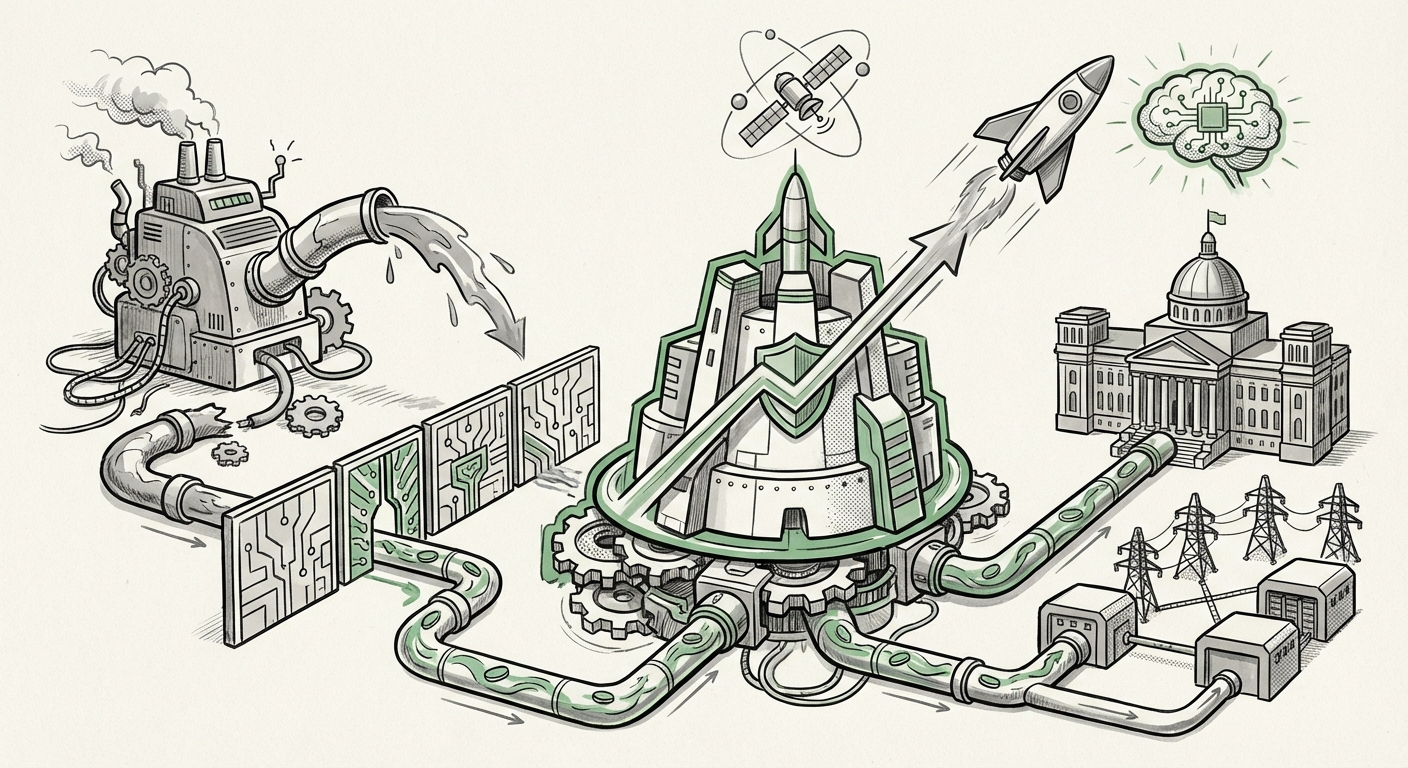
This layered approach—policy, funding, technology, and infrastructure—demonstrates that European AI strategy is holistic, moving beyond mere academic research to build an entire end-to-end sovereign stack.
Future Implications: What This Means for AI Adoption
The Mistral phenomenon signals a fundamental divergence in the global AI landscape. We are moving away from a single, dominant technological paradigm toward a multi-polar ecosystem. This has profound implications for future technology adoption:
For Businesses: The Rise of the 'Best Fit' Model
Global businesses will no longer default to the highest-profile U.S. model. Instead, decisions will become more nuanced, centered on risk, compliance, and regional relevance:
- Risk Segmentation: Companies handling highly sensitive data (e.g., government contracts, proprietary defense research) will actively seek out sovereign models hosted in regulated environments, even if they are slightly less capable than their frontier counterparts.
- Efficiency Premium: For high-volume, low-latency tasks (customer service bots, internal document summarization), the highly optimized, lower-cost European models will win the total cost of ownership argument.
- Customization: As the ecosystem matures, we will see European SMEs flourish by fine-tuning open-weight models like Mistral’s for specific regional industries, rather than relying solely on large, generic APIs.
For Society: Accountability and Trust
Europe's regulatory-first approach embeds accountability into the development process. While this may slow the pace of unchecked experimentation compared to jurisdictions with fewer restrictions, it builds long-term public trust. For the average citizen, this means that AI systems used in public services are more likely to be understandable, auditable, and aligned with European democratic values.
Actionable Insights for Navigating the New AI Map
Organizations must adapt their AI procurement and strategy planning to this bifurcated world:
- Audit Your Data Residency Requirements: Determine which of your AI workloads must legally or strategically reside within the EU. This immediately qualifies you as a primary customer for sovereign providers.
- Investigate Open-Weight Architectures: Explore fine-tuning efficient models like those offered by Mistral. This strategy often offers better security (as you can host the model internally) and lower long-term variable costs compared to pay-per-token proprietary APIs.
- Monitor Sovereign Cloud Pledges: Pay attention to commitments made by European cloud providers regarding GPU availability. Access to domestic compute is the bottleneck that determines scaling potential for all local AI startups.
Conclusion: The Dawn of Pluralistic AI
Mistral AI’s success, marked by its rapid revenue acceleration, serves as the definitive proof point for Europe’s strategy. It shows that regulatory focus and strategic capital can successfully nurture domestic champions capable of competing on the global stage. The future of AI will not be a monolithic structure dominated by one geographic center, but rather a pluralistic landscape where technological excellence is pursued alongside ethical governance and geopolitical independence.
This multi-polar AI world promises greater resilience against supply chain shocks and a broader base of innovation driven by diverse cultural and regulatory perspectives. The era of digital dependence in Europe is giving way to an era of strategic digital self-reliance, with companies like Mistral leading the charge.