The MIT License AI Uprising: How China's GLM-5 Redefines the Global LLM Race
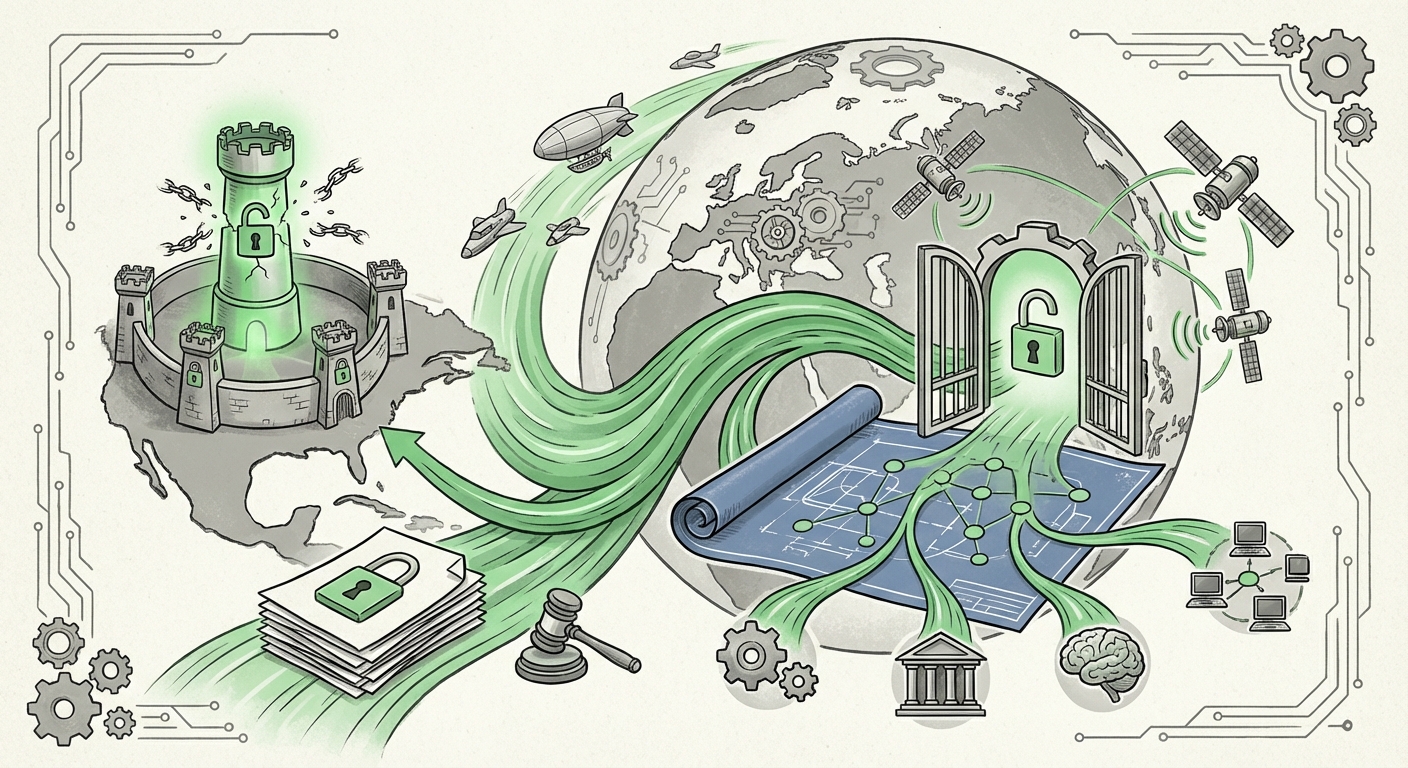
The world of Artificial Intelligence is perpetually defined by monumental releases—the moment a new model proves capable of a previously unattainable feat. We have recently witnessed such a moment, not with a guarded announcement from Silicon Valley, but from a major Chinese research institution, Zhipu AI. Their release of the massive, 744-billion-parameter model, GLM-5, under the highly permissive MIT License, is far more than a technical milestone; it is a declaration that the global AI competitive landscape has fundamentally shifted.
For years, the narrative was simple: the frontier models—the ones defining intelligence benchmarks—were locked behind proprietary APIs controlled by a handful of US-based giants. GLM-5 directly challenges this paradigm. By claiming parity with Western leaders like Claude Opus 4.5 and GPT-5.2, especially in demanding areas like coding and complex reasoning benchmarks, Zhipu is injecting extreme competitive pressure where it hurts the most: access.
The Three Pillars of Disruption: Performance, Licensing, and Ecosystem
To understand the earthquake this model generates, we must break down the three interwoven elements of the GLM-5 story. For both technical experts and business strategists, these pillars dictate future investment and development paths.
1. Technical Credibility: Closing the Performance Gap
The most immediate challenge GLM-5 poses is technical. A model with 744 billion parameters competing head-to-head with proprietary systems is a massive achievement, signaling that the investment in scale and architectural refinement outside the dominant US labs is paying dividends. When Zhipu claims parity on coding benchmarks (a critical area for enterprise adoption and agent development), developers listen.
This claim requires intense scrutiny. We need independent validation, which is why analyzing specific benchmark comparisons, such as those found by probing for "GLM-5 benchmark comparison Claude Opus 4.5 GPT-5.2," is essential. If these claims hold up, it means that the highest levels of AI reasoning capability are no longer exclusive intellectual property. For a developer building a new application, the choice shifts from "Which proprietary API can I afford?" to "Which open model fits my latency and compliance needs?"
For the layperson: Imagine the world’s fastest sports car suddenly being offered as a free blueprint. It forces the established manufacturers to rethink why their locked-down, expensive versions are still necessary.
2. The MIT License: A Weapon of Democratization
This is arguably the most disruptive component. The MIT License is the friendliest license in software development; it essentially says, "Do whatever you want with this code, just don't sue me." When applied to a 744B parameter LLM, this has profound implications for the AI ecosystem.
- Commercial Freedom: Companies can take GLM-5, fine-tune it on private, sensitive data (like medical records or proprietary engineering specifications), and deploy it without worrying about per-token API fees or sharing their intellectual property with a third-party vendor (like OpenAI or Google).
- Rapid Iteration: The open-source community can immediately begin stress-testing, patching, and improving the model faster than any single corporate lab. This turbocharges the development cycle outside established commercial silos.
This move directly contrasts with the current trend of Western leaders guarding their largest models closely. Searching for the "impact of open source LLMs from China MIT license" reveals a growing strategic tension: do you control the technology behind a high wall, or do you flood the market with high-quality, free alternatives to capture the vast majority of global adoption?
3. Institutional Backing and Sustainable Power
Developing a model of this scale requires titanic resources—billions of dollars in GPU compute and years of top-tier research talent. The narrative of Zhipu AI cannot be separated from its deep roots in academia, specifically Tsinghua University, and its significant financial backing. Investigations into "Zhipu AI funding and relationship with Tsinghua University" confirm that this is not a garage project; it is a state-supported, heavily funded endeavor.
This sustained institutional backing suggests longevity. While a startup might fold after a poor funding round, Zhipu’s capability is interwoven with national R&D priorities. This provides a stable platform for continued innovation, ensuring that the gap between GLM-5 and its successor will likely shrink, not widen.
Implications for the Future of AI Development
The arrival of genuinely competitive, permissively licensed models from China forces immediate, structural changes across the entire AI industry.
For the Tech Giants: The Proprietary Reckoning
The primary threat to OpenAI, Anthropic, and Google is the erosion of the "moat." If developers can achieve 95% of GPT-4.5 performance using a self-hosted, open-source, and fine-tunable model like GLM-5, the value proposition of paying premium API access diminishes rapidly.
This pressure will likely force proprietary labs to either:
- Accelerate Breakthroughs: Continuously push the frontier (e.g., GPT-6) so far ahead that the open models remain perpetually behind.
- Open Up Strategy: Open-source their own smaller or medium-sized models to maintain developer loyalty, a strategy partially adopted by Meta with the Llama series.
For Businesses: Sovereignty and Speed
For global enterprises, especially in regulated industries (finance, healthcare, defense), the ability to own the weights of a massive model is game-changing. Concerns over data residency, censorship, and vendor lock-in often preclude the use of cloud-based proprietary APIs for core tasks.
GLM-5 under the MIT license offers AI Sovereignty. A German bank, a Japanese manufacturer, or a Brazilian healthcare provider can deploy this high-power intelligence entirely within their own secure environments, without fear of sudden policy changes from a US-based vendor. This is a massive win for data governance and operational control.
The Geopolitical AI Landscape Shift
The context of this release cannot be ignored, especially when observing trends like the "Global LLM landscape shift Chinese open source models 2024." AI capability is fast becoming a key pillar of national economic and security power. By releasing a top-tier model openly, China gains significant soft power and technological influence by making its foundational research accessible to the entire world, potentially fostering dependence on its underlying architecture rather than on US-controlled platforms.
This accelerates the bifurcation of the technological world into distinct, interoperable or competing ecosystems. It is a highly sophisticated play in the long game of technological leadership.
Actionable Insights: What Leaders Must Do Now
The GLM-5 release is a flashing red light for any organization that has staked its future entirely on relying on closed-source API providers. Here is how stakeholders should adjust their strategies:
1. Audit Your AI Dependencies (Technical Teams)
Begin a thorough audit of current AI workloads. For any task that requires heavy customization or high data sensitivity, immediately begin prototyping migration paths using leading open-source models, including GLM-5. The total cost of ownership (TCO) for self-hosting a powerful open model, factoring in hardware depreciation, is rapidly becoming cheaper than perpetual, high-volume API fees.
2. Invest in Open Model Fine-Tuning Expertise (HR/R&D)
The value is moving from accessing large models to adapting them. Companies need engineers skilled not just in prompt engineering, but in quantization, LoRA fine-tuning, and deploying these massive models efficiently on custom hardware. Talent that can master GLM-5’s architecture will be highly sought after.
3. Develop a Dual-Sourcing Strategy (Business Leadership)
Never rely on a single vendor for foundational AI services. Establish a dual-sourcing strategy: maintain relationships and contracts with proprietary leaders (for absolute frontier performance on bleeding-edge tasks) while simultaneously building internal competency and infrastructure around world-class open models like GLM-5 for the vast majority of daily operational needs.
Conclusion: The Democratization Era is Here
The era of unified, closed-source AI dominance is officially being tested. The release of GLM-5, backed by significant resources and unleashed via the MIT License, signals the maturity of AI development outside of the traditional hubs. It pushes capability—the ability to reason, code, and create—into the hands of the global developer community.
While proprietary labs will continue to pursue the extreme bleeding edge, the availability of models at this scale in the open fundamentally alters the economics and geopolitics of AI adoption. For businesses, this is a moment of unprecedented opportunity for customization, cost control, and technological sovereignty. The foundation of the next generation of AI applications will be built not just on what the US giants announce, but on what the global community chooses to build with models like GLM-5.