The End of Anonymous AI Art: Global Courts Demand Human Authorship in Copyright Battles
The accelerating pace of generative AI has thrust the world’s intellectual property laws into their most significant overhaul since the digital age began. The legal question is no longer if AI can create, but rather: who owns what it creates?
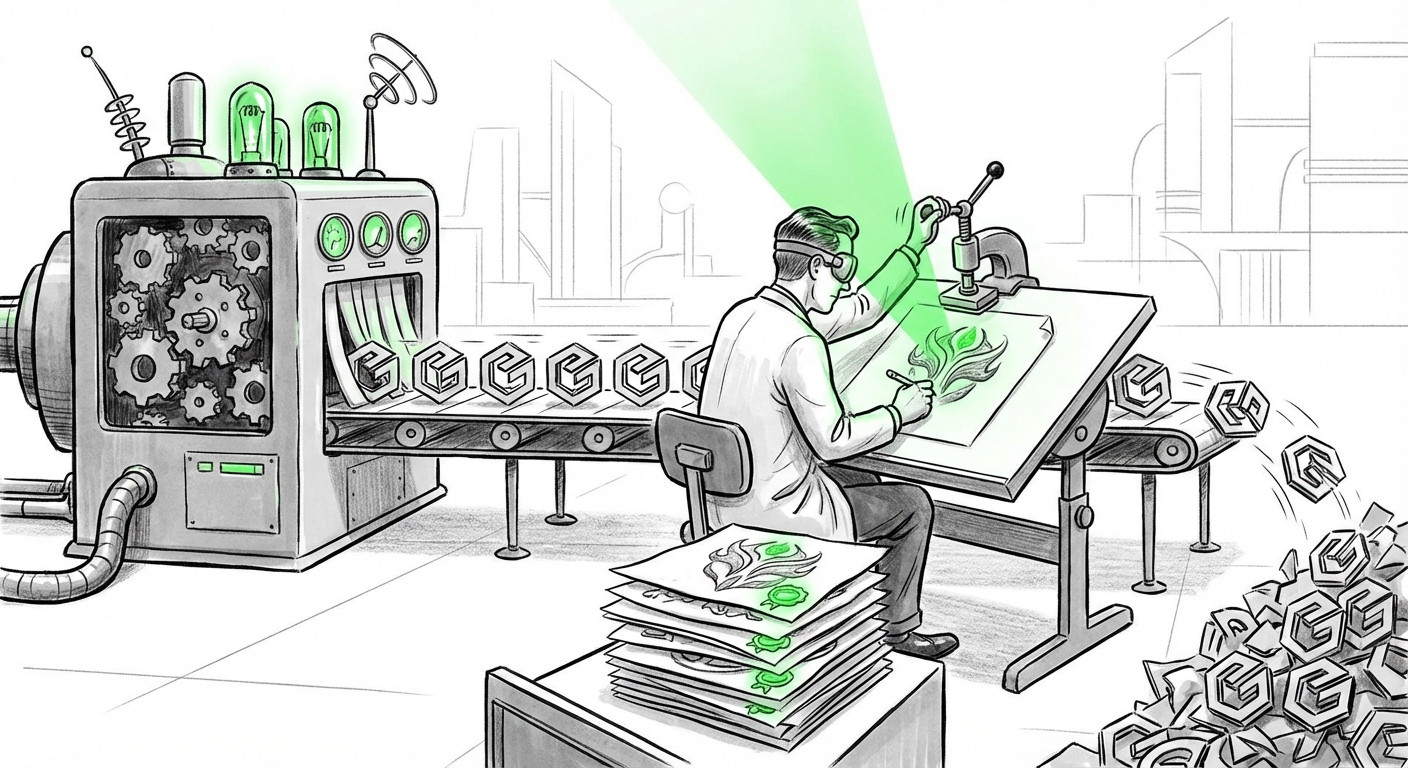
A recent ruling from a German district court crystallized this global dilemma: they denied copyright protection for three AI-generated logos. The court’s reasoning was clear and powerful: even when a human provides detailed instructions (what we call prompting), if the final, complex creative choices—the specific aesthetics, composition, and execution—are left entirely to the machine, the resulting work lacks the necessary spark of human authorship required for legal protection.
This is far more than a niche legal decision about logos; it’s a foundational moment establishing the boundaries between human creativity and machine computation. To understand the ripple effect, we must look beyond Germany and examine the emerging global consensus shaping the future of AI innovation and business reliance on synthetic media.
The Global Consensus: Why Human Input Is Non-Negotiable
The German court did not act in a vacuum. This decision strongly aligns with regulatory movements happening worldwide, confirming a trend that prioritizes the human creative contribution. When thinking about AI and technology trends, we must view this as an international pattern, not an isolated incident.
The US Parallel: Authorship by a Natural Person
In the United States, the Copyright Office (USCO) has already established strict criteria. They explicitly reject copyright registration for works generated *solely* by AI. For instance, decisions involving AI-generated images, even when curated or arranged by a human, have seen copyright protection denied for the purely synthetic elements. The USCO mandate is that the work must be created by a human author—a natural person—to secure protection. This comparison is vital, showing that major jurisdictions are converging on the necessity of human creative control. (This aligns with guidance found by searching for "US Copyright Office" AI authorship guidance rulings.)
For businesses, this means that if you use an AI tool to instantly generate a product package design without significant post-processing, you cannot rely on copyright law to prevent a competitor from using the exact same design.
The Philosophical Test: Prompt Engineering vs. Artistic Control
The crux of the modern debate lies in the effectiveness of the prompt. As AI models become more powerful, users can generate stunning complexity with simple text inputs. Does instructing the machine simply define the *subject* (e.g., "A photorealistic knight riding a chrome dragon") or does it dictate the *artistic expression* (e.g., lighting direction, texture application, specific pose)?
The German ruling suggests the latter is required. If the prompt is too broad, the human is merely a commissioner, not the author. The AI becomes the true originator. This is forcing a rapid evolution in how we define **prompt engineering**—shifting it from a mere instruction set toward a demonstration of specific, traceable creative direction. (This ongoing legal debate is discussed extensively when researching WIPO "AI creativity" intellectual property future discussions.)
Implications for the Future of AI Development and Business
These legal headwinds create significant friction for industries eager to adopt generative AI at scale, especially in branding, marketing, and software development.
1. Risk Management in Creative Industries
For design agencies, marketing firms, and startups, the risk profile has fundamentally changed. If a newly launched product logo, created entirely via an AI service with minimal human oversight, is found to be unprotected, the company faces an existential threat if a competitor copies it. This uncertainty is already prompting internal policy shifts.
Creative leaders are now auditing their workflows. The preference is shifting toward **AI-assisted workflows**—where AI handles drafting, iteration, or background texture generation, but the final composition, strategic placement, and aesthetic nuance are undeniably human-controlled and documented. This practical shift is a direct business response to the legal risk identified in rulings like the one from Germany. (Industry reactions are frequently documented in trade publications by tracking Creative industry response "AI logos" copyright ruling.)
2. The Regulatory Horizon: WIPO and *Sui Generis* Rights
The current legal framework, designed in the era of typewriters and darkrooms, is ill-equipped for autonomous creation. This strain is pushing global organizations like the World Intellectual Property Organization (WIPO) to seriously consider establishing *sui generis* rights—a brand-new type of protection.
Imagine a new "AI Investment Right" that doesn't grant authorship to the output itself, but instead rewards the company that invested the time and capital to develop or deploy the highly capable model. This is a concession to the economic reality that massive investment fuels AI output, even if the output isn't "authored" in the traditional sense.
3. The Developer’s Dilemma: Model Training and Infringement
While the German case focuses on the *output*, the industry is also intensely focused on the *input*—the data used to train these models. If the models are trained on billions of copyrighted images without permission, and the resulting outputs are deemed unprotectable because they lack human input, the entire economic model of generative AI becomes precarious. This dual challenge (unprotectable output, questionable input lineage) creates a toxic legal environment for rapid commercial scaling.
Actionable Insights: Navigating the New IP Landscape
How should businesses and creators move forward when the technology is outpacing the law? The answer lies in documentation and intentional design.
For Creative Professionals and Designers: Embrace the Editor Role
If you use generative AI, shift your mindset from prompt engineer to master editor. Document every step where you intervene:
- Initial AI Generation: Document the prompt used.
- Human Intervention: Detail manual edits in external software (e.g., "Used Photoshop to adjust lighting curves by 15%," "Manually redrew the central motif structure").
- Final Selection: Document why the human author *chose* this specific variant over hundreds of others, emphasizing subjective aesthetic judgment.
This documentation acts as the critical bridge between AI assistance and recognized human authorship.
For Businesses and Startups: Prioritize Licensed Assets
If your brand identity—your logo, key marketing imagery, or proprietary code generated by AI—needs ironclad legal protection, you must rely on assets where human authorship is undeniable. This often means reverting to traditional creative pipelines or using AI tools with clear indemnity clauses (where the provider guarantees to defend you against IP claims, though this is still rare). Until laws settle, treat purely AI-generated assets as public domain resources.
For AI Developers: Focus on Transparency
Developers must build tools that inherently support transparency. Future platforms will likely need built-in metadata that clearly tags the percentage of human input versus machine generation, allowing regulators and courts to better assess claims of authorship. The ability to audit the 'humanity score' of a creation will become a key feature.
Conclusion: The Imperative of Intent
The German court’s decision is a vital signpost in the AI revolution. It sends a clear message across continents: creativity protected by law requires human intent. The era of seeking legal protection for work anonymously delegated to a powerful black box is drawing to a close.
The future of AI in creative fields will not be one of replacement, but of **redefinition**. The value proposition will shift away from the speed of output and toward the documented strategic choices and refined artistic direction provided by the human collaborator. Technology will continue to evolve rapidly, but the fundamental legal requirement—that a work must bear the stamp of human personality—will remain the bedrock upon which the future of intellectual property is built.