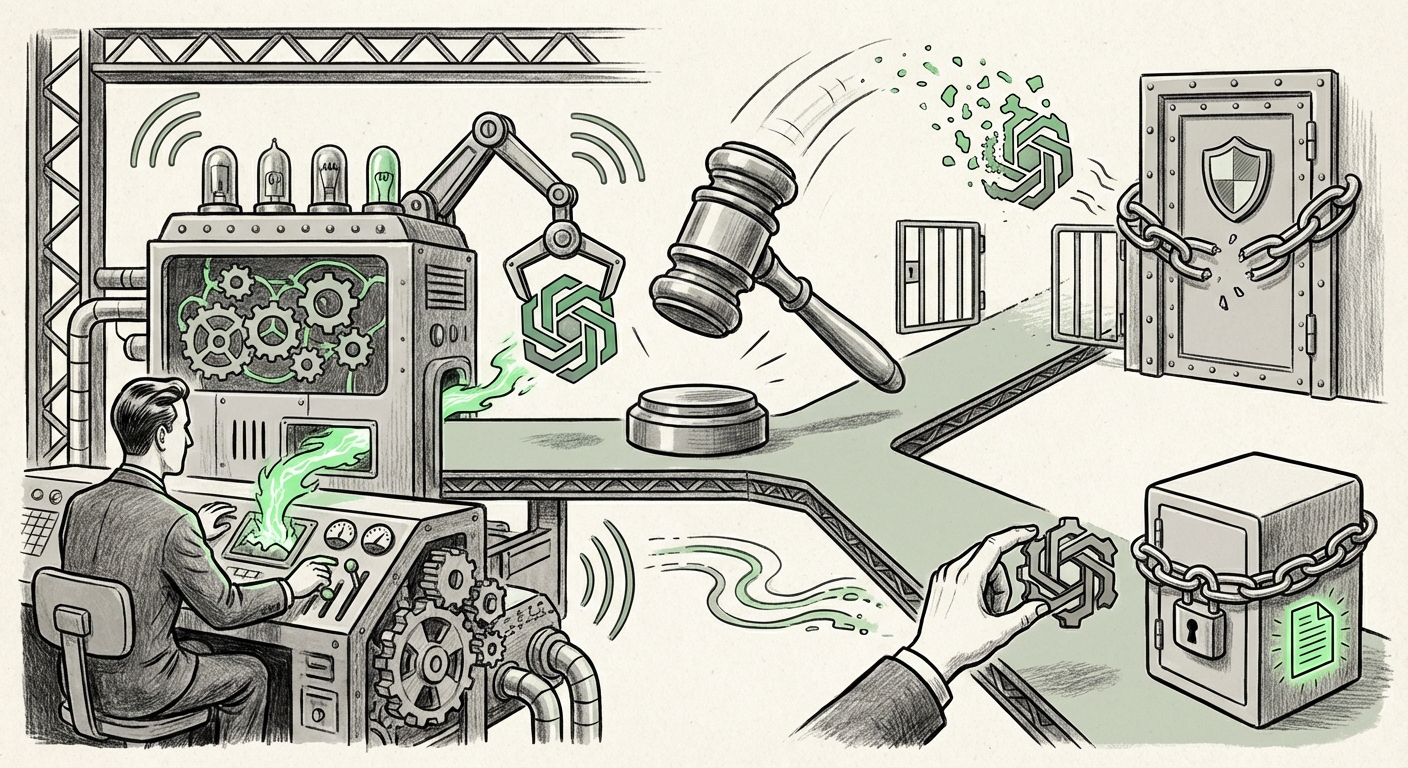
The Prompt Paradox: Why AI Logo Rulings Threaten Copyright and Reshape Creative Ownership
The rapid ascent of generative Artificial Intelligence has thrust legal systems worldwide into uncharted territory. Nowhere is this friction more apparent than in the realm of intellectual property. A recent ruling by a German district court, which denied copyright protection for AI-generated logos, serves as a critical flashpoint in this digital evolution. This decision is not merely a niche legal footnote; it is a massive data point signaling that simply instructing an AI—even with elaborate detail—may not be enough to secure ownership over the resulting creation.
As an AI technology analyst, I see this as the central tension of the current technological wave: If the creative realization is outsourced to the machine, does the human input (the prompt) fulfill the legal requirement of authorship? To understand the trajectory of AI technology, we must analyze this ruling against global legal trends and forecast the practical consequences for every business leveraging generative tools.
The Core Conflict: Human Will vs. Algorithmic Execution
Copyright law, in most established systems, is fundamentally anthropocentric. It is designed to reward and protect the fruits of human creativity. When a person writes a novel, paints a canvas, or designs a logo using traditional tools, the human mental process—the selection, arrangement, and expression of ideas—is what merits legal protection.
The German court’s decision cuts directly against the narrative often promoted by AI tool developers: that sophisticated prompt engineering equates to sufficient creative control. The court appears to argue that prompting is akin to commissioning an artist; if the commissioner merely dictates the subject matter but allows the artist total freedom on execution (color, composition, detail), the commissioner might not be the author. In the AI context, the "artist" is the autonomous model.
For a non-technical audience, imagine ordering a specialized cake. If you meticulously describe the flavor, size, and shape, but the baker uses their own highly skilled, proprietary techniques to mix, bake, and decorate it, the unique artistic choices made during the actual baking process belong to the baker. The German court is essentially classifying elaborate prompting as describing the subject, while the AI handles the proprietary, unprotectable execution.
Cross-Jurisdictional Scrutiny: A Global Divergence
To grasp the weight of this German ruling, we must look outward at how other major legal bodies are treating the issue. The landscape is far from unified, leading to significant geopolitical risk for global technology firms.
One crucial point of comparison comes from the US Copyright Office guidance on AI-generated works. The US stance echoes the underlying principle found in the German case: protection is only granted to the elements of a work that are the product of human authorship. If an AI tool generates the bulk of the creative expression—even based on a detailed prompt—the Office rejects registration for the AI-generated portions. This shows that the concern over delegating execution to a non-human agent is not unique to Europe.
Furthermore, tracking other ongoing authorship requirements for generative AI court cases reveals a broader pattern of judicial caution worldwide. Whether in music sampling disputes or visual art infringement claims against AI developers, the courts are demanding concrete evidence of human intervention beyond mere suggestion. The system is currently calibrated to protect human minds, not sophisticated statistical prediction engines.
The Prompt Engineering Debate: Where is the Line Drawn?
The debate hinges on Query #4: Defining the Threshold: When Does Prompt Engineering Become Copyrightable Authorship?
Prompt engineering has evolved rapidly from simple text commands to complex, multi-step workflows involving style transfer, iterative refinement, and detailed constraint setting. Proponents argue that an incredibly detailed prompt functions as a detailed blueprint, guiding the AI toward a highly specific, human-conceived outcome. They argue the prompt *is* the creative expression.
Courts, however, seem to be looking for expression that is fixed by human effort, not merely intended. If the AI model interprets that blueprint in millions of unpredictable ways before settling on a final image, the human's creative contribution becomes too attenuated. For businesses relying on speed, this uncertainty is paralyzing. Should they invest significant time and resources into perfecting prompts if the resulting asset is instantly contestable in court?
Future Implications for Creative Industries
The most immediate impact of these rulings is on the commercial design industry. If a startup uses an AI to quickly generate 50 unique logo concepts for their new product, and the German ruling principle is applied globally, none of those 50 logos are protectable in Germany (and potentially elsewhere).
This creates a "Wild West" scenario where AI-generated assets exist in a public domain limbo, despite being developed via paid subscriptions or custom engineering efforts. Companies must now factor in the cost of post-AI refinement—hiring a human designer to take the AI output and significantly alter it, thereby establishing clear, documented human authorship.
The Regulatory Horizon: EU AI Act and Future Liability
The German ruling gains added importance because it operates within the European Union, a bloc actively crafting comprehensive governance for the technology via the EU AI Act implications for intellectual property.
While the AI Act primarily focuses on safety, transparency, and high-risk applications, its requirements for generative models—particularly regarding data provenance and watermarking—will inevitably influence IP law. If an AI system is legally required to disclose that its output is machine-generated, this reinforces the court's skepticism about attributing human creativity.
For technology analysts, the message is clear: Future regulatory compliance (driven by the EU AI Act) will likely make it harder to claim sole human authorship over purely generative outputs, solidifying the necessity for human refinement.
Actionable Insights: Navigating the Copyright Chasm
The current environment demands a shift from expecting automatic IP protection to actively engineering it. What does this mean for businesses and creators moving forward?
1. Treat AI Output as a Starting Draft, Not a Final Product
For any asset intended for commercial branding (logos, marketing copy, specific character designs), assume the raw AI output is not copyrightable. The actionable step is to introduce significant, documented human modification. This could mean heavily editing the AI-generated image in Photoshop, re-writing 70% of the text, or combining elements from multiple AI generations under human supervision.
2. Focus on Process, Not Just Prompt
Businesses must document the entire creative workflow. Instead of just saving the final prompt, save every iteration, every human edit, every decision made regarding color palettes or layout adjustments conducted outside the generative prompt box. This documentation supports the claim that the final work is a composite reflecting human creative choices.
3. Diversify IP Strategy
If copyright protection is weak, lean into other forms of protection where applicable. For logos, robust **trademark** protection becomes even more vital. A trademark protects the *use* of a mark in commerce to identify goods/services, regardless of whether the underlying design is copyrightable. This means companies must aggressively register their AI-derived marks before competitors use similar, unprotected designs.
4. Demand Clarity from Developers
AI developers must move beyond simply maximizing output quality. They need to build tools that help users prove human contribution. This could involve integrated editing suites, version control for prompts and outputs, or explicit contractual guarantees regarding the copyright status of outputs based on the user’s subscription tier.
What This Means for the Future of AI and How It Will Be Used
The German court ruling is a necessary, if painful, reality check. It forces the industry to mature past the initial novelty of effortless generation and confront the complexities of ownership in a world where machines co-create.
In the near future, we will see a bifurcation in how AI is used creatively:
- Low-Stakes, High-Volume Use: For internal documents, mood boards, rough drafts, or content where brand identity is not critical, rapid, unverified AI generation will continue to dominate due to its speed and zero IP overhead (since it’s essentially public domain upon creation).
- High-Value, Commercial Use: For brand-defining assets like logos, product blueprints, or core marketing campaigns, AI will transition from being the final creator to being a **powerful co-pilot**. The emphasis will shift from "What can AI make?" to "How can I use AI to make what I need, while ensuring I legally own the result?"
This friction between technological capability and legal framework is healthy for innovation in the long run. It forces clarity. The future of AI adoption in creative sectors will not be defined by the power of the algorithms alone, but by the robustness of the legal and procedural scaffolding we build around them. The era of "fire and forget" prompting is over; the age of "verified authorship" has begun.
The courts are demanding that humans remain firmly in the driver's seat, even if the vehicle is capable of steering itself most of the way. Understanding this distinction—between instruction and execution—is the key to future-proofing digital assets in the generative age.