The AI Commons Revolution: How India is Redefining Global Tech Governance and Access
The world is rapidly structuring the rules for Artificial Intelligence. From regulatory frameworks in Brussels to safety summits in the UK, the narrative has often been dominated by US and European priorities. However, a powerful new voice is emerging from the East, fundamentally challenging this established order: India. At recent high-level discussions in New Delhi, India’s proposal for a "Global AI Commons" signaled more than just a seat at the table; it represented a significant geopolitical pivot toward democratizing AI development and governance, moving beyond the current Western or China-centric duopoly.
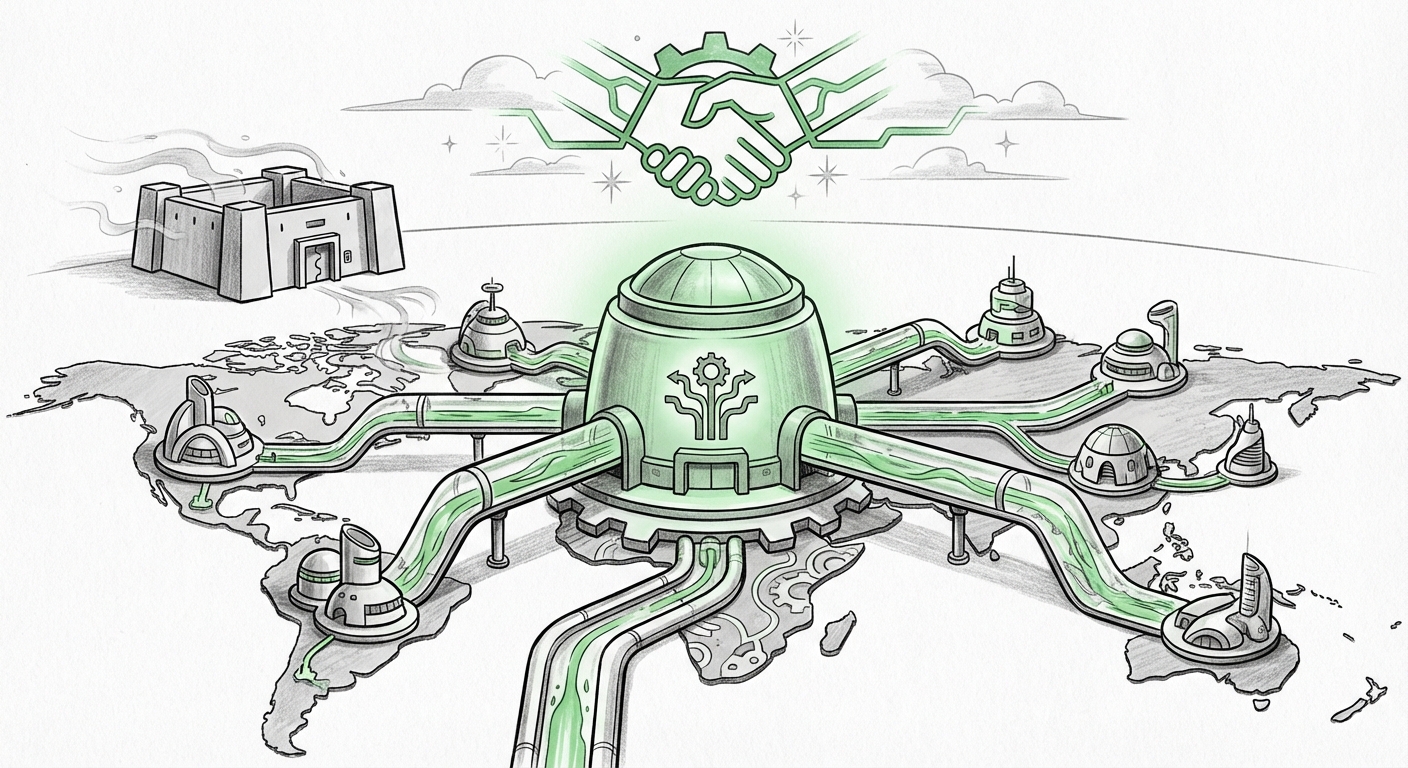
For technologists, investors, and policymakers alike, understanding this movement is not optional—it is essential for navigating the next decade of digital innovation. The "AI Commons" concept suggests that foundational AI capabilities should be treated less like proprietary weapons systems and more like shared global infrastructure, ensuring access, sovereignty, and development benefits for all nations, especially those in the Global South.
The Geopolitical Shift: From Safety to Sovereignty
The initial discussions around AI governance, heavily influenced by pioneers like OpenAI and Anthropic, centered primarily on existential risk and safety alignment. The outcomes, such as the Bletchley Declaration, prioritized safeguarding against extreme, speculative harms. While crucial, this focus has drawn criticism for overlooking immediate, tangible issues faced by developing economies: accessibility, cost, and data sovereignty.
India, now recognized as a massive, rapidly growing market for AI services (second only to the US in adoption of tools like ChatGPT and Claude), is leveraging its sheer scale to reposition the conversation. The call for a "Global AI Commons" is a direct challenge to the current trajectory, which risks centralizing AI power in the hands of a few tech giants headquartered in Silicon Valley.
Corroborating the Context: The Regulatory Landscape
To grasp the weight of India's proposal, we must see how it contrasts with existing regulatory discussions. While reports detailing the outcomes of the Bletchley Declaration set a safety baseline, India's vision implies a focus on *access and equitable distribution* rather than just risk mitigation. The core question for policy analysts becomes: Can a framework focused on safety (US/EU style) coexist with one focused on shared infrastructure (India's goal)? This tension defines the future regulatory battleground.
The concept directly challenges the current model where sophisticated models are locked behind expensive APIs. A "Commons" suggests a move toward openly accessible, perhaps publicly funded, foundational models that any nation—from Nigeria to Vietnam—could adapt and deploy without prohibitive licensing fees.
Fueling the Fire: India's Domestic AI Momentum
India’s confidence in proposing global norms is deeply rooted in its explosive domestic adoption and burgeoning local capabilities. It is not merely demanding access; it is proving its capability to build and consume.
The Market Reality: A Digital Superpower in Training
Reports confirm that India’s appetite for GenAI tools is immense, making it a critical growth engine for major AI players. This adoption velocity provides empirical weight to India's arguments. Furthermore, the Indian ecosystem is quickly maturing. We are seeing the rise of significant domestic LLM developers, such as Sarvam AI and Krutrim, who are building models optimized for India’s vast linguistic and cultural diversity. This local innovation proves the thesis that AI advancement doesn't have to be solely proprietary.
Crucially, this momentum is built on robust Digital Public Infrastructure (DPI), like the UPI payment system. India understands how to scale technology rapidly and inclusively. Therefore, when they advocate for an "AI Commons," they envision something akin to an open-source digital utility, leveraging their existing success with open protocols.
The Ideological Battle: Open Source vs. The Walled Gardens
The very structure of an "AI Commons" inherently favors open standards and open-source methodologies. This is perhaps the most significant technical implication of India’s stance.
The Case for Openness in the Global South
Current leading models are proprietary. Businesses and governments must pay to use them, creating a dependency loop—a modern form of technological colonialism. If a country relies entirely on a closed model, its data governance, cultural biases, and future innovation pathways are dictated externally.
Market analysis contrasting proprietary models versus open-source development highlights this strategic choice. For developing nations, open-source AI models are seen as the ultimate tool for digital sovereignty. They allow local developers to inspect, customize, and audit the model for local needs (like adapting to local languages or regulatory environments) without sharing sensitive data with foreign entities. The "AI Commons" serves as a rallying cry for this open approach, positioning it as the ethical, sustainable path forward against the rising walled gardens of Big Tech.
Practical Implications: What This Means for Businesses and Society
This shift is not just abstract diplomacy; it will directly impact how businesses operate, how investments are allocated, and how societies interact with technology.
For Global Tech Companies: Navigating Regulatory Fragmentation
Companies currently relying on large, proprietary models must prepare for a bifurcated regulatory world. On one side, expect rigorous, safety-first compliance mandates from the EU and US. On the other, expect growing pressure, led by coalitions forming around India’s vision, to open up model access, share safety testing data, or contribute to public infrastructure models.
Businesses operating in emerging markets must consider adopting hybrid strategies—using proprietary tools where cutting-edge performance is non-negotiable, but actively exploring open-source or "Commons-aligned" models for core business functions to future-proof against potential policy shifts demanding greater transparency.
For Emerging Economies: The Democratization Dividend
If the "AI Commons" gains traction, the immediate practical implication is a massive reduction in the cost of entry for AI adoption. Small and Medium Enterprises (SMEs) in markets like Indonesia, Brazil, or Kenya, which currently cannot afford high API costs, could gain access to powerful, localized AI tools for productivity, healthcare diagnostics, and education. This accelerates economic development by bypassing the traditional capital requirements for cutting-edge technology adoption.
For AI Researchers and Developers: A New Frontier
The push elevates the importance of foundational research into multi-lingual, diverse-data models. Researchers will find new opportunities to contribute to shared, public-good models rather than solely focusing on optimizing proprietary systems. This diversification of research effort could lead to unexpected breakthroughs tailored to real-world problems often ignored by commercial labs focusing on high-revenue Western markets.
The Future Trajectory: Coalitions Beyond Bletchley
India’s proposal is a strategic move to build a powerful coalition among nations prioritizing development and digital self-determination. The narrative is shifting from a purely *risk-focused* global dialogue (G7/Bletchley) to a *development and access-focused* dialogue (G20/Global South alignment).
Building the "AI for Development" Alliance
By championing this cause, India positions itself as the thought leader for the Global South—a grouping that includes large parts of Africa and Latin America who share similar concerns about technology dependence. We anticipate further geopolitical maneuvering as nations align themselves either with the Western framework of heavily regulated, safety-first deployment or India's framework emphasizing shared infrastructure and sovereign control.
This movement highlights that the future of AI won't be dictated solely by where the best chips are made, but by where the most influential governance standards are established. If the "AI Commons" becomes the dominant paradigm, it implies a future where technology benefits are distributed more broadly, slowing the consolidation of power currently seen in the commercial AI space.
Actionable Insights: Preparing for the Commons Era
To thrive in this emerging environment, stakeholders must act decisively:
- Map Your Dependency Risk: Businesses must audit which core AI services they rely on. If those services are entirely proprietary, they must begin researching viable open-source alternatives that align with potential "Commons" standards.
- Invest in Local Talent & Customization: For nations and companies wishing to exercise sovereignty, investment must shift from mere *consumption* of foreign models to *customization* and development of local LLMs trained on local data. This future requires talent specializing in fine-tuning and model adaptation.
- Engage in Governance Forums: Policy teams must actively monitor multilateral forums (like the G20 discussions following the New Delhi summit) where these frameworks are being debated. Compliance in the future might require adherence to shared standards rather than just bilateral agreements.
- Prioritize Open Standards: Tech architects should lean into standards that promote interoperability and transparency, viewing them as long-term strategic assets against potential future licensing restrictions.
India’s call for a Global AI Commons is more than a diplomatic suggestion; it is a blueprint for a more equitable, decentralized, and sovereign future for artificial intelligence. It forces a critical conversation: Will AI become the exclusive tool of a few wealthy nations, or will it be forged into a shared utility for global progress? The answer is being written now, in the ideological friction between closed ecosystems and the promise of a shared digital commons.