The Global AI Commons: How India is Challenging Western Dominance in Future AI Governance
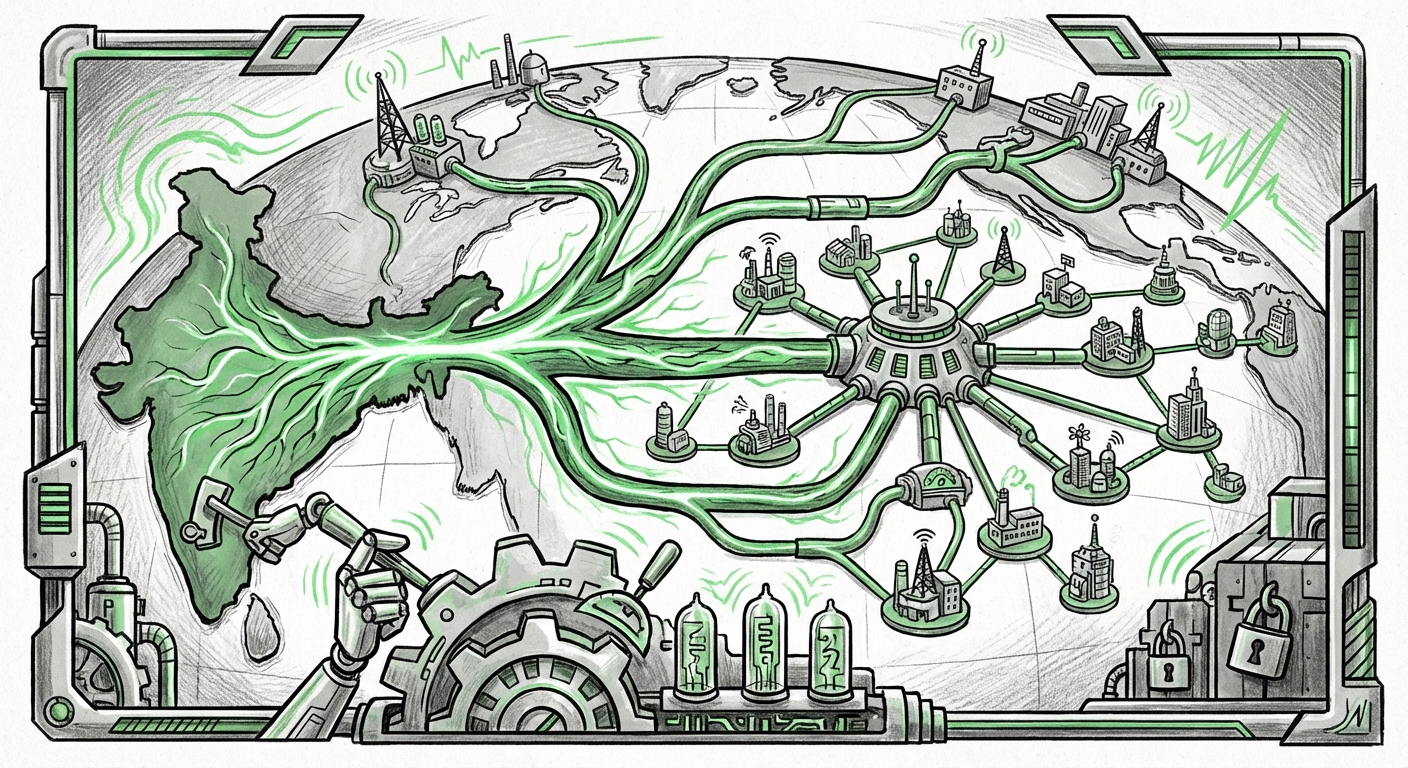
The development and governance of Artificial Intelligence stand at a critical juncture. While labs in Silicon Valley and regulatory bodies in Brussels dominate the headlines, a powerful, populous voice from the East is rapidly asserting itself. India, leveraging its immense market size and burgeoning technological prowess, is actively proposing a fundamentally different framework for global AI: the “Global AI Commons.”
This initiative is not merely a suggestion for improved collaboration; it is a geopolitical pivot challenging the existing guardrails being erected by the G7 nations. Understanding the “AI Commons” requires looking beyond immediate regulatory compliance and focusing on the deep structural issues of access, sovereignty, and global distribution of power.
The Geopolitical Shift: Beyond the Bletchley Consensus
For much of 2023, the narrative around AI safety and governance was heavily shaped by conferences like the UK’s Bletchley Park Summit. These discussions, while vital, often emphasized mitigation of existential risks—concerns that resonate most deeply with the developers and nations currently leading frontier model development. This focus can inadvertently lead to regulations that favor incumbents, creating high barriers to entry.
India's counter-narrative, advanced at recent summits, seeks to rebalance this focus. As the world's second-largest market for leading large language models (LLMs) like ChatGPT and Claude, India possesses undeniable market gravity. This leverage allows it to push for governance structures that prioritize AI capability and equitable access for the developing world, rather than solely imposing restrictive safety measures designed by the few for the many.
This push aligns with broader movements within the Global South, which often view the current AI ecosystem as a form of "digital colonialism"—where technology is developed, owned, and controlled elsewhere, dictating terms for local application. India’s vision for AI governance outside the narrow confines of the G7 aims to democratize the foundational infrastructure of future intelligence.
Defining the "Global AI Commons"
What exactly does a "Global AI Commons" entail? It is a philosophical and practical proposal centered on shared resources, much like the concept of the internet or Wikipedia, which are treated as global public goods rather than proprietary assets.
For AI, this concept generally implies three core pillars:
- Shared Foundational Models: While proprietary models will exist, the Commons would advocate for large, powerful, open-source foundational models that are legally mandated to be accessible for adaptation, fine-tuning, and deployment by researchers and developers in any nation, particularly those without massive private R&D budgets.
- Equitable Compute Access: This is arguably the most crucial element. Training cutting-edge AI models requires staggering amounts of computational power (GPU clusters). The Commons proposes mechanisms—potentially subsidized or pooled—to ensure that researchers in developing nations have access to this essential resource, overcoming the current dependency on a handful of cloud providers tied to dominant Western tech companies. (This addresses the core challenge found when researching developing countries' demands for equitable access to AI compute power).
- Open Data Standards and Transparency: A commitment to shared best practices and data governance standards that allow for local customization of AI without requiring nations to constantly reinvent safety layers or foundational research.
If adopted, this model shifts AI development from a closed, corporate sprint to a shared, global infrastructure project. For a business leader, this means the competitive edge might shift away from who owns the biggest model toward who can most effectively *adapt* and *deploy* open, powerful models to solve local problems.
The Market Reality: India's Scale Demands a Seat at the Table
India’s stance is rooted in hard economic data. The nation is not just a consumer; it is an explosive growth engine. The fact that India stands as the second-largest market globally for services like ChatGPT and Claude is telling (Impact of India's AI adoption rate on global market share confirms this scale). This massive user base creates unique, high-volume data environments spanning hundreds of languages and complex economic realities that Western models often fail to capture accurately.
When a majority of the world’s potential AI users reside outside the primary centers of model creation, the governance framework *must* reflect their needs. If the rules are set solely by the US and EU, the resulting AI systems will inevitably serve those markets first, leaving the Global South playing catch-up, or worse, struggling with technologies that are ill-suited to their demographic or linguistic needs.
This disparity fuels the ideological friction noted in current discussions: Many nations in the Global South feel that the current emphasis on abstract "existential risks" distracts from the immediate need to harness AI for tangible development goals—healthcare, climate adaptation, and education (Global South perspective on AI safety vs. AI capability funding highlights this tension).
Implications for the Future of AI Development
The concept of a Global AI Commons has profound implications for the future technology landscape:
1. The Democratization of Frontier Research
Currently, only governments or trillion-dollar companies can afford to train a frontier model from scratch. A Commons effectively acts as a shared, subsidized, foundational layer. This would empower universities, small startups, and national research labs globally to build specialized, high-value AI applications on top of publicly accessible, powerful base models.
2. The Rise of Localized Intelligence
Instead of relying on US-centric models that struggle with local languages or specific regulatory compliance (e.g., localized financial laws), developers in diverse regions could take a Commons model and fine-tune it for hyper-local utility. This fosters genuine digital sovereignty.
3. A New Geopolitical Alliance in Tech
India’s leadership in this area is catalyzing a powerful coalition. By championing shared resources, India positions itself as the infrastructural backbone for the aspirations of dozens of emerging economies that feel excluded from the current AI power structure. This creates a diplomatic bloc dedicated to an open, accessible AI future, standing in contrast to more centralized or restrictive regulatory paths (India's vision for AI governance outside the G7). This dynamic will define future global standards negotiations.
Practical Implications for Businesses and Society
Whether or not the full "Global AI Commons" vision is institutionalized immediately, the *push* itself is reshaping strategic thinking:
- For Tech Companies (Incumbents): Companies reliant on proprietary control over foundational models must prepare for a world where open-source alternatives are significantly more powerful and accessible. The value proposition must shift from *owning the model* to *owning the superior service layer* built on top of it.
- For Startups and SMEs: This trend is highly positive. Lowering the entry barrier for compute and foundational models means a startup in Nairobi or Bangalore can potentially compete with a well-funded Silicon Valley firm on speed of deployment and localization, not just capital reserves.
- For Governments: Policymakers must navigate a duality. They need to participate in global safety dialogues (like those led by the US/UK) while simultaneously supporting initiatives that ensure their local talent can build national AI capacity without dependence on foreign licensing.
The language of "Commons" forces clarity on what aspects of AI should be treated as infrastructure (like roads or electricity) and what aspects can remain proprietary (like proprietary data sets or specific application algorithms).
Actionable Insights for Navigating the AI Future
As this governance battle unfolds, stakeholders should focus on positioning themselves for a potentially more open, yet complex, ecosystem:
- Invest in Fine-Tuning Expertise: Focus R&D budgets on the ability to rapidly and effectively adapt powerful open models to niche enterprise needs. If the foundation is shared, the value is in the customization.
- Diversify Geopolitical Risk: Do not anchor your entire AI strategy to the regulatory frameworks of a single bloc (e.g., only the EU AI Act). Be prepared for regional frameworks to emerge that prioritize data localization and local compute usage.
- Champion Open Standards: Support and contribute to open-source AI initiatives. The future AI Commons will be built by those who contribute to its foundational layers, not just those who consume the final product. This directly addresses the need for equitable access to AI compute power by pooling knowledge and resources.
Conclusion: A New Era of Collaborative Creation
India’s proposal for a Global AI Commons is more than a negotiating tactic; it is a blueprint for a more distributed, equitable AI future. It recognizes that the transformative power of this technology cannot be safely or productively hoarded by a select few labs in the West. By asserting the need for shared infrastructure, India is demanding that the architecture of the coming intelligence age reflects global diversity, not just concentrated wealth.
The ultimate trajectory of AI—whether it becomes a tool that exacerbates global inequality or one that accelerates worldwide development—will hinge on the outcomes of these high-stakes governance discussions. The move toward a Commons signals that the world is ready to fight for an AI future built on collaboration rather than monopolization.