The Agent Pivot: Why AI is Moving to Telegram First and What It Means for Your Workflows
The landscape of Artificial Intelligence is shifting from the static question-and-answer format of chatbots to the proactive, multi-step execution power of AI Agents. This transition isn't just an upgrade; it’s a fundamental change in how we expect software to work for us.
The recent announcement that Manus is launching its new "Agents" mode—a system capable of running complex, chained tasks—on Telegram first, bypassing the much larger WhatsApp ecosystem owned by Meta, sends a powerful signal to the tech world. This choice is far more telling than the novelty of the feature itself. It speaks volumes about platform openness, developer strategy, and the future of where productivity will live.
The Evolution: From Chatbot to Autonomous Agent
To appreciate the significance of Manus’s launch, we must distinguish between a modern Large Language Model (LLM) chatbot and a true AI Agent. A chatbot, like early versions of ChatGPT, waits for a prompt, processes it, and returns an answer. It’s reactive.
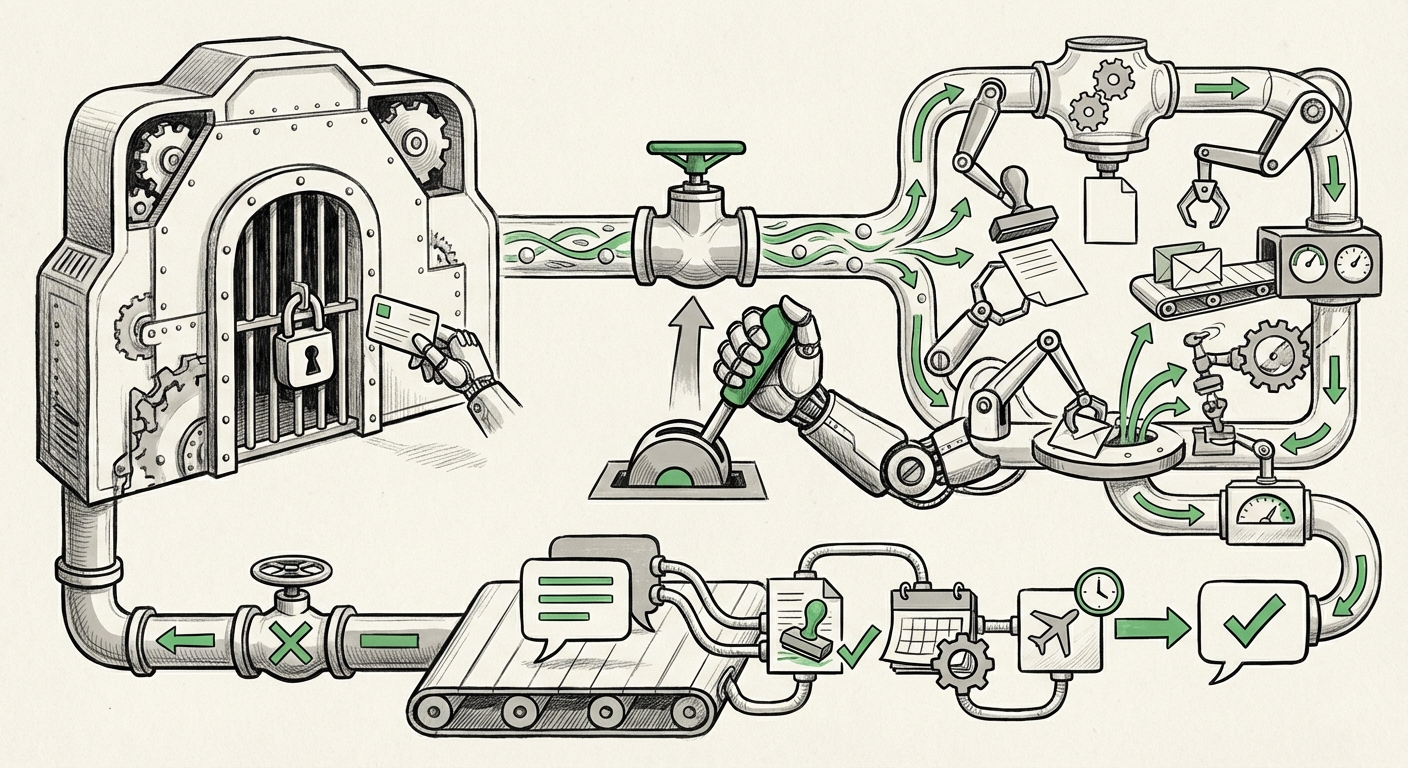
An AI Agent, however, is designed for autonomy. It takes a high-level goal ("Plan a three-day business trip to Chicago next month, book flights under $400, and block out my focus time") and breaks it down into subtasks. It interacts with external tools (APIs, email, calendars), evaluates the results of each step, course-corrects if a flight is too expensive, and reports back only upon completion. This requires sophisticated planning, memory, and execution capabilities, often being researched as the forefront of current AI development (a trend frequently explored in discussions about the rise of autonomous AI agents).
For the everyday user, this means less time prompting and more time delegating. For businesses, it means potentially automating entire sequences of operational tasks previously requiring human oversight.
Context Check: Defining the Agent Leap
If we examine this through the lens of current development, we see that achieving genuine autonomy—where the AI can handle unexpected errors without stalling—is the current engineering hurdle. Developers choosing Telegram for early deployment are often testing the limits of these agents in a less restrictive environment, getting rapid feedback on execution reliability before potentially dealing with the rigid compliance structures of larger platforms.
The Platform Paradox: Why Telegram Over WhatsApp?
The most provocative aspect of this news is the strategic choice of platform. WhatsApp boasts billions of users, making it the obvious target for mass adoption. Yet, Manus chose Telegram, a platform known for its large, technically savvy user base and its deep history supporting open-source bots and powerful APIs.
Platform Openness vs. Walled Gardens
The competition between messaging giants is heating up, particularly regarding AI integration. Meta (owner of WhatsApp) is moving cautiously, integrating AI features like Meta AI primarily within its own ecosystem (Messenger, Instagram, WhatsApp) and controlling the access points strictly. This is the classic "walled garden" approach, prioritizing security and centralized control.
Conversely, Telegram has long fostered an environment where third-party developers can create feature-rich bots and integrations that access deep functionalities of the platform. This suggests that for cutting-edge, potentially volatile agent technology, developers currently favor speed and access over the sheer user volume of a more controlled environment. As analysts track the Telegram vs WhatsApp adoption of third-party AI integrations in 2024, this pattern suggests that open APIs win the initial battle for developer innovation.
Target Audience Implications
Telegram’s user base often overlaps with early adopters, power users, and those seeking more customization. Launching an advanced Agent there first acts as a beta testing ground with users more likely to tolerate initial bugs in exchange for cutting-edge functionality. WhatsApp adoption would require more robust, user-friendly, and fully sanitized interfaces immediately.
The Future of Work: AI Agents in Your Chat History
Where the AI Agent lives dictates how it will be used. Integrating autonomous tools directly into a chat application places them at the center of our daily communication—where tasks are often discussed, delegated, and tracked.
This is the heart of the "ambient computing" trend: technology fades into the background, executing tasks as part of the normal flow of interaction. When an AI agent resides in your primary messaging app, the friction between conversation and action nearly disappears.
Productivity Redefined
Think about the productivity gains discussed in analyses of AI agents directly in chat applications on productivity trends. Instead of opening three apps (email, calendar, flight search) to coordinate a meeting, you simply ask your agent in the chat window to handle it. The agent sees the intent in your message, interacts with the necessary services, and confirms completion.
For businesses, this has profound implications:
- Shorter Decision Loops: Tasks that required switching context between apps are resolved instantly within the existing communication thread.
- Actionable Communication: Every message containing intent (e.g., "Can someone send me the Q3 report?") becomes an immediate command queue for the appropriate agent.
- Democratization of Automation: Users don't need to learn complex proprietary software interfaces; they just need to communicate their needs clearly in natural language.
Navigating the Risks: Governance and Trust
As AI moves from being a sophisticated tool to an active participant in our workflows, the ethical and security considerations multiply. This is particularly true when developers bypass the established guardrails of massive platforms like Meta.
The Scrutiny of Autonomy
Deploying agents capable of executing financial or personal tasks requires an unprecedented level of trust. If an agent sends an unauthorized email or books a non-refundable ticket incorrectly, who is accountable? This is why understanding the landscape of "AI agent deployment" regulatory scrutiny or platform risks is crucial.
Telegram’s generally more libertarian approach to development might allow Manus to innovate faster, but it also places a higher burden on the developer (Manus) and the user to ensure security and prevent misuse. If agents become powerful enough to automate spam, phishing attacks, or market manipulation, platform owners (like Telegram) will inevitably face pressure to introduce tighter controls, potentially stifling the very openness that attracted developers in the first place.
For businesses adopting these tools, the integration strategy must prioritize:
- Data Sandboxing: Ensuring the agent only has access to the minimum necessary data to complete its tasks.
- Human Oversight Loops: Mandating explicit user confirmation before any irreversible or costly action is taken by the agent.
- API Auditing: Understanding precisely which external services the agent is authorized to interact with.
Actionable Insights for the Future-Focused Professional
The Manus-Telegram development is not an isolated incident; it’s a bellwether moment. Here is what leaders, developers, and everyday professionals should take away:
1. Prioritize Agent Literacy, Not Just Chatbot Skills
The demand is rapidly moving from "Can you write a good prompt?" to "Can you define a clear objective for an agent to execute autonomously?" Start training internal teams on task decomposition and objective setting. The ability to articulate complex goals clearly will become a premium skill.
2. Evaluate Platform Alignment Strategically
Don't assume the largest user base equals the best development environment. When planning AI rollouts, weigh platform openness, API depth, and developer freedom (like Telegram) against massive user reach and security infrastructure (like WhatsApp). For early, powerful integrations, the former may be the smarter initial move.
3. Prepare for In-Channel Workflow Collapse
The barrier between communication and action is dissolving. Businesses must map out high-friction, multi-step workflows (e.g., compliance approvals, onboarding documentation) and anticipate how an in-chat agent could collapse those steps into a single command. Start small, perhaps with internal scheduling agents, to understand the technology’s capabilities within your specific operational context.
Conclusion: The Era of Actionable Communication
The arrival of Manus Agents on Telegram signals a clear trajectory: AI is leaving the laboratory and embedding itself directly into the friction points of our daily digital lives. The preference for Telegram over WhatsApp in this early, pivotal stage highlights a developer culture hungry for platforms that empower innovation without immediate, suffocating control.
We are moving beyond simply talking *to* AI; we are entering the era of reliably commissioning AI to *act* on our behalf, right where we communicate. The successful organizations of tomorrow will be those that master the art of delegating these complex, autonomous tasks efficiently and, crucially, securely, within the emerging architecture of ambient, action-oriented messaging.