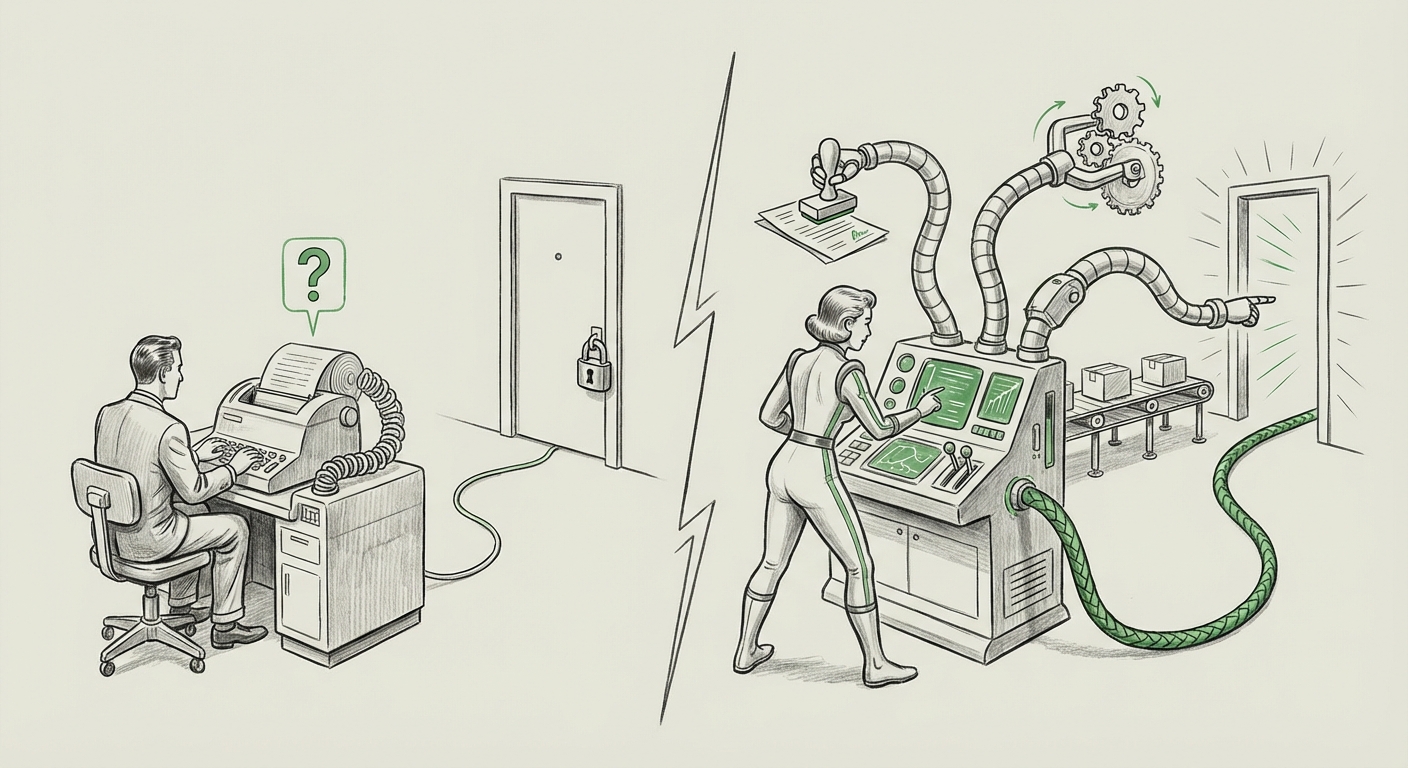
The AI Agent Wars Begin: Why Telegram Beat WhatsApp to Put Autonomous Intelligence in Your Chat
The race to embed Artificial Intelligence into our daily digital lives has just hit a critical milestone. We are moving rapidly past simple chatbots that answer questions. The new frontier is the AI Agent—a piece of software capable of understanding a complex goal and executing a series of steps to achieve it, all directly within our most-used communication channels.
The recent announcement that Manus launched its new "Agents" mode first on Telegram, bypassing Meta’s dominant WhatsApp, is far more than just a platform launch; it’s a strategic signal flare in the ongoing war for AI integration dominance. This move forces us to ask: Why Telegram? What does this technical shift mean for how we work? And how will this change the future of mobile productivity?
The Agent Revolution: From Chatting to Doing
For years, chatbots were essentially sophisticated Q&A machines. You asked, they answered. The breakthrough represented by Manus’s new Agents mode is the shift from *informing* to *acting*. Imagine texting your assistant: "Plan my entire trip to London next month, book the cheapest flights within a $700 budget, and find me three mid-range hotels near the British Museum."
An AI Agent doesn't just respond with possible flight links; it executes the search, compares prices across external sites, interacts with booking APIs (with your permission), and presents you with the finalized itinerary ready for confirmation. This capability relies on advanced LLM features, specifically function calling or tool use. This means the AI can translate your natural language request into structured code that interacts with external software (Source 2 research confirms this technical necessity).
For the average user, this means the barrier between having an idea and getting it done shrinks dramatically. For developers and businesses, it means the primary user interface for complex applications is rapidly becoming the chat window.
The Strategic Split: Why Telegram Won the AI Fast Lane
The decision by Manus to launch on Telegram first, despite WhatsApp boasting billions more users, is the most compelling piece of market commentary. This selection speaks volumes about the current state of platform openness and target demographics (Source 1 analysis: `"AI agents" messaging platforms Telegram vs WhatsApp strategy`).
1. Velocity Over Volume: The Early Adopter Appeal
Telegram has cultivated a reputation as a platform for rapid innovation, often attracting cryptocurrency enthusiasts, power users, and those seeking highly customizable, feature-rich experiences. These demographics are generally more tolerant of beta features and are quick to adopt groundbreaking AI tools. For a startup like Manus, deploying a complex agent system on Telegram allows for faster iteration, real-world stress testing, and immediate feedback from technically sophisticated users.
Meta, meanwhile, tends to be risk-averse in core product areas like WhatsApp. Integrating complex, potentially unstable AI agents requires rigorous safety testing and deep integration with Meta’s vast, centralized data infrastructure. This cautious approach naturally slows down feature velocity.
2. Open APIs and Developer History
Telegram has a decades-long history of supporting robust, third-party bots via its rich API structure. Developers are already familiar with integrating tools and services into the Telegram ecosystem. This established framework likely provided a smoother path for deploying sophisticated agent logic compared to the often more opaque or restrictive integration pathways required by Meta’s walled garden (Source 3 research: `Telegram open API ecosystem vs Meta walled garden AI`).
In simple terms, Telegram was built to allow external tools to play nicely within its walls; Meta's ecosystem is designed to keep the core experience tightly controlled by Meta itself.
The Technology Deep Dive: Function Calling as the Core Enabler
To truly understand the potential of these agents, we must look under the hood. What differentiates an "Agent" from a fancy chatbot? The answer lies in Tool Use.
When you ask a modern LLM to "Book a meeting with John," it doesn't just generate text that says, "I have booked a meeting." Instead, the model recognizes that this request maps to a known function, perhaps named `schedule_meeting(recipient, time, duration)`. The model then outputs the specific parameters for that function.
The underlying platform (Telegram, in this case) intercepts this output, executes the actual calendar API call, and feeds the result (success or failure) back to the LLM. The LLM then uses that factual result to formulate a natural language response back to the user.
This ability to securely and reliably interface with external tools is the magic trick that turns a conversational interface into a functional dashboard. As LLMs become better at reasoning and planning the steps required (the "agentic" part), the number of tasks they can automate grows exponentially. This technology is the true bottleneck, and its consumer deployment via chat is a massive leap forward.
Implications for Mobile Productivity and the App Economy
The successful deployment of AI Agents within messaging apps signals a profound shift in how we will manage our digital lives. We are witnessing the beginnings of the "De-Appification" of mobile productivity (Source 4: `impact of autonomous AI agents on mobile productivity`).
1. Convergence of Communication and Execution
Why switch between your messaging app, your email client, your banking app, and your travel site when an agent can handle these tasks across all platforms via a single chat interface? If AI agents can reliably manage scheduling, payments, customer service inquiries, and basic research through a universally accessible tool like Telegram or WhatsApp, the need to physically open specialized apps diminishes.
For businesses, this means the primary touchpoint for customer interaction is shifting. Instead of building complex mobile apps with intricate navigation trees, the focus shifts to developing robust, secure, and context-aware **Agent Skills** that can be plugged into major messaging hubs.
2. The New Ecosystem Gatekeepers
This development highlights a crucial power struggle. If agents become the default way users interact with services, the messaging platforms hosting them—Meta, Telegram, or perhaps future players—become the new gatekeepers of digital economic activity. Their terms of service, data policies, and API access will dictate who succeeds in the agent economy.
This is why Meta’s perceived lag is significant. If Telegram successfully onboards the most useful and powerful agents first, it captures the early loyalty of the power users, creating an early network effect that Meta might struggle to overcome even with its massive user base.
3. Raising the Bar on User Expectation
Once users experience an AI Agent that can reliably book a restaurant reservation based on conversational context, their tolerance for legacy, manual mobile processes drops sharply. The expectation for *all* software will be to anticipate needs, automate multi-step tasks, and communicate results clearly. This puts immense pressure on traditional enterprise software providers to evolve beyond static interfaces.
Actionable Insights for Navigating the Agent Era
For technology leaders, developers, and businesses observing this trend, several immediate actions are warranted:
- Audit Agent Readiness: Identify your company’s most frequently requested, multi-step tasks. Can these be broken down into discrete functions that an external LLM could execute via an API call? This is the foundation of agentic integration.
- Prioritize Tool Security: If you allow external agents to interact with your systems (e.g., through booking or payment APIs), security protocols must be airtight. The risk profile shifts from securing user input to securing the agent's authorized actions.
- Experiment on Velocity Platforms: Don't wait for perfect integration on the largest platforms. Deploy initial proofs-of-concept on more agile environments like Telegram or specialized developer sandboxes to learn the intricacies of agent orchestration before committing resources to a slower, centralized rollout.
- Focus on Contextual Hand-off: The best agent systems know their limits. Train your integration points to smoothly hand off complex, nuanced, or sensitive queries back to a human agent, ensuring the user experience remains positive even when the AI cannot fully comply.
Conclusion: The Interface is Disappearing
The Manus launch on Telegram isn't just a minor feature update; it's evidence that the era of the autonomous digital assistant, powered by function-calling LLMs, is arriving not on a new desktop OS, but inside the apps we already check hundreds of times a day. The competition between platform philosophies—Telegram’s agile openness versus Meta’s scaled control—will determine which environment becomes the dominant operating system for these agents.
Ultimately, the technology promises to dissolve the friction between intention and execution. In the near future, the question will stop being, "What app do I need to open?" and start being, "What do I want the AI in my chat to accomplish for me?" The architecture of mobile computing is being rewritten, one autonomous action at a time.