The Ambient AI Shift: Analyzing Apple's 2026 Wearable Strategy and the Future of Spatial Computing
The technology world is perpetually seeking the "next big thing" that follows the smartphone. For years, that focus has narrowed onto augmented reality (AR) and spatial computing. Recent reports suggesting Apple is aggressively pushing its wearable AI pipeline, with smart glasses production possibly slated for late 2026, signal more than just a new gadget launch; they indicate a fundamental pivot in how we interact with artificial intelligence.
This development confirms that the industry is moving beyond handheld screens toward ambient computing—a state where digital intelligence is seamlessly integrated into our everyday vision and environment. Analyzing this timeline requires looking not just at Apple’s specific plans, but also at the surrounding technological ecosystem, the competitive pressures already shaping the market, and the immense hardware challenges that must be overcome.
The End of the Smartphone Era (As We Know It)
For the past decade, the smartphone has been the central nexus of digital life. It’s the portal to our apps, communication, and increasingly, our AI assistants. However, this interaction requires a conscious, physical action: pulling the device out, looking down, and tapping a screen. This interruption breaks flow.
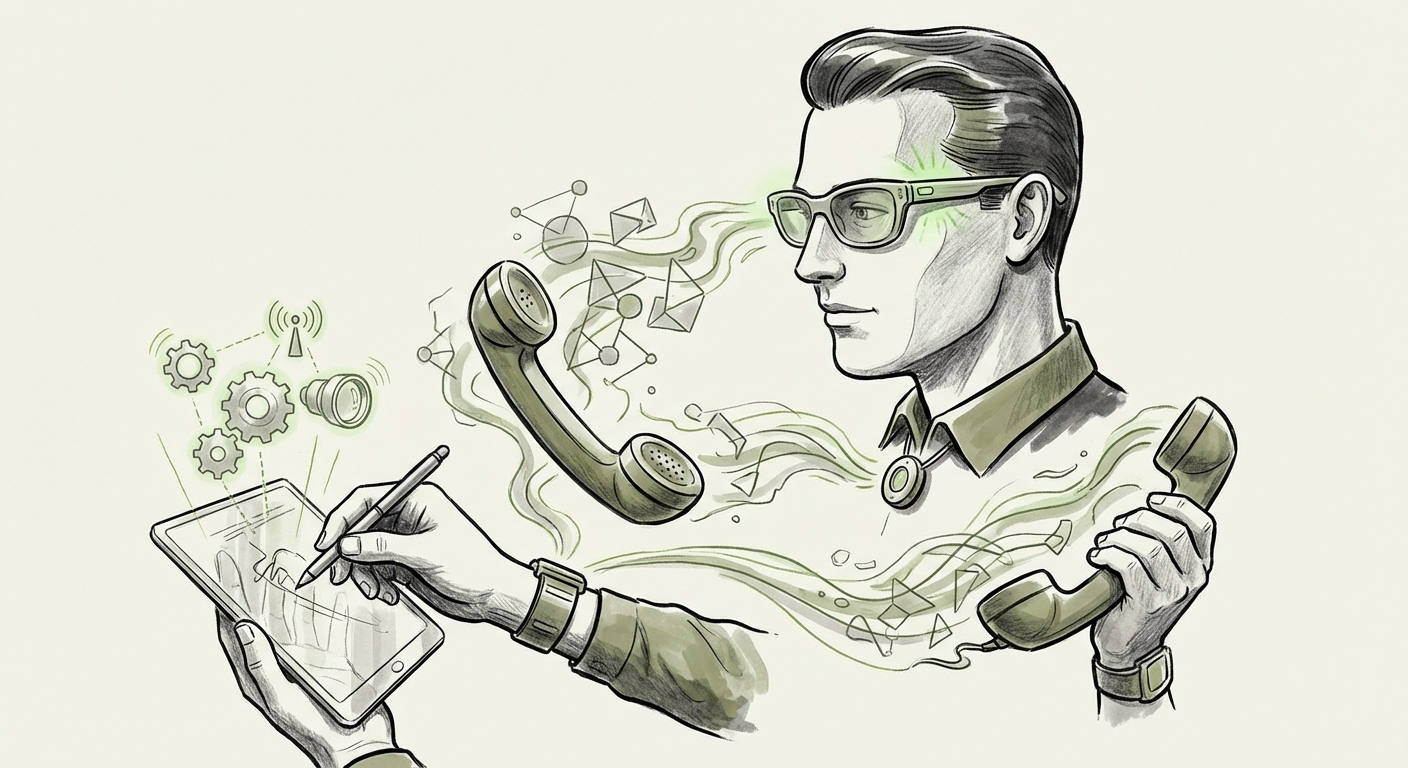
Apple's triad of upcoming wearables—smart glasses, an AI pendant, and camera-equipped AirPods—points squarely toward solving this friction. The goal is to move AI from being a service we *check* to an intelligence that is simply *present*. The 2026 target for smart glasses suggests Apple believes the necessary breakthroughs in form factor, battery, and display technology are achievable within the next three years.
Corroborating the Ecosystem Commitment
This aggressive hardware timeline must be underpinned by an equally robust software commitment. The success of these glasses depends entirely on the capabilities built for the spatial web. Analysts actively track the evolution of **visionOS**—the operating system powering the high-end Vision Pro headset—as the true indicator of Apple's long-term intent. Any serious roadmap discussion around future AR hardware implicitly relies on continuous, significant software updates in 2025 and 2026 designed to shrink the processing load and shrink the hardware footprint.
If visionOS continues to mature, adding superior hand-tracking, context awareness, and perhaps even true multimodal input (understanding voice, gesture, and environment simultaneously), it provides the necessary scaffolding for lighter, more consumer-friendly glasses.
The Competitive Crucible: Why 2026 Matters
Apple excels at perfecting a category rather than inventing it. The 2026 target suggests a desire to hit the market at the precise moment when current competitors have refined the initial rough edges of AR wearables. This is where context from the competition becomes vital.
Meta’s Groundwork and the Path to Maturity
Meta, through its partnership resulting in the **Meta Ray-Ban smart glasses**, is aggressively seeding the market with lower-cost, camera-enabled, AI-adjacent hardware. While these initial iterations are not full AR displays, they are establishing user habits around wearing always-on visual capture devices and integrating AI assistants directly into the workflow. A source analyzing Meta's current AI feature roadmap highlights how they are leveraging on-device machine learning for real-time translations and object recognition.
This competitive push validates the market necessity. By 2026, Apple needs to leapfrog these earlier attempts. If Meta or others establish significant early market share or, more critically, define consumer expectations around privacy vs. utility, Apple’s launch window becomes less about invention and more about flawless execution.
The Core Technological Hurdle: Powering Intelligence at the Edge
The most significant technical challenge for any discreet wearable device that handles complex AI—like interpreting the world in real-time—is power efficiency. Consumers will not tolerate glasses that require charging every few hours or devices that feel hot against their temples.
The Imperative of On-Device AI
To achieve necessary latency (the speed of response) and ensure user privacy, these wearables cannot constantly stream all data to the cloud for processing. This necessitates powerful, highly optimized on-device AI.
For the AI analyst, this means looking closely at advancements in chip architecture. Articles analyzing the trade-offs between Cloud AI (powerful but slow and bandwidth-hungry) and Edge AI (fast, private, but constrained by physical hardware) reveal the roadmap. Apple's success in 2026 hinges on the continuous evolution of its Neural Engine within its custom silicon (the A-series or future variants).
Achieving the necessary performance for real-time language understanding, visual object tracking, and spatial mapping within a slim frame requires breakthroughs in chip density, efficiency, and thermal management. The expectation is that by 2026, Apple Silicon will be capable of running sophisticated, localized Large Language Models (LLMs) that can function autonomously for significant periods.
Beyond the Glasses: The Ambient Ecosystem
The smart glasses are unlikely to launch in isolation. The original reports point to a suite of devices, including an AI pendant and advanced AirPods. This confirms Apple’s vision for ambient computing.
The Quiet Assistant: AI Everywhere
Ambient computing means the technology fades into the background. The AI pendant, for example, might serve as a highly localized, low-power sensor hub or an emergency notification device, providing context when glasses might be cumbersome (e.g., while sleeping or exercising). Meanwhile, AirPods with cameras integrate spatial audio cues with real-time visual data.
This strategy seeks to create a 360-degree sensory net around the user. If the glasses recognize a crucial person approaching, the AirPods can relay discreet audio alerts, while the pendant ensures continuous biometric monitoring. This synergy means that the 2026 product launch is not just about one device, but the maturation of an entire, low-friction AI operating environment.
Analysts tracking Apple’s patent filings and strategic accessory investments often see evidence of this focus. The pursuit of making AI ubiquitous, rather than singular, suggests a business model that relies on capturing attention across multiple subtle touchpoints.
Future Implications: How AI Interaction Will Change
If Apple successfully executes this vision by 2026, the implications for business, society, and digital interaction are profound:
- The Death of the Search Bar: Why type a query when your glasses can visually identify an engine part, read the instructions hovering over it, and whisper the repair steps to you via your AirPods? Interaction becomes immediate and contextual.
- Hyper-Personalized Commerce: Imagine walking past a retail display. Your glasses instantly recognize your style preferences, recall items you previously browsed online, and subtly highlight relevant sales—all processed locally to maintain privacy.
- Transforming Enterprise Training: Field technicians can receive step-by-step AR guidance overlaid directly onto complex machinery, dramatically reducing error rates and training time, provided the on-device AI can handle complex, proprietary manuals.
- Data Integrity and Privacy Redefined: While ambient collection raises privacy flags, the emphasis on on-device processing creates a potential competitive moat. If Apple can guarantee that real-time visual processing stays locked to the local chip, it addresses a major consumer hesitation point that cloud-dependent competitors face.
Actionable Insights for Businesses Navigating the Ambient Wave
For businesses outside the hardware sector, preparing for this shift requires anticipation:
For Content Creators and Marketers:
Content must become truly spatial. Static 2D marketing assets will fail. Businesses need to begin planning 3D, context-aware assets that can be rendered dynamically by future smart glasses. Think about how your brand information will appear when overlaid onto the real world, not just on a screen.
For Software Developers:
Mastering spatial frameworks is non-negotiable. If you are developing customer-facing applications, understanding the principles of spatial anchoring, persistent digital objects in real environments, and low-latency data delivery (for when cloud access *is* needed) will be key to being ready for the 2027 market uptake following the 2026 hardware release.
For Operations and Manufacturing:
Investigate pilot programs for guided assistance using existing AR headsets. The infrastructure and safety protocols you establish now for complex maintenance or assembly tasks will transition smoothly to sleeker 2026-era smart glasses, offering significant ROI through efficiency gains.
Conclusion: The Imminent Dawn of Always-On Intelligence
Apple’s rumored acceleration toward a 2026 smart glasses launch is a powerful signal. It demonstrates that the industry views the next wave of AI adoption not through the lens of software updates alone, but through fundamentally new hardware form factors designed for continuous, context-aware interaction. The challenge ahead is immense—balancing power constraints with computational necessity—but the strategic alignment across visionOS, competitive positioning against Meta, and the essential requirement for powerful on-device AI suggests a coordinated effort.
The shift from smartphone dependency to ambient computing represents the next major cycle of technology investment and disruption. Those who prepare for a world where the digital assistant is always in view, yet never intrusive, will be best positioned to lead the post-smartphone era.