The Copyright Crucible: How Warner Bros. vs. ByteDance Defines the Future of AI Training Data
The landscape of Artificial Intelligence is currently being shaped not just in server rooms and research labs, but squarely within courtrooms. The recent accusation by Warner Bros. that ByteDance—the parent company of TikTok—deliberately trained its new AI video service, Seedance 2.0, on copyrighted characters represents a critical flashpoint. This isn't just a legal skirmish; it’s a proxy war over the fundamental inputs required to build the next generation of generative AI.
As AI technology analysts, we must look beyond the headlines of infringement claims to understand the deeper technological and strategic currents at play. This conflict pits the insatiable data appetite of advanced generative models against the foundational rights of content ownership. What happens next will determine who pays for the creation of tomorrow’s synthetic media.
The Core Tension: Fidelity Versus Fair Use
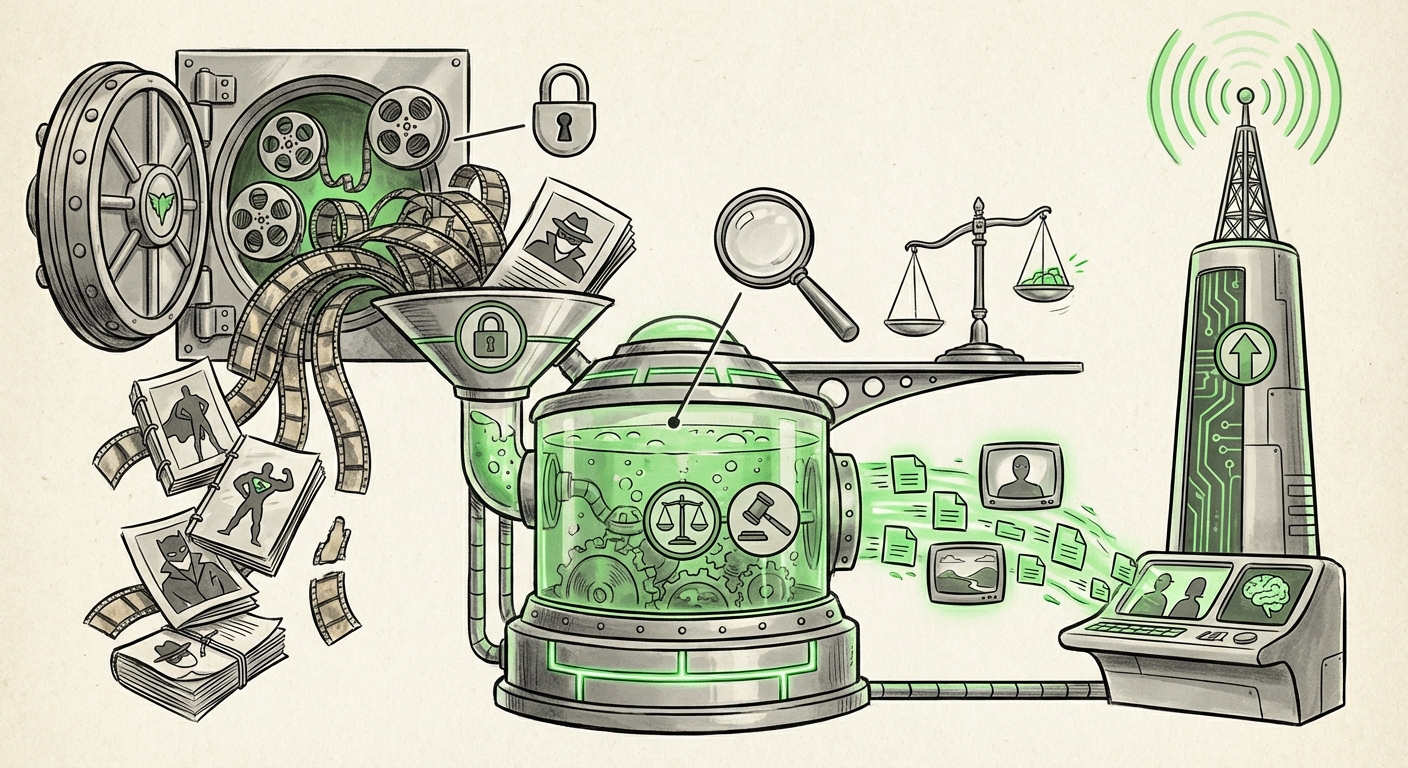
At the heart of the Warner Bros. complaint is the concept of deliberate training. Generative AI models, especially those focused on video synthesis like Seedance, do not magically learn what Batman or Superman looks like. They learn by analyzing billions of data points, including copyrighted images, video frames, and scripts. The better the training data, the higher the model's fidelity—its ability to create realistic and consistent outputs.
If Seedance can convincingly reproduce Warner Bros. characters, it suggests the training data included high-resolution, high-quality examples of that copyrighted material. For the AI developer, this is technological victory; for the studio, it is massive, unauthorized commercial exploitation.
To understand why this is happening now, we look at the technological arms race in generative video:
- The Quality Threshold: Early AI outputs were often distorted or uncanny. The current demand, driven by consumer expectations (partially set by TikTok’s high-velocity content trends), requires near-perfect character consistency. Achieving this requires training on the best possible examples—which are often professionally created and protected works.
- The Data "Sourcing" Dilemma: AI labs require unprecedented scale. While open-source data exists, premium, high-fidelity data (like film libraries) offers a distinct competitive edge. This creates a powerful incentive to skirt licensing agreements if the legal risk is perceived as low or the technological payoff is too great to ignore.
Contextualizing the Battle: The Evolving Legal Battlefield (Query 1 Analysis)
The Warner Bros. filing does not exist in a vacuum. It joins a growing chorus of creators—artists, writers, news organizations, and now major studios—challenging the expansive interpretation of "fair use" that AI developers have relied upon. When researching the broader **"AI training data copyright lawsuits"** landscape, a clear pattern emerges. Creators argue that training a commercial model on their work, even if the model doesn't spit out a direct copy, deprives them of future licensing revenue and replaces the need for their original work.
The key legal question currently before various courts—from the ongoing challenges against Stability AI to claims against large language model providers—is whether the act of ingestion and mathematical processing constitutes a "transformative use" sufficient to overcome copyright protection. If courts ultimately rule that large-scale scraping of proprietary data for commercial training is *not* fair use, the economic models underpinning many current generative AI startups could collapse or require massive, retroactive licensing fees. Warner Bros. is effectively testing the strength of this legal barrier on the highest possible stakes.
The Geopolitical and Strategic Implications (Query 2 Analysis)
The involvement of ByteDance adds a crucial layer of geopolitical and competitive tension. We must analyze their **ByteDance AI video generation strategy** not just as a product launch, but as a move in a global tech race, often summarized as the race against OpenAI and Google.
For ByteDance, mastering generative video tools like Seedance is vital for maintaining dominance in short-form content distribution. If ByteDance can offer creators bespoke, high-quality, copyright-free-to-train tools that allow for rapid creation of professional-grade content, they solidify their position against Western rivals. The speed and aggression with which they push these products internationally often lead to less concern over legacy licensing agreements common in older media industries.
This strategic calculus suggests that for certain global tech players, the short-term gain of rapid model improvement via high-quality, if legally contentious, data acquisition outweighs the risk of lawsuits from legacy media companies. This tension highlights a divergence in operational philosophy: Western studios, deeply invested in protecting established IP rights, are litigious; while rapidly scaling AI competitors see legal challenges as necessary friction in the race toward market leadership.
The Technological Imperative: Why Character Consistency Matters
Why go after *characters* specifically? This moves us into the technological reality of modern generative AI, guided by research into **"Generative video model fidelity"**. Consumers and businesses do not want fleeting, novel images; they want reliable synthetic actors, environments, and products.
To create a reliable synthetic actor, the model must internalize the physical rules, lighting preferences, and nuanced expressions associated with a specific character across thousands of different scenes. This requires deep, character-specific data integration. If Seedance can generate a scene featuring a distinct Warner Bros. character flawlessly—maintaining continuity across movements, costumes, and lighting—it proves the model possesses a sophisticated, proprietary understanding derived directly from the source IP.
For the AI industry, this validates the effectiveness of data-centric AI development. For the content industry, it is the ultimate realization of their fear: that AI can automate the value they spent decades building.
Future Implications: Redefining Content Economics
The outcome of these high-profile legal battles will fundamentally rewire the economics of content creation and AI deployment over the next decade.
1. The Licensing Bottleneck
If courts side firmly with content owners, expect an immediate and massive shift toward mandatory licensing frameworks. Instead of scraping the internet freely, AI developers will be forced to create dedicated, auditable data pools. This creates enormous opportunities for rightsholders—the studios, archives, and artists—to charge substantial fees for model training access. This effectively turns historical content into an indispensable, high-margin asset for the AI age.
2. The Rise of Synthetic IP
Conversely, if AI developers manage to successfully defend broad fair use interpretations, it drastically lowers the cost of entry for new synthetic content studios. Companies can build world-class models cheaply and rapidly. The implication here is that the value shifts from *owning* the training data (the old content) to *controlling* the generative software (the new IP).
3. Transparency and Watermarking
Regardless of the legal outcome, technological solutions will become mandatory. We are already seeing increased calls for "data provenance" tools—digital watermarks or embedded metadata that prove whether a piece of content was AI-generated and, critically, *which model* created it. This transparency is necessary for both legal accountability and consumer trust.
Actionable Insights for Technology Leaders and Creators
What should businesses and creators do in this era of legal uncertainty and rapid technological advance?
For Content Owners (Studios, Publishers, Artists):
- Aggressively Audit and Catalog IP: You cannot protect what you cannot precisely identify. Invest in metadata tagging and digital fingerprinting for all high-value assets. Prepare detailed documentation showing the commercial history and market value of the work allegedly used for training.
- Engage the Legal Front: Support foundational litigation. Setting precedent now is cheaper than fighting millions of individual derivative works later.
- Explore Defensive Licensing: If litigation is too slow, proactively approach leading AI firms to establish pilot licensing programs that define terms now, rather than waiting for them to unilaterally decide the value of your IP.
For AI Developers and Tech Companies:
- Prioritize Data Hygiene: Future-proof your models by building pathways for licensing and compensating data creators. Models trained exclusively on licensed or public domain data will be insulated from the most damaging copyright suits.
- Invest in Synthetic Augmentation: Where possible, use synthetic data (data generated by your own models under strict internal controls) to augment real-world data, reducing reliance on high-risk, copyrighted material.
- Design for Transparency: Implement robust mechanisms to track the lineage of your outputs. In an era where distinguishing human from machine is critical, provenance tracking becomes a feature, not an afterthought.
The struggle between Warner Bros. and ByteDance is more than a fight over a few cartoon characters; it is the negotiation over the raw materials of the AI revolution. The resolution will dictate whether the coming wave of synthetic media is built upon foundations of established ownership or on foundations of unrestrained digital acquisition. The answer will define the market dynamics, legal structures, and ethical boundaries for content creation for the foreseeable future.