The Battle for Residency: Why Claude in PowerPoint Signals the End of Standalone AI Chatbots
The world of generative AI is moving at dizzying speed, but one recent development cuts directly to the heart of its future: the integration of Anthropic’s advanced large language model, Claude, directly into Microsoft PowerPoint for Pro subscribers. This move is far more significant than just adding another feature; it marks a crucial pivot in how businesses will adopt and use AI.
For years, interacting with AI meant opening a separate tab—visiting a dedicated chatbot website. Now, AI is breaking down the digital walls, marching straight into the tools where the actual work happens. As an analyst focused on technology trends, this deep embedding into established productivity suites like Microsoft 365 represents the maturation of AI from a novelty tool into an indispensable utility. We must analyze this event not just in isolation, but within the broader competitive, strategic, and workforce context.
The Great Unbundling: Moving Beyond the Chat Window
The early days of generative AI were defined by the standalone application—the isolated chatbot. Users would take data from a spreadsheet, switch to a browser, ask an AI to analyze it, copy the text, switch back, and paste it into a document. This created significant **context-switching friction**, which kills productivity.
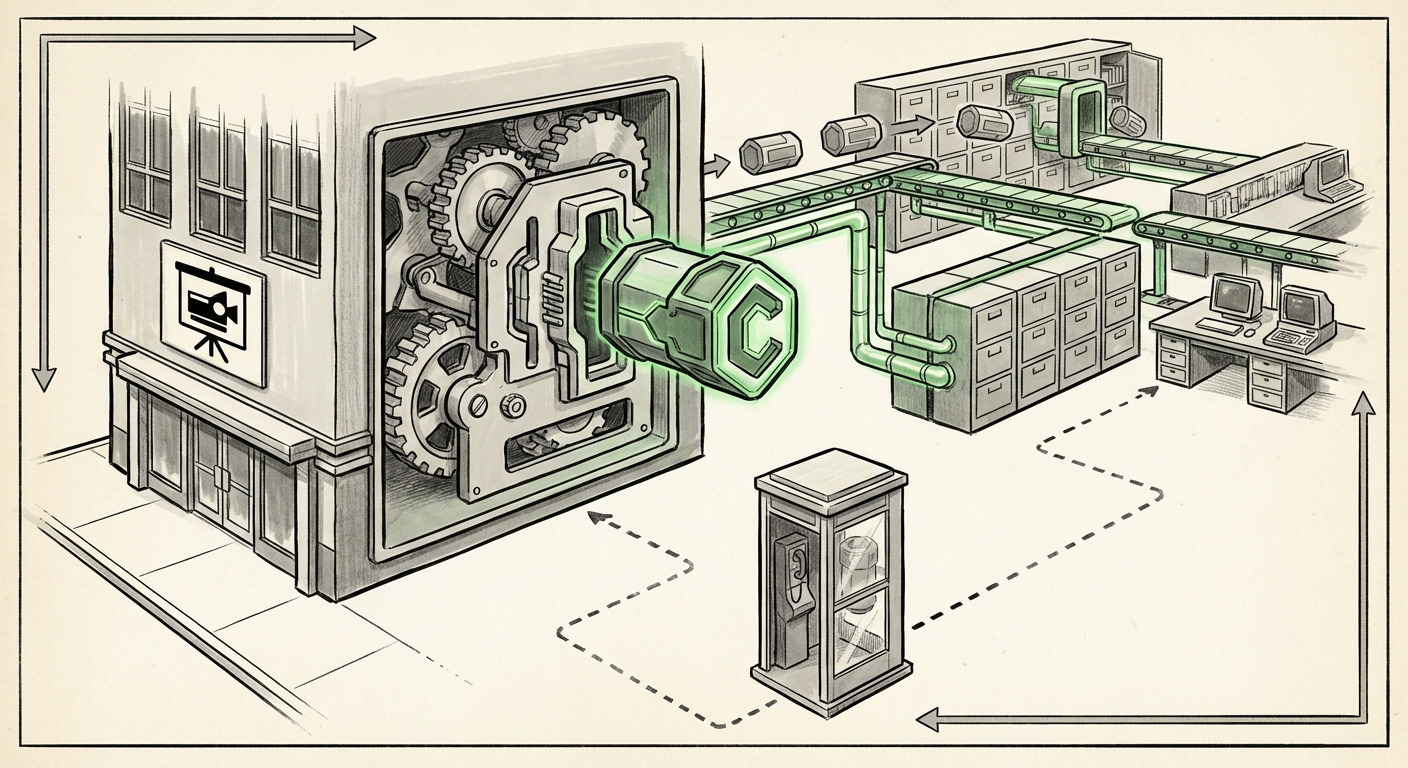
The Claude integration into PowerPoint demonstrates a clear industry consensus: the most valuable AI is the one you don’t have to consciously open.
When a Pro user can command Claude—"Create a five-slide narrative based on last quarter's sales figures, focusing on regions X and Y showing growth"—and watch the slides populate instantly, the AI becomes invisible, yet essential. This is the shift to Actionable AI. It’s not about asking questions; it’s about commanding tasks directly within the environment where the output will live.
Contextualizing the Competition: Native vs. Third-Party Excellence
To truly understand this move, we must look at the existing ecosystem. Microsoft is heavily invested in its own native solution, Copilot for Microsoft 365. If we examine updates surrounding Copilot [reference point 1], we see Microsoft aiming to own the entire AI layer within its suite. So, why allow a direct competitor’s model like Claude to embed itself?
- The Gap Filler Role: This suggests that for some sophisticated users, Microsoft’s default model may not yet meet specific needs regarding reasoning depth, creativity, or compliance/safety profiles. Claude is highly regarded for its large context windows and nuanced instruction following. Pro users are effectively voting with their clicks, demanding the *best* model for the job, even if it bypasses the primary native option.
- Infrastructure Leverage: Anthropic may be leveraging Microsoft’s underlying cloud infrastructure (Azure) to deliver its service, creating a complex, semi-cooperative ecosystem where the application shell belongs to Microsoft, but the intelligence layer can be chosen by the end-user.
This dynamic validates that the AI competition is no longer just about who has the best foundational model, but who can achieve the best AI Residency—the ability to live inside the most frequently used business software.
The Competitive Landgrab in Productivity Software
This isn't happening in a vacuum. If presentation software giants aren't integrating advanced generative tools, they risk becoming obsolete. Research into the broader AI integration into presentation software market share confirms this feature parity is becoming table stakes [reference point 2].
We can anticipate similar rapid feature deployments across the board:
- Google Workspace (Gemini): Will continue to push deeper integrations into Docs, Sheets, and Slides, likely aiming for ecosystem lock-in, where switching suites becomes harder due to embedded utility.
- Niche Players: Specialized presentation tools (like those used strictly for data visualization or design agencies) will rush to incorporate LLMs to stay competitive against the massive feature set of the incumbents.
For tech investors and analysts, the key metric shifts from raw model performance to integration depth and user retention within the productivity suite.
Anthropic’s Strategic Pivot: Partnerships Over Exclusivity
Anthropic, founded with a strong focus on AI safety, has adopted a strategy that seems to prioritize broad, high-value deployment over exclusive platform control. By making Claude accessible within the world’s most dominant office tool, they are accelerating their enterprise adoption curve. Searching into Anthropic strategic partnerships and enterprise deployment reveals a calculated effort to embed their technology where businesses already trust the security environment [reference point 3].
This contrasts sharply with competitors who might insist on users interacting solely through their own branded portals. For Anthropic, being the "power behind the throne" in PowerPoint is a win, establishing Claude as the preferred reasoning engine for high-stakes communication tasks, even within a rival's primary application environment.
Implications for the Future of Work: Shifting Human Value
The most profound impact of this trend relates directly to the knowledge worker. When AI can draft visually compelling, logically sound presentations in minutes, what is left for the human employee to do? Articles analyzing the future of work impact of AI in daily office tasks provide a crucial framework here [reference point 4].
From Compilation to Curation
The traditional office task profile for many—spending hours researching, formatting bullet points, and aligning text boxes—is being rapidly automated. The AI handles the "first 70%" of compilation.
The new value proposition for human employees centers on the remaining 30%—the parts AI struggles with:
- Proprietary Insight: Injecting context that is not public data—internal company secrets, nuanced client relationships, or proprietary market feeling.
- Ethical and Legal Vetting: Ensuring the AI-generated narrative does not inadvertently violate company policy or external regulations.
- Emotional Resonance: Crafting the narrative arc, tone, and visual metaphor that truly persuades a specific audience.
For HR leaders and managers, this means training must pivot away from software proficiency (how to make a slide look good) toward critical thinking and strategic prompt engineering (how to instruct the AI to create the *right* slide).
Actionable Insights for Business Leaders
This environment demands proactive adjustment. Businesses cannot wait for their software vendors to mandate one AI provider.
1. Implement a Multi-Model Strategy: Do not tether your critical communication tasks to a single LLM. Evaluate Claude, GPT-4, and native copilots based on specific needs. Use Claude for complex narrative flow in presentations, perhaps using GPT for quick data manipulation in spreadsheets. Your contracts and licenses must reflect this flexibility.
2. Audit for Prompt Literacy: The best AI tool is useless if employees don't know how to command it effectively. Invest immediately in training focused on advanced prompt engineering for specific output types (e.g., "How to prompt for persuasive slide design" vs. "How to prompt for data analysis").
3. Re-evaluate Time Allocation: If meeting prep time drops by 30%, where is that freed time being reinvested? Mandate that this new efficiency translates into strategic analysis, client engagement, or innovation, rather than simply being absorbed by other low-value tasks.
The Inevitable Future: Seamless Intelligence
The integration of Claude into PowerPoint is not an outlier; it is the definitive signal of the next phase of AI adoption. The technology is leaving the sandbox and entering the core engine room of global commerce. The race is no longer about which model is the biggest or the fastest in a benchmark test; it’s about achieving Ubiquitous, Seamless Utility.
Whichever AI models successfully embed themselves deeply into the tools that form the bedrock of our daily work—be it presentation design, email management, or data analysis—will win the long game of enterprise trust and utilization. This forces a healthy, competitive dynamic, ensuring that businesses gain access to cutting-edge reasoning capabilities exactly when and where they need them.