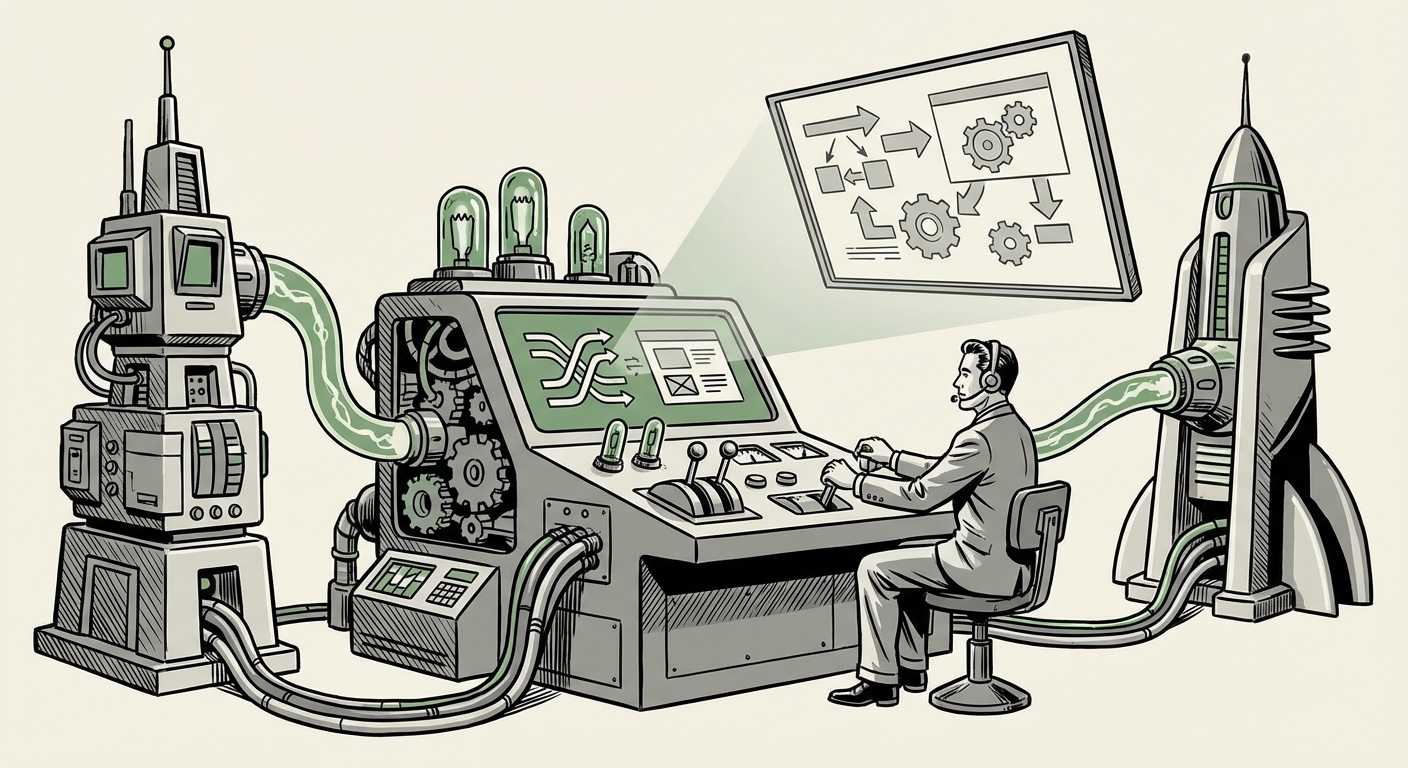
The Productivity War: Why Claude in PowerPoint Signals the End of Standalone AI Chat
The news that Anthropic’s powerful large language model, Claude, is now available directly within Microsoft PowerPoint for Pro users is more than just a feature update; it is a seismic indicator defining the next era of enterprise technology. This move solidifies a critical trend we have been tracking: the permanent embedding of generative AI not just into our desktops, but directly into the core, mission-critical workflows where real work gets done.
For years, the public face of generative AI was the separate chat window—the standalone interface where you asked ChatGPT or Claude a question and copied the result into your document. That era is rapidly drawing to a close. When AI enters the document creation environment itself—like PowerPoint—it stops being a search tool and becomes an active co-pilot in the creative process. This shift fundamentally alters expectations for productivity, speed, and the very nature of content creation.
The Death of the "Two-Step" Workflow
Imagine creating a presentation. Previously, the steps looked like this:
- Step One (External): Open a browser, prompt Claude or GPT, generate bullet points or talking tracks.
- Step Two (Internal): Copy the text, paste it into PowerPoint, manually format it, adjust slide layouts, and add speaker notes.
This two-step process is slow, context-switching is mentally taxing, and it often results in sterile content that lacks the nuance of the final application. Claude’s direct integration bypasses this entirely. It implies that a user can now say, "Create a narrative arc for a 20-minute pitch on Q3 projections, structuring it across 10 slides, and focusing on actionable next steps," all while remaining inside the application.
This depth of integration requires massive technical coordination and signals a clear consensus among major software vendors: The value is no longer in the model itself, but in its seamless application within the user’s primary context.
Corroborating the Integration Trend: The Great Productivity Suite Arms Race
Anthropic’s move is significant precisely because it is entering an already heated battlefield. To truly understand its implication, we must look at what the market leaders are doing. The integration of Claude into PowerPoint exists within the larger context of the AI arms race dominating enterprise productivity software.
1. The Competitive Landscape Check
The true measure of this trend is watching how Microsoft’s native **Microsoft 365 Copilot** (primarily powered by OpenAI models) and Google’s **Workspace Gemini** respond and evolve. Our analysis suggests that the key search query for IT leaders right now revolves around competitive timelines:
Search Query Focus: "Microsoft 365 Copilot" "Google Workspace Gemini" integration timeline
If Microsoft is rolling out GPT-powered features natively in PowerPoint, and Anthropic is simultaneously deploying Claude there, it suggests that access to high-quality, proprietary model capabilities within the suite is becoming a mandatory selling point, not a bonus feature. For Enterprise IT Decision Makers, this forces a decision: Do we standardize on a single LLM provider baked into our suite (like Copilot), or do we embrace a **multi-model strategy** that offers best-of-breed solutions for specific tasks?
2. The Emergence of Multi-Model Enterprises
The collaboration between Anthropic and PowerPoint (often through Microsoft infrastructure, given the deep ties) is a perfect example of the multi-model approach gaining traction. Claude has historically been favored for its strong performance in safety, complex reasoning, and long-context understanding, often making it preferred for sensitive content generation or long-form narrative structuring.
This begs the question of ecosystem strategy, best understood by looking at the foundational partnerships:
Search Query Focus: Anthropic "Claude" "enterprise adoption" "Microsoft partnership"
If Anthropic is securing strategic footholds across different enterprise platforms, it suggests that AI Strategy Leaders are moving away from relying solely on one dominant model. They might use Claude for PowerPoint narrative development while using GPT for complex code generation in Azure, or Gemini for real-time data analysis in Sheets. This heterogeneity maximizes performance but adds complexity for IT governance.
Implications for Content Creation and Creative Roles
When an AI can draft, structure, and refine an entire presentation deck, what is left for the human creator? This is the "Future of Work" question looming over every creative professional.
The shift is from creation to curation and refinement. Tools like Claude in PowerPoint are designed to handle the heavy lifting—the initial draft, the rephrasing of technical jargon into business language, and ensuring visual flow. This is where examining the impact on creative roles is crucial:
Search Query Focus: generative AI in presentation software impact on creative roles
For the Marketing Manager or Sales Executive, this means exponentially higher output potential. They can create three high-quality decks in the time it used to take to polish one. However, for the specialized Presentation Designer, the value proposition must change. Their expertise will pivot toward mastering the AI prompts, enforcing brand guidelines through custom constraints, and adding the crucial layer of human judgment and unique creative flair that models still struggle to replicate authentically.
The technology democratizes basic competence but raises the ceiling for true excellence. If everyone can generate a "good" deck automatically, the differentiation comes from the uniquely *excellent* decks guided by human expertise.
The Commercialization Blueprint: AI Behind the Paywall
A crucial, often overlooked, aspect of this deployment is the requirement for "Pro users." This development reveals the current commercialization strategy for bleeding-edge AI capabilities.
Search Query Focus: LLM feature paywall strategy enterprise SaaS
Software companies have spent decades perfecting feature segmentation—basic, standard, professional, enterprise. Generative AI is the first truly transformative feature that demands a premium tier. Claude integration isn't just bolted on; it’s likely deep within the engine, requiring significant compute and licensing costs. Therefore, locking it behind the "Pro" subscription model is a clear business strategy designed to increase Average Revenue Per User (ARPU) immediately.
For Product Managers: This sets the precedent. If Claude is a Pro feature in PowerPoint, users will expect Gemini to be a Pro feature in Google Docs, and Copilot to remain a premium add-on in the Microsoft ecosystem. The AI feature becomes the primary driver for upgrading subscription tiers.
Actionable Insights for Navigating the Embedded AI Future
What does this mean for your organization or your personal workflow today?
1. Audit Your Context Switching Costs
Identify the three applications where you spend the most time moving data *between* them (e.g., taking notes from a meeting transcript and putting them into a project plan). These are the prime targets for AI integration. Wherever AI is deeply embedded, your productivity gains will be highest. Prioritize software vendors that offer native, in-app AI features over those that only offer browser extensions or standalone chatbots.
2. Define Your Model Taxonomy
Do not assume one LLM is suitable for all tasks. Given the multi-model trend, begin testing Claude against GPT, and Gemini against both for your specific internal use cases. For presentation narrative and tone (PowerPoint), Claude might excel. For spreadsheet formula generation (Excel), a GPT-based tool might be better. A clear internal taxonomy prevents reliance on whichever model is easiest to access.
3. Invest in Prompt Engineering, Not Just Tool Adoption
Simply having access to Claude in PowerPoint is not enough. The output quality is directly proportional to the input quality. Organizations must immediately begin training staff—from junior analysts to senior executives—on writing contextual, constrained, and iterative prompts *within the application*. Prompt engineering is the new literacy requirement for the professional workforce.
4. Re-Evaluate Content Quality Metrics
If AI handles 70% of the initial deck creation, management must adjust what constitutes "good" work. Instead of rewarding speed in producing basic slides, reward strategic thinking, data visualization mastery, and persuasive storytelling that the AI still needs human guidance to perfect. The focus shifts from *quantity* of slides to *impact* of the narrative.
Conclusion: The Interface is the Feature
The integration of Claude into PowerPoint is a microcosm of a massive technological transition. We are moving past the novelty phase of Generative AI. The battleground has shifted from who has the *smartest* model in a vacuum to who can deploy that intelligence most effectively, silently, and reliably, directly within the software employees use every hour of the day.
This move confirms that the future of AI is not about adding another application to the desktop; it’s about dissolving the interface layer between the user and the intelligent engine. The AI that wins the enterprise won't be the one users have to *remember* to open; it will be the one they don't even realize they are using, shaping their documents, emails, and data analysis seamlessly as they work.