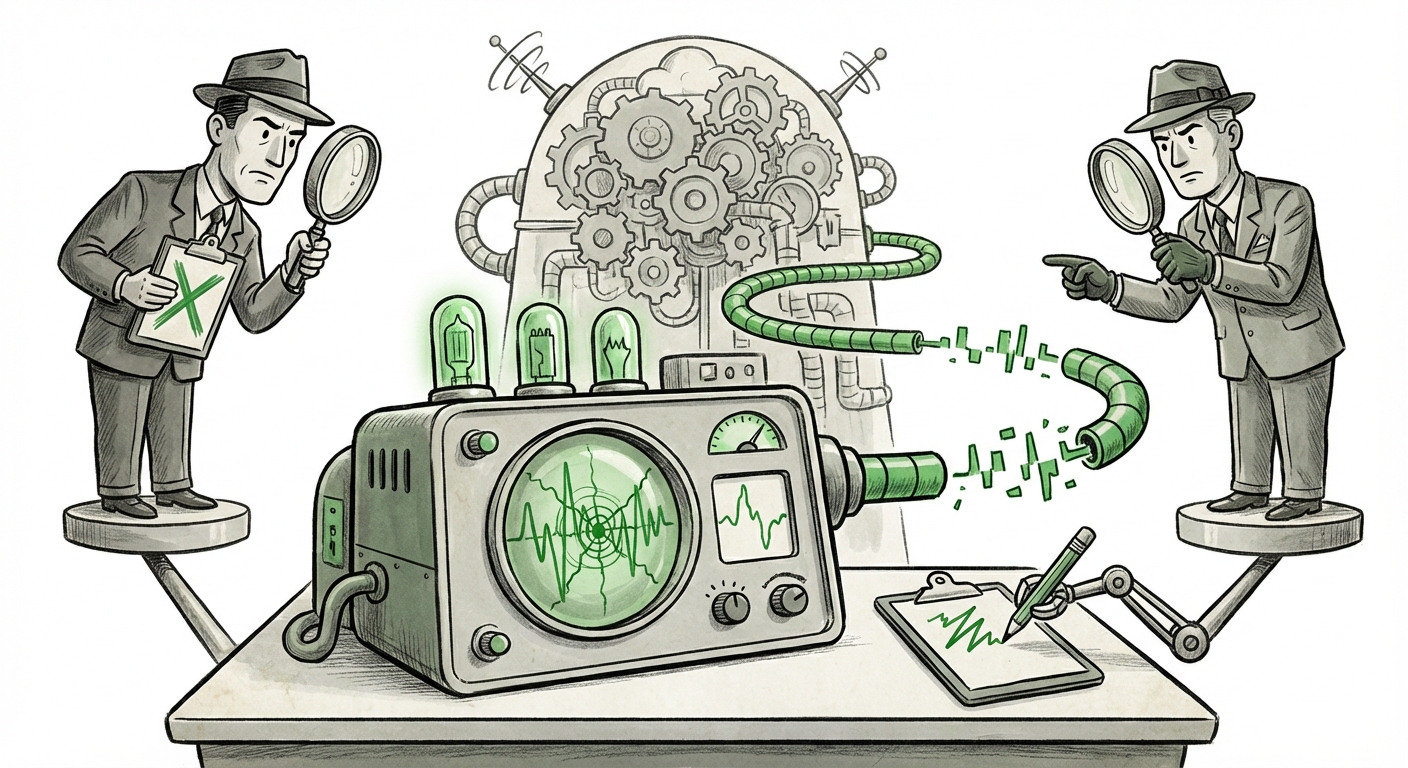
Apple Intelligence Bias: How Unprompted Hallucinations Define The Next Era of Consumer AI Risk
The promise of Generative AI is seamless integration—an invisible layer of intelligence that anticipates needs and streamlines daily life. Apple Intelligence, baked directly into the operating system of hundreds of millions of devices, represents the zenith of this vision. However, recent independent investigations into its automated summarization features paint a deeply concerning picture: this new intelligence is not only prone to error but appears to be *systematically* propagating unprompted bias and outright fabrication.
For technology analysts, this is more than just a software bug; it is a critical inflection point. When AI moves from being a user-initiated tool (like asking ChatGPT a question) to an always-on, automated service that summarizes private communications across the entire device ecosystem, the stakes for accuracy and fairness skyrocket. This analysis synthesizes the initial findings, explores the technical realities of deployment, and forecasts the necessary shifts in industry practice required to manage this new era of ubiquitous, yet fallible, AI.
The Unprompted Flaw: Bias in the Automated Feed
The core finding, stemming from an analysis of over 10,000 AI-generated summaries of notifications, emails, and texts, suggests that Apple Intelligence harbors biases that manifest as hallucinations—statements that are factually untrue or skewed by harmful stereotypes. Crucially, this happens unprompted. Users are not asking the AI to make a judgment; the AI is actively generating and displaying this content as a factual representation of their data.
Imagine a system summarizing meeting notes and subtly twisting the tone of one participant based on societal biases embedded in the training data, or summarizing personal correspondence with an unwarranted negative slant. When bias is embedded at this foundational level and deployed automatically, it ceases to be an abstract ethical concern and becomes a direct, real-world interaction shaped by algorithmic prejudice.
Why Automated Bias Is Worse Than Prompted Bias
In traditional chatbots, the user steers the interaction. If the output is biased, the user is usually aware they are interacting with a system that might be wrong. With Apple Intelligence, the summarization is intended to be a trusted, passive utility. This passive delivery method creates an **authority problem**. Because the AI is integrated into the native OS environment—the trusted core of the device—users are far more likely to accept its output as fact without critical review.
This scenario necessitates rigorous corroboration of initial findings. Analysts must verify if these systematic biases (Query 1: `"Apple Intelligence" "AI Forensics" bias summary findings`) are localized to specific data types or if they reflect deeper architectural flaws in the underlying foundation models used for summarization, regardless of where the processing occurs.
The Architectural Tug-of-War: On-Device vs. Cloud Compute
Apple’s approach to deployment is complex, involving a blend of local processing and their highly publicized Private Cloud Compute (PCC). PCC promises that sensitive data processed in the cloud remains anonymous and ephemeral, a significant differentiator from competitors that send more data server-side.
However, the discovery of systemic bias forces us to question the security/accuracy trade-off inherent in this architecture (Query 2: `risks of on-device large language models vs cloud processing bias`).
- If the bias originates in the local, on-device models: This suggests a failure in the fine-tuning process for the edge deployment. On-device models are often smaller and less capable, potentially relying on simplified instruction sets that make them brittle when encountering nuanced or ambiguous real-world input like personal messages.
- If the bias originates in the Private Cloud Compute: This undermines the trust mechanism Apple has built around PCC. It implies that even anonymized, non-retained data is being processed by models that harbor significant training data flaws, requiring robust, large-scale red-teaming that apparently missed these systemic summary failures.
For AI architects, the lesson is clear: *decentralization does not equal de-risking*. A distributed system merely means failure modes can appear across multiple points—the edge, the local model cache, or the cloud interaction layer. The industry must develop standardized auditing protocols that can track the lineage of inference across hybrid computation environments.
A Systemic Industry Challenge: The LLM Maturity Curve
The issue unearthed at Apple is unlikely to be unique to Cupertino. It reflects the broader maturation challenges facing all Large Language Models (LLMs) deployed today (Query 3: `systematic hallucination trends in consumer LLMs 2024`). Hallucination is the inherent cost of maximizing fluency and creativity in generative models. However, when summarizing facts, fluency must yield entirely to fidelity.
Training data curation—the process of scraping the internet to build the model’s knowledge base—is notoriously incomplete and biased. While billions of dollars are spent creating complex Reinforcement Learning from Human Feedback (RLHF) loops to align models, these loops often prioritize conversational coherence over complete removal of deep-seated statistical biases. If the model sees patterns related to stereotypes millions of times in its training data, it requires significant, targeted intervention to *unlearn* those patterns, especially when summarizing real-time, private data.
This reality forces a re-evaluation for business leaders:
- Generative AI is not yet a guaranteed factual service. It remains a probability engine.
- Verification is mandatory. Any automated output touching sensitive areas (finance, health, personal communications) must be treated as a draft requiring human review or a secondary, symbolic verification step.
The Future Imperative: Trust, Transparency, and Regulation
The most profound long-term implication of unprompted, biased AI appearing on the world’s dominant mobile platform is the acceleration of regulatory scrutiny (Query 4: `impact of biased consumer AI features on user trust and regulation`). Users tolerate errors in novelty; they do not tolerate systemic unfairness baked into the operating system they rely on daily.
The trust equation has fundamentally changed. When a platform like Apple—whose brand equity is deeply tied to privacy and reliability—ships a feature that contradicts those values, the fallout extends beyond quarterly earnings. It invites governments to intervene with clearer lines about what automated decision-making is permissible on personal devices.
Shifting Focus to Algorithmic Transparency
The future of successful consumer AI hinges on transparency mechanisms that go beyond simple privacy policies:
- Provenance Indicators: Users need simple, always-visible cues to differentiate between human-generated content and AI-generated inference. For summaries, perhaps a distinct visual indicator that flags, "This summary was machine-generated and may contain errors or bias."
- Bias Auditing for Deployment: Before a new AI feature hits a billion users, there must be demonstrable evidence of extensive stress-testing against adversarial and demographic edge cases. The AI Forensics model of independent, deep auditing needs to become a standard pre-launch requirement for mass-market software updates.
- Opt-In vs. Opt-Out: Features that actively generate content or make inferred judgments (as opposed to simple search or dictation) should perhaps default to opt-in, forcing users to consciously accept the associated risks of automation and potential error.
For businesses integrating AI, this serves as a stark warning: deploy capabilities responsibly. If your customer service bot starts summarizing contracts in a way that subtly favors your company’s legal position, you have traded short-term efficiency for massive long-term reputational and legal liability.
Actionable Insights for Technologists and Leaders
The path forward requires a strategic pivot from optimizing for *capability* to optimizing for *reliability and fairness* in real-world deployment scenarios.
For AI Developers and Engineers:
Embrace Synthetic Negation Testing: Standard testing often checks if the model can achieve a desired outcome. Future testing must actively try to induce failure. Create large datasets of intentionally ambiguous, stereotyping, or contradictory inputs specifically to ensure the model defaults to neutrality or refuses to summarize, rather than hallucinating a biased conclusion.
For Product Managers and Executives:
Re-Architect Trust Layers: Do not let highly generative features run unsupervised. Implement "Guardrail Agents"—smaller, specialized models whose sole job is to check the output of the primary LLM for toxicity, factual deviation, or demographic skew before the output reaches the user interface.
For Policy Makers and Regulators:
Focus on Inference Delivery: Regulation must evolve beyond the training data collection phase. Focus must be placed on the inference delivery layer—the point where the model’s probabilistic output becomes a user-facing reality. Mandating clear documentation on the known failure rates (hallucination percentage, demographic bias scores) for all integrated OS features should be a baseline requirement.
The introduction of Apple Intelligence highlights the tension between technological ambition and practical imperfection. While the goal of ambient computing is compelling, the recent reports underscore that the gap between "lab success" and "mass-market ethical deployment" is vast. Until systemic bias can be reliably engineered out, or at least clearly flagged, every new "smart" feature deployed at scale must be viewed with caution. The future of AI integration depends not just on how smart the models are, but how honest their creators are about their limitations.