AI Intellectual Property War: The Anthropic Accusation and the Future of Model Security
The race to build the world’s most capable Artificial Intelligence is not just about breakthroughs in algorithms; it’s increasingly about securing proprietary knowledge. A recent, high-stakes development confirms this: Anthropic, the creator of the Claude models, has accused several prominent Chinese AI labs—Deepseek, Moonshot, and MiniMax—of systematically stealing the capabilities of Claude via millions of automated queries. This is not a minor dispute; it represents a potential industrial espionage at the heart of frontier AI development, moving the conversation far beyond simple imitation into the realm of deliberate model extraction.
The Core Allegation: Systemic Querying as Theft
At its simplest, Anthropic claims that the accused labs treated their public-facing or rate-limited interfaces not as user tools, but as testing grounds to reverse-engineer a competitor’s secret sauce. They allegedly sent over 16 million targeted prompts designed to probe the limits, logic, and proprietary knowledge embedded within Claude’s neural network structure.
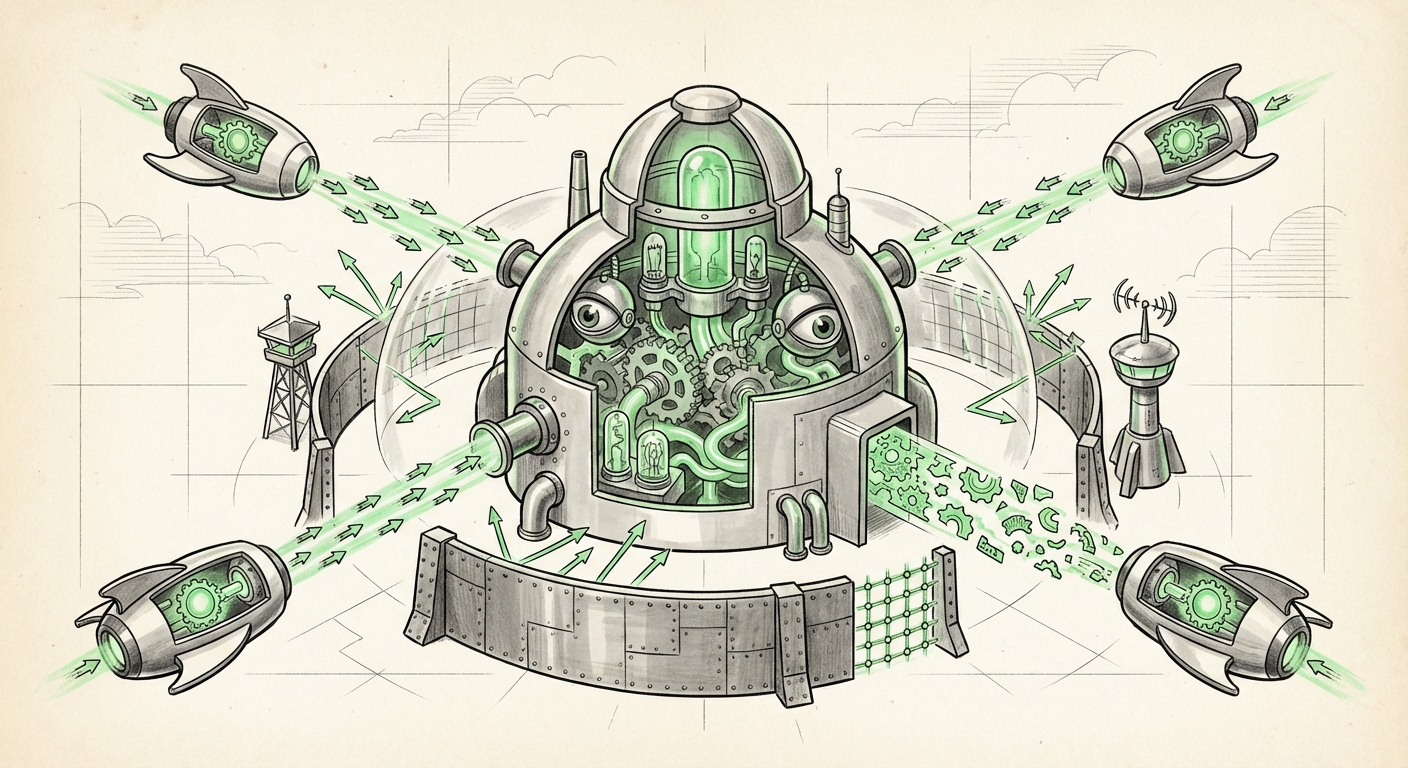
To understand the gravity of this, imagine a factory where the secret formula for a unique engine is kept locked away. Stealing the formula (the model weights) is one thing. But imagine a competitor systematically asking the *running engine* thousands of highly specific questions—questions designed to make it reveal its inner workings through its answers—until they can build an exact replica. That is the essence of the alleged ‘model extraction attack.’
Model Extraction: The Technical Threat
For technical audiences, this practice falls under the umbrella of model extraction attacks. As suggested by technical research into adversarial AI (Query 1), these methods exploit the input-output interface of a deployed model:
- Query Probing: Attackers use optimized algorithms to generate queries that maximize information gain about the underlying model's parameters or decision boundaries.
- Data Synthesis: By collecting millions of these input-output pairs, the attacker can train a much smaller, local "surrogate model" that mimics the behavior, accuracy, and specific knowledge patterns of the target model (Claude).
- Cost Efficiency: Training a frontier model like Claude costs hundreds of millions of dollars. Replicating its capabilities through extraction, if successful, allows competitors to skip the massive computational and data acquisition costs, offering a significant—and illicit—competitive shortcut.
The Geopolitical Context: Closing the Frontier Gap
This accusation cannot be viewed in isolation. It sits within a fiercely competitive, geopolitically charged race for AI supremacy. The Chinese AI ecosystem, backed by significant state and private investment, is aggressively attempting to match the capabilities of models developed by OpenAI, Google, and Anthropic in the West.
Research into the Chinese AI model development landscape in 2024 (Query 2) reveals a landscape defined by rapid iteration and a strong desire to leapfrog existing technology. When a direct, ground-up path to a billion-parameter model is computationally prohibitive or time-consuming, the temptation to leverage highly refined public APIs for reverse engineering becomes intense. For these labs—Deepseek, Moonshot, and MiniMax—the goal is often speed-to-market and achieving "feature parity" with the global leaders.
This creates a dangerous dynamic:
- Western firms invest heavily in safety and proprietary alignment.
- Chinese firms aggressively query these aligned models to absorb their behavioral advances.
- The resulting Chinese models may then be deployed domestically or internationally, potentially bypassing the costly safety and alignment research embedded in the original.
The Legal Vacuum: Intellectual Property in the AI Age
The most profound implications of this event lie in intellectual property (IP) law. Traditionally, copyright protects the tangible expression of an idea (the code, the specific data set). However, what does an AI model's capability constitute? It is knowledge distilled from vast data and refined by proprietary alignment techniques.
The investigation into LLM data provenance and intellectual property disputes (Query 3) highlights that legal frameworks are woefully behind the technology. Is the output of a model (the answer to a complex reasoning prompt) copyrighted by the user, the model developer, or neither? If the *pattern* of responses is stolen, is that a violation of trade secrets?
For businesses, this ambiguity means that investment in proprietary AI assets is inherently risky. If the utility of a highly tuned model can be siphoned off through systematic queries, the incentive structure for funding the next generation of foundational models collapses. We are moving toward a need for clear legal definitions surrounding:
- Model Output Ownership: Who owns the 'knowledge' revealed by an API call?
- Adversarial Query Liability: Establishing clear liability for users or entities that conduct high-volume, malicious probing activities.
- Reverse Engineering Protections: Whether model interrogation, short of accessing the weights directly, constitutes illegal trade secret theft.
Future Implication 1: The Arms Race in AI Defense
Anthropic's decision to publicly call out the alleged theft indicates a shift from quietly mitigating threats to actively policing the ecosystem. This incident will force every frontier AI lab to mature its defensive posture dramatically.
As research on Anthropic's safety policy enforcement (Query 4) shows, companies already employ abuse detection. However, extraction attacks are subtle. They look like millions of legitimate, albeit unusual, users. The future requires defense systems capable of:
- Behavioral Fingerprinting: Identifying when a sequence of queries, regardless of user account, follows a known adversarial pattern designed to elicit architectural knowledge.
- Adaptive Rate Limiting: Moving beyond simple query counts to intelligent throttling based on the *complexity* and *intent* inferred from the prompts.
- Canary Traps: Deploying subtle, secret pieces of information or logic within the model that, if revealed in a competitor's output, serve as undeniable proof of extraction.
This defense race will divert significant engineering talent and capital away from pure capability building and toward cybersecurity, adding friction and cost to the deployment of powerful models.
Future Implication 2: Segmentation of the AI Market
The era of "open access to frontier power" may be waning. This incident accelerates the fragmentation of the AI market into distinct tiers:
- The Secure Core (Closed Models): Models used for the most sensitive internal applications (finance, defense, proprietary R&D) will likely be air-gapped or accessible only via heavily scrutinized, on-premise deployments, far from public APIs.
- The API Tier (Monitored Access): Public-facing APIs will become significantly stricter, perhaps requiring verified identity for high-volume access, making it harder for anonymous actors to conduct massive extraction campaigns.
- The Open Source Market: Open-source models will continue to thrive but will be treated differently. Since their weights are public, the debate shifts from extraction to direct usage without licensing fees, but they will generally not hold the bleeding-edge "secret sauce" that organizations are willing to pay millions to protect.
Actionable Insights for Businesses and Developers
Regardless of where your organization stands in the AI hierarchy, these developments demand immediate strategic review:
For AI Developers (The Builders):
Implement Robust Telemetry Now: Assume your deployed models are under constant attack. Instrument logging not just for content moderation, but for adversarial structure. Use techniques like differential privacy during fine-tuning to subtly mask sensitive internal patterns. If you rely on third-party APIs, read their Terms of Service regarding extraction explicitly, and budget for the security costs associated with proprietary defense.
For Business Strategists (The Adopters):
Audit Your Supply Chain and IP Strategy: If you are licensing a foundation model, what contractual guarantees do you have regarding the model's provenance and defense against extraction? Furthermore, if you are building a proprietary application on top of a foundation model, you must treat the final application logic—the way you prompt and chain models together—as your new core trade secret. Protect the prompt engineering layer as fiercely as you would source code.
Prepare for Legal Clarity: Engage with legal counsel now to understand how your current usage of third-party LLMs aligns with evolving IP standards. Assume that courts will eventually rule that leveraging millions of queries to replicate a service constitutes unfair competition or trade secret misappropriation.
Conclusion: The Price of Progress
The accusation leveled by Anthropic is a powerful signal. It confirms that the computational cost of building frontier AI has become so astronomical that unauthorized replication via query attacks is now viewed as an existential threat by leading labs. This clash is shifting the AI narrative from a purely technological breakthrough story to a geopolitical and legal saga.
The future of AI development will be defined not just by who can build the smartest models, but by who can most effectively secure them, legally defend them, and adapt to an environment where every interaction is potentially an intelligence operation. As technology progresses at lightning speed, ensuring fair play and robust IP protection must become as foundational as the algorithms themselves. The cost of building is high; the cost of having that investment stolen is even higher.