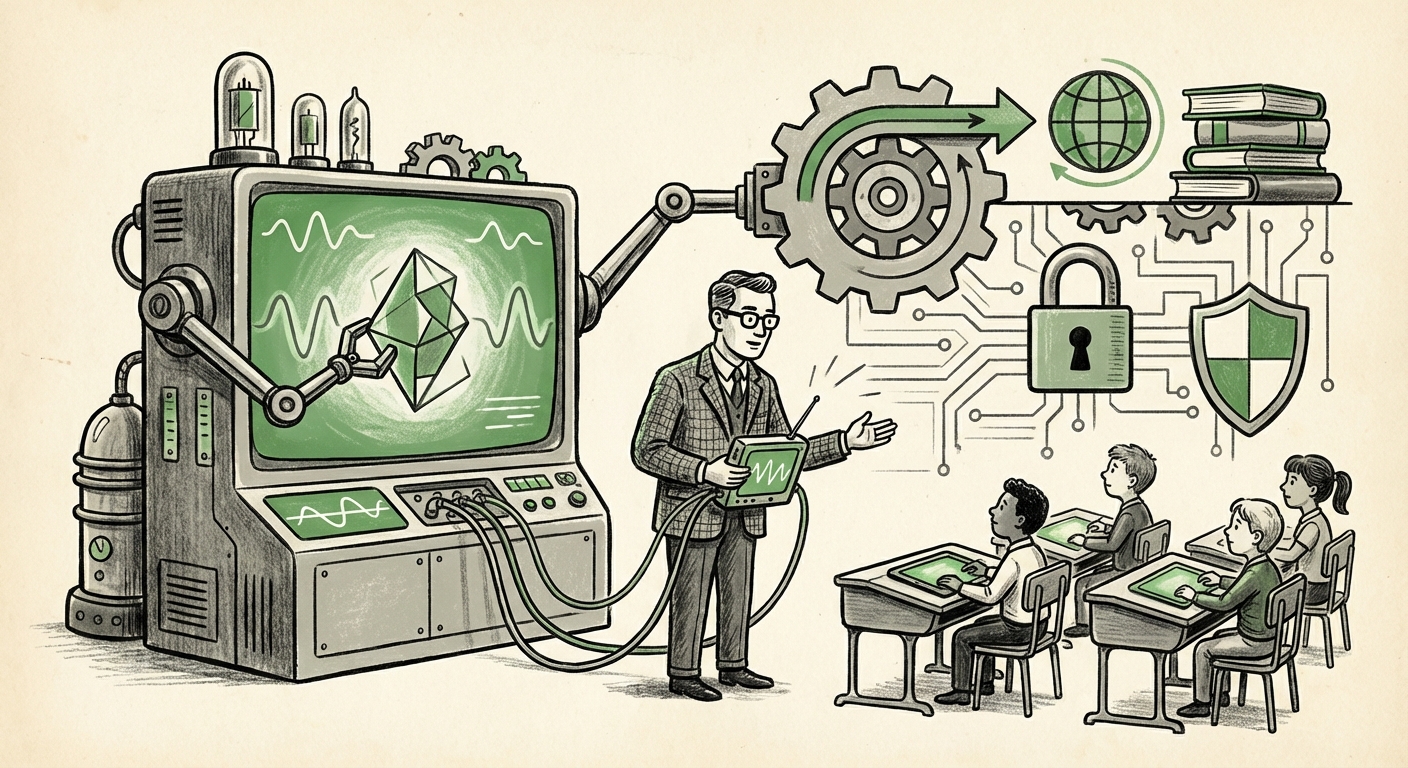
The Great AI Land Grab in Education: Google's Gemini Play and the Future of Classroom Tech
The integration of Artificial Intelligence into daily life is no longer a speculative future; it is a fierce, present-day competition for digital turf. Nowhere is this land grab more strategically vital—and potentially transformative—than in the U.S. education sector. When Google announced its intent to provide free Gemini AI training to all 6 million U.S. educators, it signaled more than just an altruistic move; it declared open season on establishing the default AI operating system for the next generation of learners and administrators.
For the education market, the implications are massive. AI promises to revolutionize everything from personalized tutoring and administrative automation to curriculum development. However, for the tech giants, the goal is simple: secure the user base now, integrate deeply into the workflow, and build an indispensable ecosystem that will pay dividends for decades. Analyzing this move requires looking beyond the surface-level "free training" offer and dissecting the competitive, regulatory, and pedagogical forces at play.
The Battlefield: Ecosystem Lock-in and the Competitive Edge
Google’s deployment of Gemini training is a classic technological strategy: land and expand. By offering widespread, zero-cost education on their flagship model, Google achieves several immediate goals. Firstly, it educates millions of potential users on the *Google* way of interacting with AI, reducing the learning curve for future paid enterprise tools. Secondly, it preempts rivals.
The most significant rival in this arena is, unsurprisingly, Microsoft. As many school districts already rely on Google Workspace (G Suite) or Microsoft 365, the fight is over who owns the teacher’s daily digital environment. If teachers are proficient and comfortable using Gemini for lesson planning, grading assistance, or generating varied content, the inertia to switch to a competitor’s offering—even a powerful one like Microsoft Copilot—becomes substantial. This dynamic is central to the current technological arms race in EdTech. We see this reflected in analyses of the competitive landscape, where vendor strategies prioritize deep integration over simple feature parity.
For educators, this means they will soon be choosing between two powerful, yet philosophically different, AI mentors. The choice isn't just about the tool; it's about which company’s data infrastructure and security protocols their district becomes reliant upon.
Understanding the Business Model of "Free"
When an offering of this magnitude is labeled "free," business analysts must immediately ask: What is the true cost, and what is the eventual revenue stream? In the context of AI deployment, the "free" training is a direct investment in Customer Acquisition Cost (CAC) reduction. The true monetization comes later, often through several stages:
- Premium Features: Basic Gemini access might be free, but advanced features like integration with proprietary district data, specialized security overlays, or high-throughput APIs for custom applications will carry a premium price tag.
- Data Feedback Loop: While student data privacy must be protected (a topic we will address shortly), anonymized and aggregated interaction data helps Google refine Gemini's performance in complex, real-world pedagogical scenarios—making the model better for everyone, including paying enterprise customers.
- Ecosystem Stickiness: Once Gemini is integrated into daily teaching practice, it becomes difficult to remove. This stickiness increases the likelihood that schools will purchase other Google Cloud or Google for Education services down the line.
This strategic investment in user onboarding is a high-stakes gamble that only players with deep pockets and massive installed bases, like Google and Microsoft, can afford to take in the education sector.
The Unmovable Hurdles: Privacy, Policy, and Trust
The road to AI saturation in K-12 education is paved with regulatory compliance. Unlike the consumer market, where terms of service are often skimmed, educational technology is governed by strict federal and state laws designed to protect minors.
The paramount concern is **FERPA (Family Educational Rights and Privacy Act)**. If teachers use Gemini to analyze student essays, create personalized learning paths based on performance metrics, or even draft communications about a student’s progress, the system processes Personally Identifiable Information (PII). For Google’s training to be successful, the messaging around Gemini's compliance framework must be unimpeachable. Schools cannot afford to adopt a tool that risks significant federal penalties or erodes parental trust.
This forces the technology not only to be smart but also to be *securely walled off*. The market is keenly watching how Google implements "zero-retention" policies or secure enterprise sandboxes for educational data. If the training materials gloss over these compliance intricacies, uptake among risk-averse administrators will stall, regardless of the tool's capabilities. The future of AI in schools hinges less on model performance and more on ironclad legal agreements.
The Human Element: Teacher Readiness and Pedagogical Shifts
A technologically advanced tool is inert without a skilled user. This brings us to the critical question of teacher readiness. Surveys of educators often reveal a wide gap: excitement about AI’s potential is often matched by anxiety regarding job security, time commitment for learning new systems, and uncertainty about ethical usage.
Google's decision to focus on widespread training recognizes this adoption bottleneck. However, the *quality* and *focus* of this training will determine its ultimate success. Is it merely showing teachers how to prompt Gemini, or is it fundamentally redesigning pedagogical approaches? Effective integration requires teachers to move beyond using AI as a fancy search engine or simple content generator, and instead utilize it as a co-pilot for differentiated instruction, complex assessment design, and administrative relief.
If the training successfully empowers teachers to save meaningful time—perhaps by automating the creation of five different versions of a quiz tailored to varying comprehension levels—then the adoption rate will surge. If it is perceived as another mandatory training module adding to an already overloaded schedule, the 6 million educators might simply revert to familiar, analog methods. The future success of Gemini in the classroom relies heavily on demonstrating tangible, time-saving benefits that align with current curriculum standards.
What This Means for the Future of AI and Education
Google’s massive training initiative solidifies several undeniable trends shaping the near future of technology adoption:
1. AI as Infrastructure, Not an Application
This move treats Gemini not as a standalone chatbot, but as foundational infrastructure—like electricity or the internet connection—that must be accessible and understood by all stakeholders. Future educational platforms will be built *on top* of large language models, making fluency in these models as essential as knowing how to use a word processor.
2. The Rise of the AI-Fluent Educator
The definition of a "qualified teacher" will subtly shift. It will soon include competency in prompt engineering, understanding model limitations, and applying AI tools responsibly within ethical frameworks. School districts must budget for ongoing professional development, moving beyond one-time training sessions into continuous upskilling.
3. Hyper-Personalization at Scale
When teachers are fluent in using AI, they unlock true personalized learning at scale. Gemini can help generate learning paths that adjust in real-time based on student inputs, something human teachers struggle to manage for 30 individuals simultaneously. The long-term implication is a reduction in the 'one-size-fits-all' curriculum model, leading to potentially better student outcomes across diverse learning needs.
Actionable Insights for Stakeholders
For various players in the ecosystem, Google’s strategic push offers clear imperatives:
For School District IT Directors and Superintendents:
Action: Do not view "free training" as a commitment to the platform. Mandate that training covers security protocols, data segregation methods, and acceptable use policies *before* widespread classroom deployment. Use this initial phase to rigorously test vendor compliance against FERPA and local regulations.
For EdTech Vendors (Non-Hyperscalers):
Action: Focus your differentiation strategy on niche expertise. You cannot compete with Google or Microsoft on foundational model power or scale. Instead, build specialized curriculum layers, assessment validation services, or administrative compliance tools that *integrate* with the major LLMs but add unique, non-replicable value specific to pedagogy.
For Educators and Teacher Unions:
Action: Engage proactively with the training, but demand clarity on workload expectations. If AI integration saves 5 hours per week on administrative tasks, that time must be explicitly repurposed for student interaction, not absorbed into covering new district mandates. Advocate for training that emphasizes critical thinking over mere prompt writing.
Conclusion: Beyond the Hype Cycle
Google’s push to onboard 6 million educators is a high-stakes move to cement Gemini as the default cognitive assistant in American classrooms. It represents the moment AI transitions from an exciting novelty to an assumed utility within our educational infrastructure. While the competitive fight with Microsoft will define market share, the true societal impact will be determined by how effectively schools navigate the privacy minefield and how deeply teachers integrate these powerful tools into genuine pedagogical improvement.
The future of learning is being coded right now, one trained educator at a time. The winners will be those who manage the delicate balance between technological capability, regulatory compliance, and human empowerment.