The Agent Age: Why OpenAI's Consulting Powerhouse Strategy Signals Enterprise AI's True Takeoff
The world of Artificial Intelligence has rapidly moved beyond impressive demos and novel chatbots. We are now standing at a crucial inflection point: the moment AI becomes an embedded, autonomous operational partner within the world's largest organizations. The recent announcement that OpenAI is teaming up with the "Big Four" level of consulting—McKinsey, BCG, Accenture, and Capgemini—to roll out its new Frontier agent platform is not just a business deal; it is the clearest signal yet that the era of experimental Generative AI is over, and the age of high-stakes, integrated AI Agents has begun.
For technology analysts, this move is profoundly significant. It solves the single biggest bottleneck preventing cutting-edge AI from transforming the global economy: implementation and trust. Let’s break down what this partnership means, what these "agents" are capable of, and why this specific combination of technology vendor and service integrators is set to redefine the future of work.
The Leap from LLM to Autonomous Agent
To understand the significance of the "Frontier agent platform," we must first distinguish it from the tools many consumers currently use. Most interactions with large language models (LLMs) today are transactional: you give a prompt, you get a response. This is powerful, but limited.
An AI Agent, however, is designed for complex, multi-step goals. Think of it less like a search engine and more like a sophisticated, digital project manager. As evidenced by industry discussions around "agentic workflows" vs traditional LLM applications, these systems possess:
- Planning: Breaking a large objective (e.g., "Analyze Q3 sales across all European markets and generate a risk mitigation strategy") into sequential sub-tasks.
- Tool Use: The ability to call external software (databases, coding environments, email clients) to execute parts of the plan.
- Self-Correction: Checking its work, identifying errors, and adapting its plan without constant human intervention.
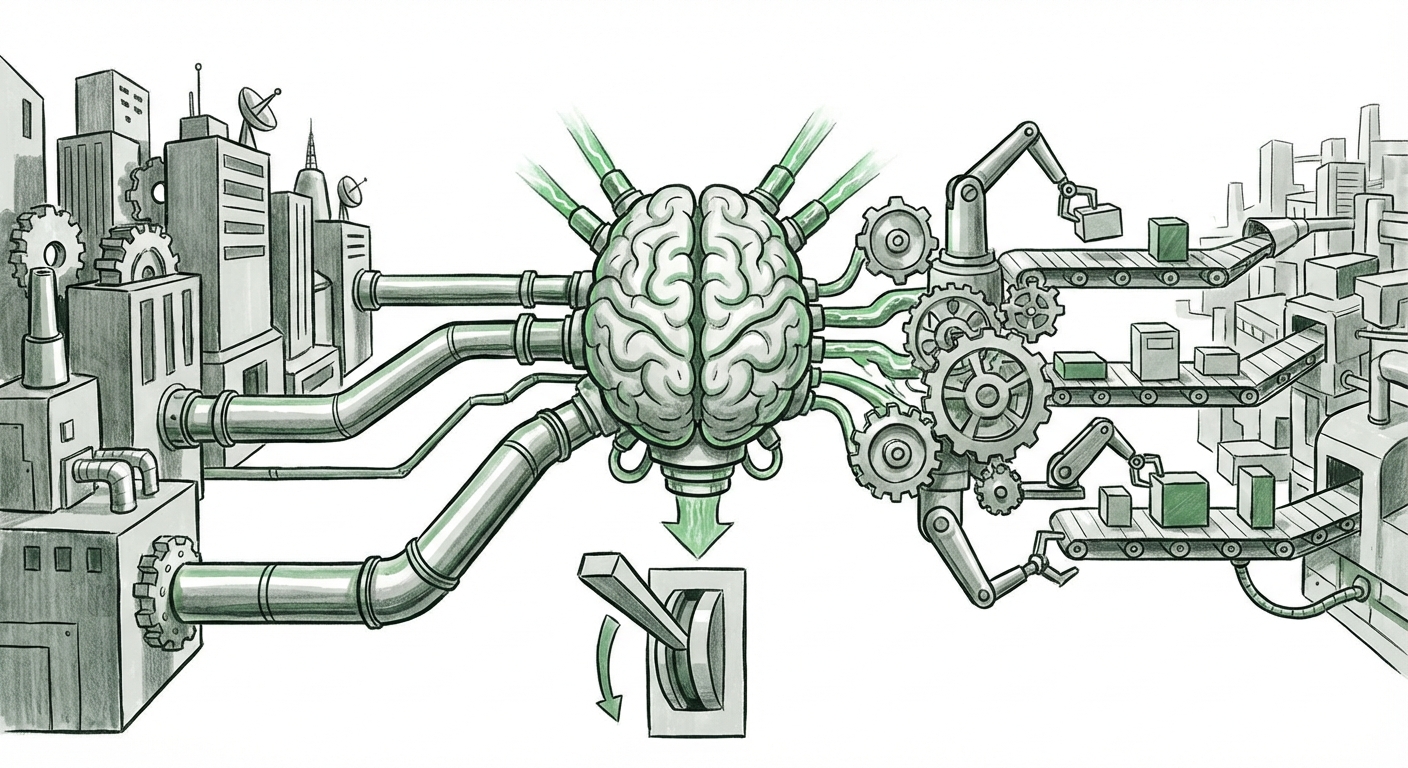
OpenAI’s Frontier platform is positioned to be the operating system for these agents. By enabling agents to securely interact with proprietary enterprise data and systems, the potential moves from simple document summarization to fully automating entire business processes.
The Critical Role of the Consulting Powerhouses
The technology itself, no matter how advanced, is only half the equation. The real hurdle for enterprise technology adoption is not usually whether the tech *can* work, but whether it can work *within* a specific, often decades-old, organizational structure. This is where McKinsey, BCG, Accenture, and Capgemini become indispensable.
When searching analyst roadmaps for "enterprise AI agents" adoption roadmap Gartner Forrester, the consensus is clear: success hinges on governance, security, and process redesign. The consulting firms bring exactly this expertise:
1. Bridging the Trust Gap
Large corporations cannot afford a security breach or a major compliance failure caused by an experimental AI. The consulting firms act as a trusted intermediary. Their presence implies that the Frontier platform has passed rigorous vetting for data handling, privacy, and regulatory compliance—a necessary stamp of approval for any CIO contemplating deploying agents over core business functions.
2. Operationalizing the Impossible
As numerous reports on Accenture, McKinsey, BCG "AI implementation strategy" current focus show, these firms are experts at transforming business processes. They don't just install software; they redesign the entire workflow around it. For the Frontier platform, this means mapping out exactly which middle-management tasks, supply chain coordination efforts, or financial analysis routines can be safely handed over to autonomous agents.
3. Industry Specialization at Scale
McKinsey understands healthcare billing compliance; BCG understands intricate investment banking regulations. By embedding themselves with OpenAI, they ensure the generic power of the LLM is tailored precisely to the niche, high-value problems within specific verticals. This partnership accelerates the transition from a general-purpose tool to a specialized, industry-specific workforce multiplier.
Corroborating the Trend: The Agent Mandate
This move by OpenAI aligns perfectly with broader industry observations. If we look at what competitors are doing, or what technical thought leaders are emphasizing, the message is unified: autonomy is next.
The query tracking Google, Anthropic "enterprise agent strategy" reaction to OpenAI partnerships reveals a competitive race. Every major AI provider understands that the next billion-dollar software category will be agent-based services, not just superior chat interfaces. This competition is driving rapid feature parity in agent capabilities, but OpenAI’s move leverages the consulting infrastructure that its competitors may lack in immediate deployment capacity.
Furthermore, Gartner and Forrester reports repeatedly categorize agent technology as moving from the "Innovation Trigger" phase into the "Slope of Enlightenment"—meaning it’s ready for production if the organization can manage the complexity. OpenAI has effectively outsourced the complexity management to the world’s best implementation experts.
Future Implications: What This Means for Business and Society
The deployment of highly capable, consultant-vetted AI agents at scale carries profound implications, touching everything from job roles to strategic advantage.
For Businesses: Hyper-Efficiency and the Consolidation of Services
The immediate payoff for enterprises adopting the Frontier platform will be unprecedented efficiency gains. We are looking at the automation of tasks that require context-switching, data retrieval, and multi-system interaction—the very definition of knowledge work complexity. This won't just mean cost savings; it means the ability to perform tasks previously deemed too resource-intensive, such as real-time dynamic pricing optimization across millions of SKUs or instantaneous regulatory compliance checks across global operations.
This synergy also leads to a consolidation of the AI stack. If the best foundational model (OpenAI) is paired with the best implementation expertise (Consulting Firms), other smaller, niche AI startups may find it increasingly difficult to compete on the enterprise adoption front.
For the Workforce: Redefining Human Value
The most significant societal implication is the direct impact on knowledge workers. If agents can reliably execute complex, multi-step projects, the roles that focus purely on aggregation, reporting, and coordination will transform dramatically. This is not about replacing humans entirely, but about elevating the required skill set.
Future roles will focus on:
- Agent Oversight and Auditing: Ensuring agents adhere to ethical guidelines and business logic.
- Defining High-Level Strategy: Setting the goals and parameters that the agents execute.
- Interpreting Novel Exceptions: Handling scenarios the agent has never encountered before, requiring human creativity and intuition.
The technical shift toward "agentic workflows" means that job descriptions will move from detailing *how* to perform tasks to detailing *what* strategic outcome the team must achieve.
Actionable Insights for Leaders Today
For CIOs, CDOs, and business strategists evaluating this landscape, the time for passive observation is over. The partnership between OpenAI and the consultants is a clear call to action:
- Audit for Agent Readiness: Identify internal processes that are highly repetitive, data-intensive, and rely on sequential decision-making. These are the prime candidates for your first Frontier agent deployment.
- Engage Implementation Partners Early: Do not wait for a fully mature, off-the-shelf solution. Start discussions with your existing consulting partners (McKinsey, Accenture, etc.) now about building tailored governance frameworks around your planned agent strategy. Their expertise is the essential security layer.
- Invest in "Prompt Engineering 2.0": The new core skill is not just writing good prompts, but designing robust agent architectures—defining the tools the agent can use and the constraints under which it must operate.
- Prioritize Data Integrity: Agents are only as good as the data they access. Investing in cleaning, structuring, and securing internal data repositories is now the most critical prerequisite for agent success.
Conclusion: The Enterprise is Mobilizing
The convergence of OpenAI’s frontier models with the implementation muscle of the world’s leading consulting firms signals a dramatic acceleration in enterprise AI adoption. The "Frontier agent platform" represents the industrialization of intelligence. It moves AI from the periphery of IT experimentation into the core engine of corporate operations.
We are witnessing the commercialization of true digital autonomy. For organizations that move swiftly to understand, govern, and deploy these agentic systems via trusted implementation partners, the competitive advantages will be immense. For those that hesitate, the gap between the AI-enabled enterprise and the rest will widen into a chasm.