The AI Marketplace Revolution: Why Anthropic’s New Storefront Signals a Shift to Composable Enterprise AI
The race to dominate the Artificial Intelligence landscape is no longer just about building the smartest foundational model; it is increasingly about controlling the path to enterprise adoption. In a recent significant move, Anthropic announced the launch of its **Anthropic Marketplace**, a storefront allowing corporate customers to purchase third-party software built using Anthropic’s powerful Claude models, utilizing their existing AI budgets.
This development is more than just a convenience feature. It represents a critical inflection point, signaling a powerful shift away from monolithic AI consumption toward a **composable, application-centric ecosystem**. For Chief Technology Officers (CTOs), software developers, and financial analysts alike, understanding this marketplace strategy is essential to navigating the next phase of Generative AI maturity.
The End of Monolithic AI: Welcome to the Composable Stack
For the first couple of years of the GenAI boom, the dominant paradigm was simple: pick the best model (OpenAI’s GPT or Anthropic’s Claude), connect to it via an API key or a direct subscription, and build applications around it. This was the "monolithic" approach—the foundational model provider acted as the single gateway for all AI services.
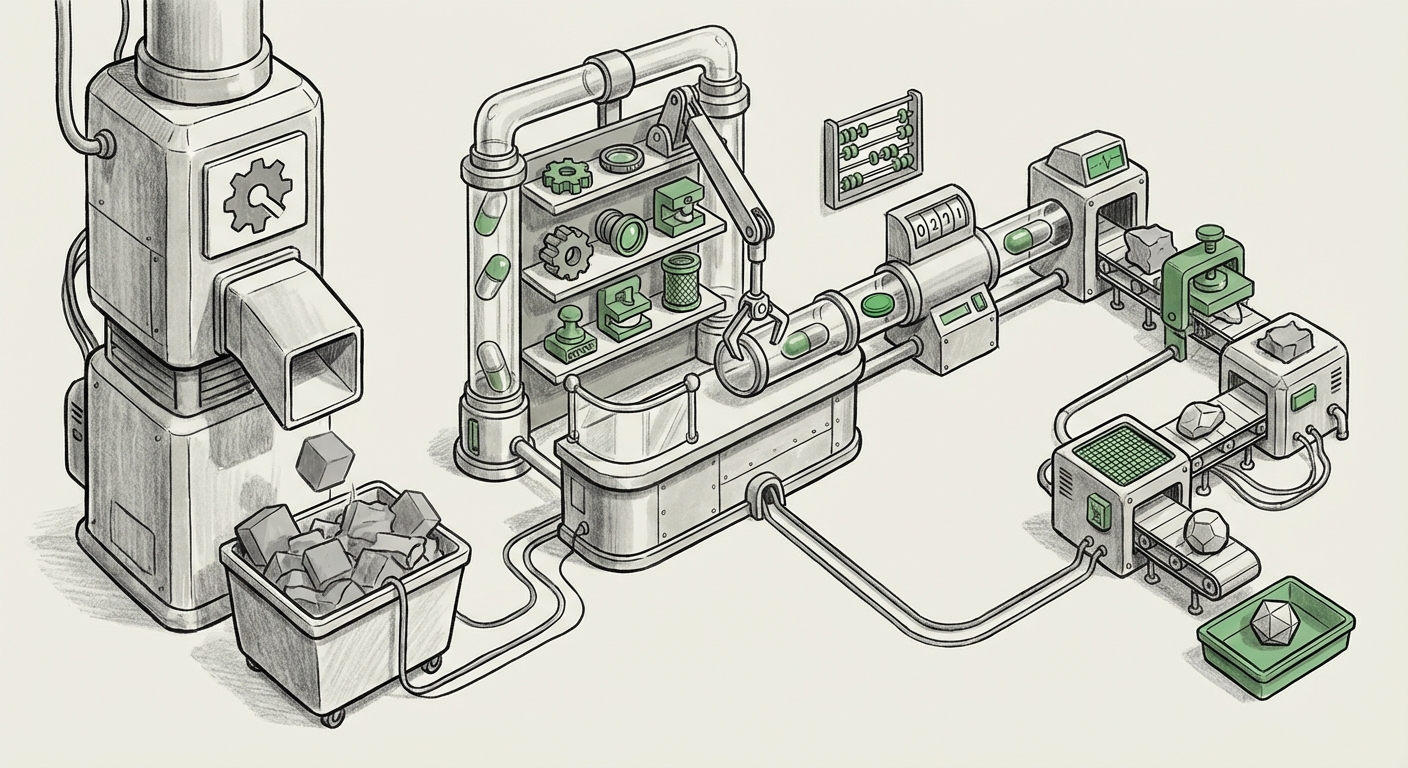
Anthropic’s marketplace directly challenges this structure. By creating a storefront for third-party tools, they are effectively endorsing and empowering the **Composable AI** thesis. Think of it like the Apple App Store or the Microsoft Store, but for AI capabilities.
What is Composable AI? (A Simple Explanation)
Imagine you need to build a complex business process, like auditing employee expense reports. You don't need one giant AI brain to do everything. You need:
- An AI tool specialized in reading PDFs (built on Claude).
- An AI tool specialized in cross-referencing corporate policy databases.
- An AI tool specialized in flagging anomalous spending patterns.
In a composable world, you pick the best specialized tool for each job, even if they were built by different companies, as long as they all run efficiently on a common foundation—in this case, Claude. Anthropic is making it easy for enterprises to find, vet, and purchase these specialized services directly through them.
The Procurement Pivot: How Marketplaces Change the Enterprise Ledger
Perhaps the most significant business implication lies in **enterprise procurement and budget management**. Large organizations often allocate specific budgets for AI or cloud services. If IT needs to buy 15 different specialized AI SaaS tools, it historically involved 15 separate vendor negotiations, 15 new contracts, and 15 separate line items that might not fit neatly into existing vendor agreements.
Anthropic’s marketplace streamlines this. Customers can spend their existing, established AI budget allocated to Anthropic on these vetted, third-party solutions. This solves a massive headache for procurement managers and IT governance teams:
- Simplified Billing: One bill, tied to an existing strategic vendor relationship.
- Vetting Assurance: The inclusion of tools implies a level of technical validation by Anthropic, reducing vendor risk for the enterprise user.
- Budget Flexibility: It allows enterprises to shift budget dynamically between using the core Claude model directly and consuming specialized, Claude-powered applications.
As financial analysts examine enterprise AI spend, this move validates the reality that dollars are already flowing rapidly toward niche, third-party applications. Anthropic is merely formalizing this behavior, ensuring the spending remains within its sphere of influence.
Competitive Strategy: Challenging the Hyperscalers
The launch of the marketplace immediately puts Anthropic into direct strategic competition with the cloud giants—Microsoft (Azure), Amazon (AWS), and Google (GCP). These hyperscalers have long acted as the primary "AI operating system," hosting models and offering their own marketplaces for applications running on their infrastructure.
This brings us to the first critical area of analysis: "OpenAI vs Microsoft Azure AI marketplace strategy." Microsoft heavily integrates OpenAI (and now others) through Azure, effectively directing customers toward solutions that leverage the Azure ecosystem. Anthropic’s move suggests they want to compete not just on model quality (Claude vs. GPT), but on platform strategy.
By hosting a marketplace, Anthropic seeks to control the relationship, acting as a platform layer that sits between the end-user application and the underlying cloud infrastructure. This potentially weakens the lock-in that Microsoft or AWS might enforce when customers primarily access AI through their cloud consoles. For an enterprise CTO prioritizing model diversity, Anthropic offers a clearer path to consume best-of-breed services without being forced into a single cloud vendor’s AI suite.
Implications for the AI Startup Ecosystem (Query 2 Focus)
What does this mean for the burgeoning ecosystem of AI startups? The future viability of many niche **SaaS vendors** hinges on distribution and procurement efficiency. The trend of "AI marketplaces on AI marketplaces" raises questions about consolidation versus decentralization.
If a startup builds a fantastic legal AI tool powered by Claude, having it featured in the Anthropic Marketplace gives them instant credibility and a direct line to high-value enterprise customers already using Claude. This lowers the customer acquisition cost significantly.
However, the risk is that this creates a new layer of dependency. Will startups focus solely on building tools for the Anthropic ecosystem, potentially stifling innovation that might be better suited for models from Google or Meta? Or will the marketplace become a primary distribution channel that allows specialized tools to thrive independently of the massive cloud providers?
This mirrors earlier platform wars: success often depends on which platform offers the best tooling, the most generous revenue split, and the most accessible customer base. The maturation of these marketplaces suggests we are moving past the "wild west" phase into a structured ecosystem where distribution channels matter as much as raw performance metrics.
Future Implications: Standardization, Governance, and Actionable AI
This shift toward formal, controlled marketplaces points toward several long-term implications for how AI will be integrated into core business functions:
1. Enhanced AI Governance and Trust
For enterprises, the biggest barrier to rapid AI adoption is governance—ensuring data privacy, compliance, and security. If a tool is listed on the Anthropic Marketplace, it carries an implicit level of trust regarding its integration methods and data handling, especially concerning the use of the Claude model. This standardization around a recognized vendor simplifies internal compliance checks significantly.
2. Accelerating Specialized Agent Deployment
The move confirms that the future of enterprise AI is not one giant chatbot but thousands of specialized, interconnected AI agents. This marketplace facilitates the creation of **"AI Tool Chains."** We will see more sophisticated applications where an AI orchestrator selects a specific third-party tool from the marketplace, feeds it proprietary data, receives a specialized output, and passes that back to the core LLM for final summarization or action.
3. The Budget Allocation Reality (Query 3)
Data on "Enterprise budget allocation for third-party GenAI tools 2024" likely shows that a significant portion of allocated capital is being spent outside the traditional hyperscaler envelopes—buying from specialized startups. Anthropic is effectively capitalizing on this existing behavior. By offering a marketplace, they move their revenue share from just API calls to capturing a percentage of the entire third-party application spend that relies on their model.
Actionable Insights for Technology Leaders
For businesses looking to optimize their AI strategy, Anthropic’s marketplace opens up new avenues for deployment and procurement:
- Audit Existing Spend: Review where your current AI budget is going. If you are purchasing specialized SaaS tools that rely on leading LLMs, investigate if those tools are now available (or soon will be) through Anthropic’s Marketplace. Consolidating billing can streamline finance and IT operations.
- Prioritize Platform Agnosticism (Cautiously): While Anthropic promotes its ecosystem, use this as leverage. When negotiating with AWS or Azure, point to the Anthropic Marketplace as evidence that you require flexibility to procure the best-in-class application layer, regardless of the underlying model host.
- Invest in Orchestration Skills: The composable future requires internal teams skilled not just in prompt engineering, but in API integration and service orchestration—understanding how to glue together specialized tools effectively.
Conclusion: The Platform War Heats Up
Anthropic’s launch of its enterprise marketplace is a powerful statement about the direction of the AI industry. It signals the death knell of the purely monolithic service model and heralds the era of **composable, vendor-rich AI ecosystems**. By creating a trusted procurement layer, Anthropic is not just selling access to Claude; it is attempting to become the essential hub through which enterprises discover, govern, and fund the specialized AI applications that will define productivity gains in the coming years.
The competition is shifting from who has the largest model to who can build the most efficient, trusted, and easily managed distribution platform for that model’s downstream applications. As enterprises look to deploy AI at scale, marketplaces like this will transition from novelties to absolute necessities for efficient, governed consumption.