The Great AI Bribe: Why OpenAI is Gifting Tools to Open Source Maintainers
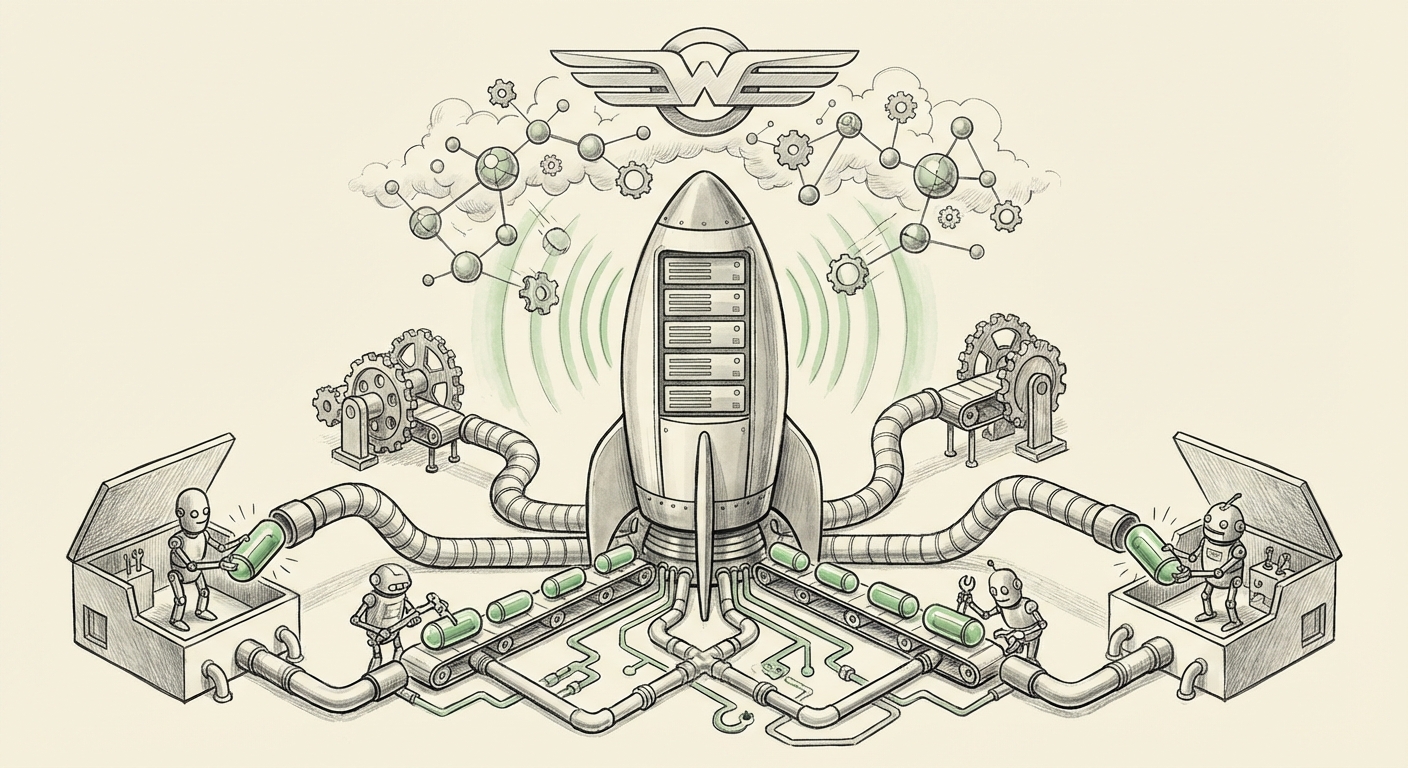
In the high-stakes chess match defining the future of Artificial Intelligence, every move matters. Recently, OpenAI, the reigning champion of proprietary Large Language Models (LLMs), made a surprising tactical shift: offering six months of free access to its premium tools—ChatGPT Pro and the specialized code generation model, Codex—to key open-source maintainers. This action, seemingly an act of community goodwill, is far more complex. It is a calculated move within the fierce battleground where closed, controlled ecosystems collide with the collaborative spirit of open source.
The Core Tension: Proprietary Power vs. Open Collaboration
OpenAI’s journey has been one of constant evolution, moving from an early non-profit mandate focused on broad distribution to becoming the commercial powerhouse behind ChatGPT and GPT-4. Their current business model relies heavily on API access—selling compute power and superior performance to businesses.
When an organization built on selling access begins giving away its most powerful tools, the community naturally asks: Why?
This initiative targeting open-source maintainers—the unpaid, yet incredibly influential architects of the software that powers the modern internet—is a direct response to pressures detailed in our analysis of OpenAI's strategy on open source vs closed models. Maintainers are the gatekeepers. If they adopt a tool, they influence thousands of downstream users. By giving them free access, OpenAI isn't just gaining users; they are gaining **advocates and integrators** within critical infrastructure.
Analyzing the Offer: What Developers Actually Get
The package isn't just about chatting; it bundles critical developer utilities:
- ChatGPT Pro Access: Access to the latest, most capable models (likely GPT-4), which offers superior reasoning and context windows for complex project management and documentation tasks.
- Codex Access: The specialized model for code generation. This is fascinating, as deep dives into tool adoption suggest newer GPT iterations often handle code well. Offering Codex specifically signals a desire to ensure key OSS codebases are optimized or vetted using OpenAI’s specialized, perhaps older, but battle-tested coding logic.
- Security Tools: Inclusion of security utilities suggests an ambition to become the default security layer for open projects—a crucial, sticky integration point.
The Competitive Crucible: Llama and the Open Revolution
The single biggest driver forcing OpenAI’s hand is the seismic shift caused by high-performing, openly available models, chiefly Meta’s Llama series. The concept of "open AI" has gained incredible momentum, exemplified by the ongoing analysis regarding the impact of Llama 3 release on closed AI API usage.
When developers can download, fine-tune, and run state-of-the-art models locally or on private infrastructure—without paying per token to a centralized vendor—the value proposition of proprietary APIs erodes rapidly, especially for non-mission-critical tasks or for projects concerned with data privacy.
OpenAI's move can be interpreted as a "land grab" for developer mindshare before the open-source ecosystem fully migrates to Llama or other leading open foundations (like those from Mistral AI).
The Curious Case of Codex: Value Perception in Code Generation
Why include Codex when GPT-4 is the current flagship? This hints at two potential strategies:
- Legacy Integration & Ecosystem Lock-in: Many large, older open-source projects rely on established patterns. Codex might be uniquely suited or required for integrating specific legacy features or older dependency checks that the newer, more generalized models don't prioritize as heavily. By giving away Codex access, OpenAI ensures these projects stay tethered to the OpenAI API structure, making future migration to a competitor harder.
- Benchmarking and Data Gathering: By having influential maintainers test these tools across diverse, real-world codebases, OpenAI gains invaluable, high-fidelity feedback on performance, edge cases, and security vulnerabilities that paid enterprise clients might not expose as readily.
For the developer audience, this means they are getting cutting-edge tools to automate tedious maintenance work—from documentation drafting to dependency checking—which is an immense time-saver for volunteer-driven projects.
Future Implications: Shaping the Next Generation of AI Infrastructure
This giveaway is not just about six months of free service; it’s about **shaping the foundational layer of future software development.** The implications span strategy, security, and talent acquisition.
1. The Standardization of Proprietary Tooling
If hundreds of critical open-source projects begin integrating OpenAI’s suggested security tools (as suggested by analysis of OpenAI security tools for open source projects integration), those tools risk becoming the de facto standard. Even if the access eventually expires, the security posture and internal documentation of that project will be built around the OpenAI API ecosystem.
For Businesses: This means that reliance on OpenAI’s proprietary tooling might trickle down from the enterprise layer right into the core OSS libraries that enterprises depend on. This subtly strengthens OpenAI's moat by embedding itself deeply into the development lifecycle.
2. The Talent Pipeline Acquisition
Open-source maintainers are often the most skilled and discerning developers in the world. They are the talent that hyperscalers and AI startups desperately seek. By giving them preferential access and treating them as VIPs, OpenAI builds significant brand loyalty.
When these developers eventually seek commercial roles, their muscle memory, workflows, and familiarity will lean heavily toward the OpenAI stack. It’s a long-term investment in human capital and advocacy.
3. The AI Ecosystem Fork: Closed vs. Truly Open
This move crystallizes the two paths AI development is taking:
- The Closed, High-Performance Path (OpenAI, Anthropic): Offers superior immediate performance and ease of use, but demands reliance on a centralized vendor.
- The Open, Adaptable Path (Llama, Community Forks): Offers transparency, customization, and local control, but often requires more significant engineering effort to match peak proprietary performance.
OpenAI is attempting to make the proprietary path *so convenient* and *so integrated* that the effort required to maintain an open-source project becomes significantly harder without their assistance. They are essentially trying to prove that the productivity boost from their proprietary tools outweighs the philosophical comfort of true open source.
Practical Takeaways for Developers and Businesses
What does this mean for those reading this analysis today? Actionable insight is key:
For Open-Source Maintainers:
Actionable Insight: Leverage the free access aggressively. Use ChatGPT Pro to rapidly update documentation, prototype solutions for complex bugs, and integrate the provided security scanners into your CI/CD pipeline. However, critically audit any security integration. Understand exactly what data is being sent to OpenAI, as the transition period (six months) will eventually end. Plan for migration or budgetary allocation now.
For Enterprise Leaders and CTOs:
Actionable Insight: Recognize that your supply chain is being influenced. If your core product relies on OSS libraries whose maintenance workflows are now deeply intertwined with GPT-4, you have an inherent vendor dependency on OpenAI. Evaluate your risk profile: How quickly could you swap out an OpenAI-based security checker for an audited, local alternative when the promotional period ends? Diversification of AI tooling strategy is paramount.
The offering of free premium access to OSS maintainers is a brilliant, multi-faceted strategic play. It serves as a buffer against the rising tide of open models, accelerates the integration of proprietary tooling into the digital commons, and secures a loyal talent pipeline. The AI race isn't just about building the best model; it’s about winning the hearts, minds, and workflows of the developers who build everything else.