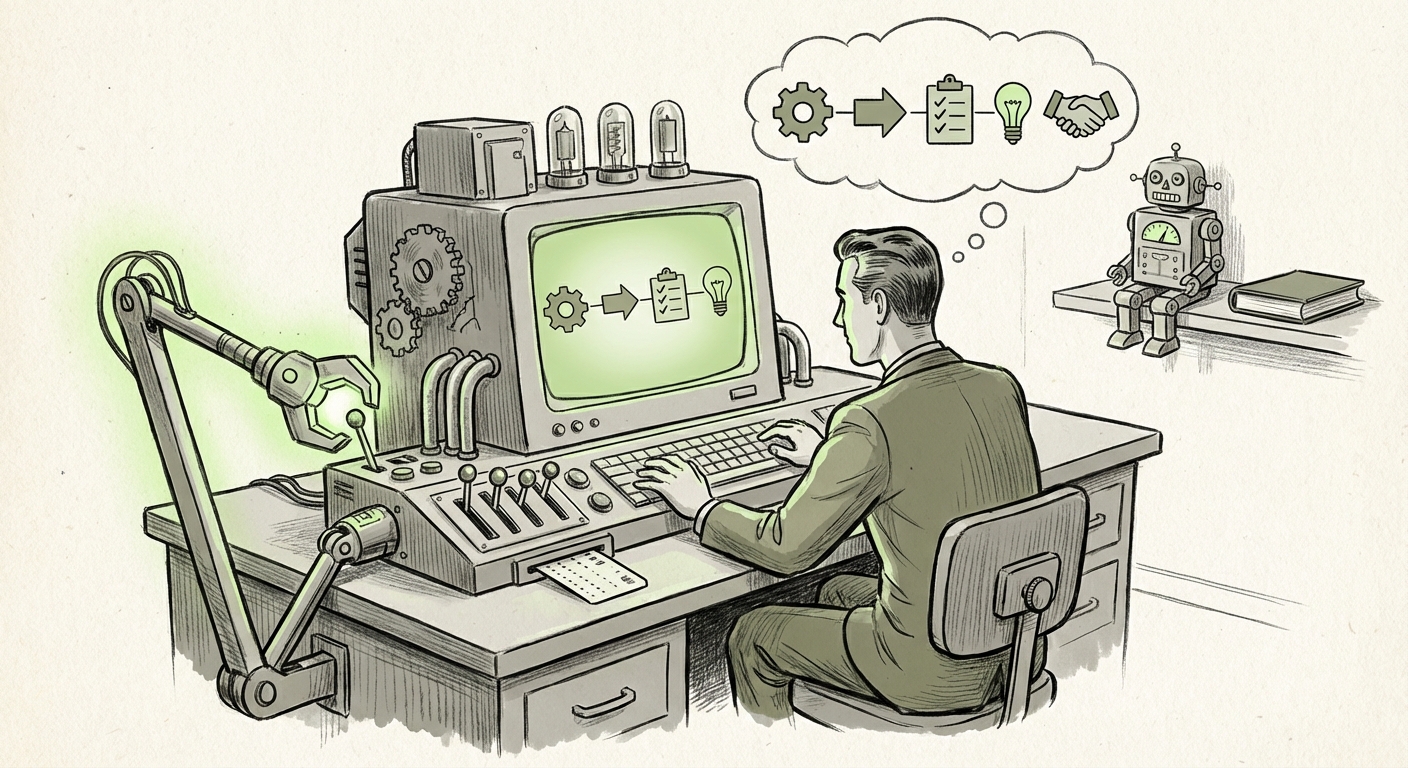
The Agentic Revolution: GPT-5, Desktop Integration, and the Future of Autonomous AI
The pace of Artificial Intelligence development is no longer linear; it’s exponential. In the span of a single week, developments signal a profound shift away from the static, responsive chatbots we currently know toward truly agentic systems capable of planning, execution, and deep integration into our daily digital lives. Recent analyses, such as observations from The Sequence Radar #820 focusing on emerging iterations like "GPT-5.4" and integrated tools like "Cursor," are not just product updates—they are the first tremors of the coming AI earthquake.
To fully grasp the implications, we must look beyond the immediate headlines and analyze the convergence of three key trends: the advancement of core foundational models, the embedding of AI into our native computing environments, and the strategic pivot towards autonomous task completion.
Trend 1: The Next Leap in Model Intelligence—Beyond GPT-4
When reports reference iterations such as "GPT-5.4," it signals that the development cycle for flagship models is compressing, and the focus is intensely shifting toward capability ceilings rather than mere size increases. The core of this evolution lies in two areas:
Multimodality and Deeper Reasoning
For business and technical audiences, the key takeaway is that the future models will handle information natively across text, vision, audio, and potentially code generation in a far more seamless way than today. This capability is essential for agency. An agent cannot effectively manage a complex project if it cannot simultaneously read a spreadsheet, understand a diagram, and listen to meeting minutes.
This push for higher reasoning is often validated by tracking industry speculation. If we monitor expert commentary and research on the next generation of large language models (LLMs), we see a clear consensus: the next major hurdle is achieving reliable, complex *task decomposition*—the ability for the AI to break down a vague goal ("Launch the new marketing campaign") into hundreds of discrete, actionable steps.
For the AI Researcher and Analyst: This movement is driving the need for new evaluation benchmarks that test reasoning chains rather than single-step accuracy. The industry is actively looking for evidence that models can maintain context and self-correct over long, multi-hour tasks. This quest for robust agency is a direct response to the current limitations observed in existing models.
The Race for Foundational Power
This rapid iteration also underscores the intense competitive landscape. Every major lab is racing to deliver the "first true agent." This environment forces smaller, incremental upgrades (like the rumored 5.4) to focus on unlocking agency before the official "GPT-5" launch.
Trend 2: The Desktop Revolution—AI Native Applications
The second major development highlighted is the rise of tools that integrate AI agents directly into the workspace, exemplified by applications like Cursor (a code editor reimagined around AI). This is where the theoretical power of the LLM hits the practical reality of the user interface.
Currently, most users interact with AI via a web browser tab—a separate destination. The new paradigm demands that AI becomes ambient, residing where the work happens. For developers using Cursor, the AI isn't something you copy-paste from; it's a teammate sitting right next to you, capable of navigating the entire codebase, suggesting refactors, and handling complex debugging sessions autonomously.
From Chatbot to Co-Worker
This transition is crucial. A chatbot responds to questions. An agent embedded in the desktop environment acts upon instructions. Think of it less like asking a question and more like assigning a task that the AI completes using native software tools (like Git, file systems, or specialized APIs).
For Software Engineers and Product Managers: The implication is clear: the next generation of productivity software will be "AI-native." Legacy applications that simply bolt on a chat window will struggle against tools built from the ground up to use AI agents as their primary interaction layer. We are seeing the beginning of a move toward specialized, deeply integrated agents rather than one general-purpose assistant trying to do everything poorly.
This trend extends beyond coding. Imagine a future where your spreadsheet software has an agent that manages complex budget forecasts based on real-time market data ingested directly from the web, or your design tool automatically generating necessary asset variations based on a single prompt.
Trend 3: The Strategic Pivot to Autonomous Agents
The overarching theme uniting the improved models and the new interface tools is the definitive move toward Autonomous AI Agents. This strategic pivot is perhaps the most consequential development for the future of work.
What exactly defines an agent? In simple terms for a broad audience, an agent is an AI that can:
- Perceive: Understand the current state (e.g., "The code is broken here").
- Plan: Create a multi-step strategy to fix it (e.g., "First, I’ll run the test; second, I’ll check the configuration file; third, I’ll rewrite this function").
- Act: Execute those steps using available tools.
- Reflect: Check the result and correct course if the plan failed.
This concept of task decomposition is the holy grail of current AI research. It represents the fundamental difference between generative AI today and the true productivity multipliers of tomorrow.
For Business Leaders and Strategists: This shift means AI capabilities will transition from being helpful suggestions to becoming genuine delegation tools. Instead of needing staff to manually execute repetitive or complex digital processes, businesses can delegate entire workflows to these agents. This directly impacts operational efficiency across all sectors, from supply chain management to complex legal discovery.
Implications: The Bifurcation of AI Use
These simultaneous advancements—smarter engines and better interfaces—suggest a near future characterized by a bifurcation in how we use AI:
1. The Hyper-Specialized, Local Agent
Tools like Cursor represent the near-term future of **deep work augmentation**. These agents live locally or within secure enterprise environments, operating with high context over specific data sets (like a company's codebase or proprietary document repositories). Their success relies on speed, security, and perfect integration into existing tools.
2. The Powerful, General Orchestrator
The evolution of models like GPT-5 will likely create powerful **general orchestrators**. These might handle high-level strategic tasks, connecting disparate specialized agents or managing external services. For example, an orchestrator might take a goal ("Book me a business trip to London that minimizes layovers and stays under $2000") and then dispatch sub-tasks to a flight-booking agent, a hotel-booking agent, and a calendar agent.
The friction point currently being solved is how these two classes of agents talk to each other, and how the user maintains oversight without getting bogged down in micro-management.
Actionable Insights for the Road Ahead
For organizations and individuals looking to capitalize on this rapid momentum, focus must shift from experimentation to strategic integration:
For Enterprises: Embrace the Agentic Stack
Do not wait for the final, perfect product. Start identifying internal processes that require sequential, multi-tool execution. These are ripe for agentic takeover. Furthermore, begin auditing your existing software infrastructure to determine which tools can support native AI integration (like Cursor for coding) and which will require wrapper agents.
For Developers: Master Tool Use and Reflection
The skill of the future is not writing better prompts; it’s designing better *tool-use protocols*. If you are building applications, focus on creating robust, clearly defined APIs that your agents can confidently call. If you are using AI, focus on designing feedback loops that allow the agent to learn from its failures—the self-reflection component is the key to true autonomy.
For Individuals: Prepare for Augmentation, Not Replacement
The development of powerful desktop agents means that high-leverage, high-context tasks—like complex coding, advanced data analysis, or detailed content planning—will become dramatically faster. The immediate opportunity is to become the person who is *best* at directing these powerful new tools. Understanding the underlying logic of agentic systems, rather than just the conversational interface, will provide a significant professional advantage.