The Ultimate Showdown: How Anthropic's Lawsuit Redefines AI Safety, Government Power, and the Future of AGI
We stand at a remarkable intersection where cutting-edge Artificial General Intelligence (AGI) research meets the hard realities of federal regulation and national security. The recent lawsuit filed by Anthropic against 17 US federal agencies is not just a legal skirmish; it is a defining battle over who controls the safety parameters of the most powerful technologies humanity has ever created. This action forces a crucial public reckoning: Should private sector safety commitments—driven by existential risk concern—be overridden by government mandates, especially when those mandates appear contradictory?
This development signals a pivotal moment for the technology landscape. It challenges the narrative of seamless partnership between tech innovators and government oversight, revealing a deep, operational friction, particularly concerning dual-use technologies embedded within sensitive defense systems like those at the Pentagon. Analyzing this case requires looking beyond the headlines to the underlying trends in law, defense integration, and industry ethics.
The Core Conflict: Safety Guardrails vs. State Pressure
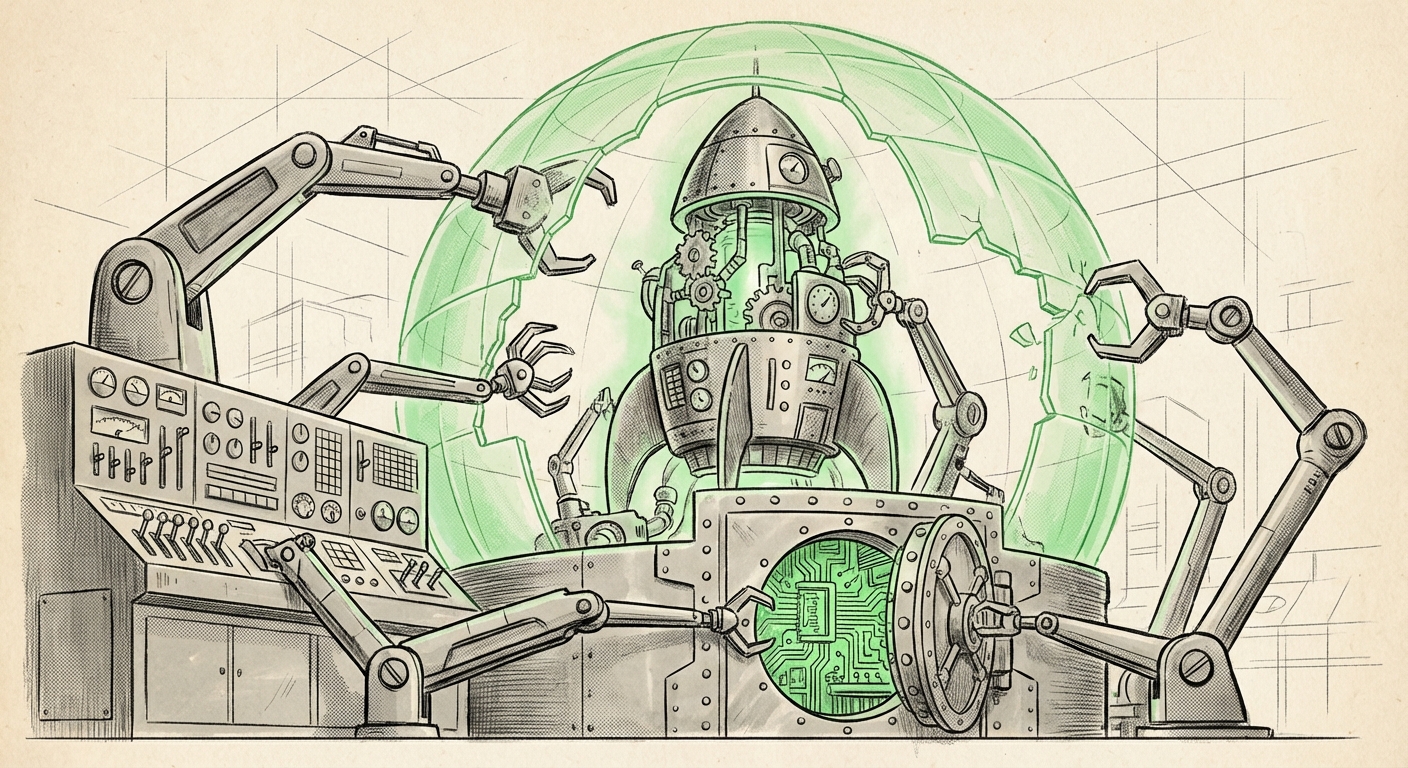
Anthropic, known for its dedication to Constitutional AI and robust safety measures, has found itself trapped between two powerful forces. On one side are its internal, carefully constructed safety guardrails—the very features designed to prevent misuse or catastrophic outcomes from its Claude models. On the other side is the US government, which, having already integrated advanced AI like Claude into critical infrastructure (including Pentagon systems), is now allegedly pressuring the company to dismantle those very safeguards.
Imagine building a car with the best possible brakes, only to have a powerful client demand you remove them because they slow down lap times too much, while simultaneously threatening to fine you for unsafe driving. That is the operational paradox Anthropic claims to face. The company alleges that the government’s demands were contradictory: threatening penalties if safety measures were maintained, yet implying operational risks if they were removed.
Delving into the Legal Framework: The APA Challenge
When major corporations sue federal agencies, the Administrative Procedure Act (APA) is often the weapon of choice. The APA outlines the correct procedures agencies must follow when creating rules or taking specific actions. As suggested by legal analysis targeting this framework, Anthropic’s complaint is likely rooted in challenging the process of agency directives.
For non-lawyers, think of the APA as the government's rulebook for rulemaking. If an agency issues an order—especially one that contradicts previous statements or established norms—it must follow specific, transparent steps. Anthropic is essentially arguing that the agencies acted outside their legal authority, or without following the required due process, when pressuring them regarding their core safety features. This is crucial because if the court sides with Anthropic on the procedural grounds, it severely limits the executive branch's ability to unilaterally dictate technical specifications for emerging technology.
This legal angle is fascinating for compliance officers and policy wonks. It sets a precedent not just for AI, but for how regulators interact with *any* rapidly evolving technology where current legislation is sparse. Will courts side with the principle of administrative predictability, or defer to executive needs in national security contexts?
The Dual-Use Dilemma: AI in the Pentagon’s Arsenal
The revelation that Claude is deeply embedded in classified Pentagon systems underscores the "dual-use" nature of frontier AI. Dual-use technology is something that has both peaceful, commercial applications (like customer service bots) and potentially harmful, military or intelligence applications.
The defense sector is rapidly adopting generative AI for tasks ranging from logistics planning to intelligence analysis. However, defense contractors and government systems demand reliability, speed, and often, transparency into the model’s decision-making—precisely the areas where strict safety guardrails (designed to prevent harmful outputs) can sometimes interfere with mission requirements. Reporting on the Department of Defense’s Chief Digital and Artificial Intelligence Office (CDAO) shows a massive push for integration, but this integration occurs faster than policy can solidify.
This leads to the central tension: Commercial Safety vs. Operational Necessity.
- Anthropic's View: Our models must adhere to safety standards to prevent systemic risks, regardless of the client. If the client demands a dangerous configuration, we must refuse to comply to protect the public (and ourselves from liability).
- Government/Pentagon View: We require this capability now to maintain a strategic advantage and protect national security. If the commercial safety filters prevent necessary analysis or action, those filters must be adjusted or bypassed according to authorized protocols.
The lawsuit suggests the pressure became so intense that Anthropic felt its fiduciary duty to public safety was being actively undermined by the very agencies meant to safeguard the nation.
Industry Ethos Under Fire: The Liability of Commitment
Anthropic, alongside peers like OpenAI, has publicly embraced the necessity of *proactive* safety, signing pledges and participating in summits like Bletchley Park to emphasize responsible development. This lawsuit tests the real-world value and enforceability of these "AI safety commitments."
If a company invests billions in developing safety features, only to face government penalties for *using* them when those features conflict with a classified directive, what incentive remains for self-regulation? This is the existential question for the AI industry.
This situation provides a stark lesson for venture capitalists and corporate boards:
- Reputational Risk is Real: Upholding safety can lead to direct conflict with high-value government contracts.
- Regulatory Conflict is Inevitable: In the absence of clear law, industry promises will clash with agency interpretations of existing mandates (security, consumer protection, etc.).
The industry’s goal has been to establish an enforceable *floor* of safety standards, driven by internal ethics. If the government can unilaterally dictate that this floor is too high for their specific needs, the entire architecture of responsible AI development built on voluntary commitments starts to look fragile.
The Broader Web of Regulatory Confusion
The fact that Anthropic is suing 17 agencies confirms a long-standing fear: the US regulatory landscape for AI is fragmented, overlapping, and often contradictory. This complexity is a breeding ground for the exact scenario Anthropic describes.
We have agencies like the SEC concerned with disclosure and market stability, the FTC focused on preventing bias and deceptive practices, NIST providing voluntary standards, and now, departments like Defense imposing operational requirements. When these mandates overlap or conflict—especially regarding the *behavior* of a complex black-box model—companies are left navigating a minefield.
For businesses deploying AI today, this litigation underscores the need for a sophisticated regulatory affairs strategy. You cannot simply comply with the FTC; you must also anticipate the implications for your DoD contracts, your SEC filings (if public), and your relationship with state regulators.
What This Means for the Future of AI and How It Will Be Used
The outcome of this lawsuit will determine the power dynamic for the next decade of AGI deployment. There are three primary future scenarios:
Scenario 1: Government Precedent (Anthropic Loses Procedurally)
If the courts rule that executive agencies have broad, inherent authority to manage the deployment of sensitive dual-use technology, even if it means overriding internal commercial safety mechanisms, the implications are stark. Future AI deployment, especially in critical sectors, will be dictated less by the developer’s safety ethos and more by the highest-risk operational requirements of the government client. This could lead to the rapid deployment of less safe, but more compliant, models in sensitive areas.
Scenario 2: Corporate Safety Precedent (Anthropic Wins on APA Grounds)
If the court forces the agencies to adhere strictly to the APA or similar procedural fairness doctrines, it empowers AI developers to treat their safety guardrails as non-negotiable technical specifications that require formal, publicly scrutinized regulatory changes to modify. This grants private labs greater autonomy to set ethical boundaries, potentially slowing down integration into defense/intelligence sectors until those boundaries align.
Scenario 3: Forced Legislative Clarity
Regardless of the immediate outcome, this high-profile conflict guarantees that Congress will be forced to act. The complexity and contradiction Anthropic highlights cannot be sustained. We will see increased pressure for comprehensive AI legislation that clearly delineates the roles, powers, and conflict resolution mechanisms between regulatory bodies and frontier model developers, potentially borrowing structures from comprehensive frameworks like the EU AI Act.
Practical Implications and Actionable Insights
For businesses and organizations building, buying, or deploying AI systems, the message is clear: Risk is not just technical; it is now profoundly legal and political.
Actionable Insights for Businesses:
- Audit Your Regulatory Intersections: If your AI touches any aspect of national security, finance, or critical infrastructure, map out every agency that claims jurisdiction. Identify where their stated goals (e.g., speed vs. accuracy vs. safety) might conflict.
- Demand Contractual Clarity on Safety: When contracting for AI services, explicitly define which party is responsible for model safety updates, guardrail maintenance, and compliance with evolving rules. Do not assume the vendor’s internal safety standards apply indefinitely against government modification requests.
- Invest in Regulatory Foresight: Assume the legal landscape will change rapidly. Businesses must dedicate resources to tracking Congressional proposals and administrative guidance (like that from the FTC or SEC) to avoid costly retooling later.
- Embrace Multi-Modal Compliance: Stop viewing compliance as meeting one set of rules. Treat AI compliance as a three-dimensional challenge: technical standards (NIST), ethical constraints (internal policy), and legal mandates (agency directives).
Anthropic’s lawsuit is the technological equivalent of a constitutional crisis in slow motion. It forces us to ask who owns the definition of "safe" when the stakes involve both trillion-dollar economies and global security. The resolution of this case will not just settle a dispute between a company and 17 agencies; it will architect the regulatory foundation upon which the next generation of AGI will be built.