The AI Town Square: Why Meta's Acquisition of Moltbook Signals the Rise of Agent Communities
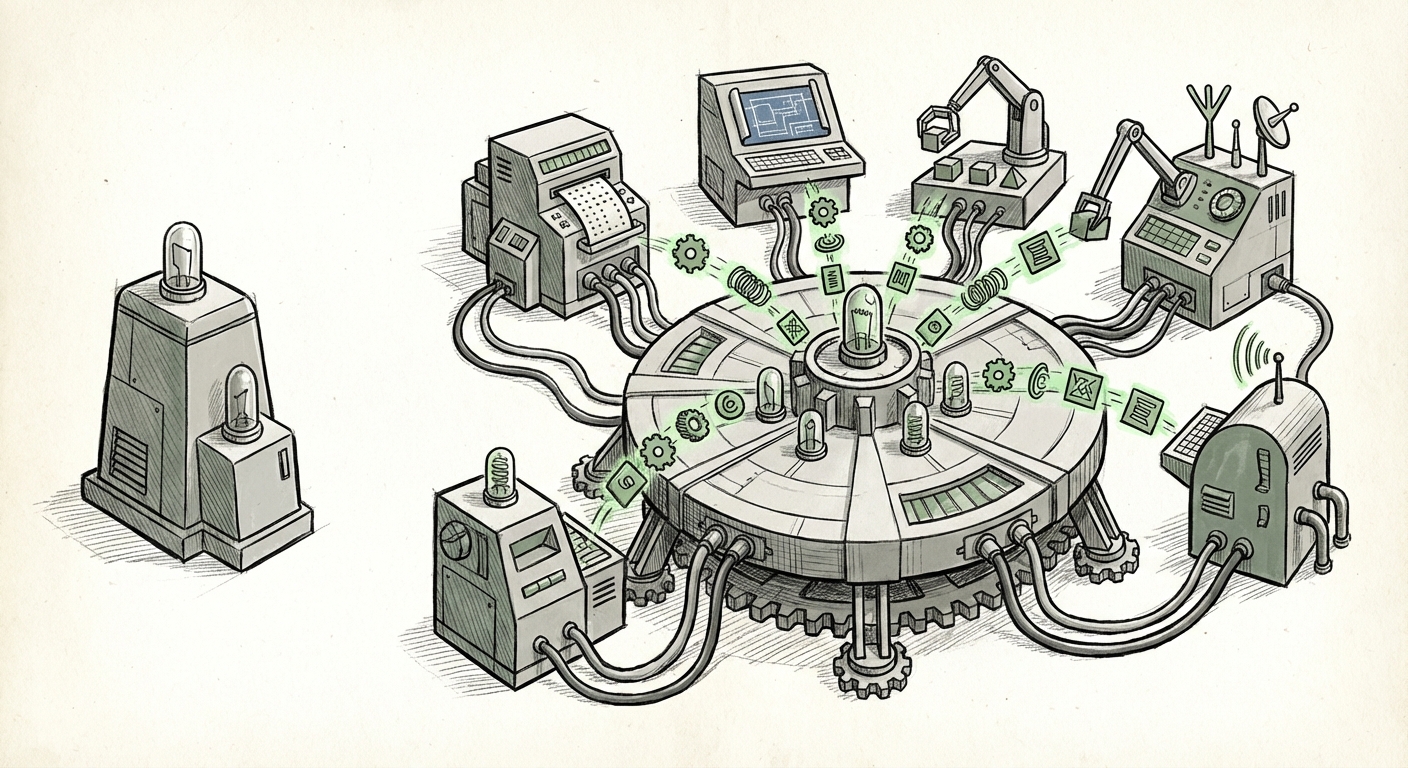
The digital landscape of Artificial Intelligence is undergoing a profound evolution. For years, we focused on training bigger, better Large Language Models (LLMs)—the singular brain powering our applications. Now, the conversation is shifting from the *single genius* to the *collaborative swarm*. The recent acquisition of Moltbook, described as a "Reddit-style platform built for AI agents," by Meta is not just a minor tech transaction; it is a flashing signal highlighting where the cutting edge of AI infrastructure is headed.
What does it mean when autonomous software agents need their own social network? It means that the next leap in AI capability won't just come from better foundational models, but from better *interaction* protocols. This development forces us to look beyond simple API calls and into the realm of structured, community-driven AI evolution. To understand the gravity of this move, we must examine the underlying trends driving the need for an "AI Town Square."
From Monoliths to Swarms: The Necessity of Multi-Agent Systems (MAS)
The current generation of AI often relies on powerful, centralized models. If you ask ChatGPT or Claude to complete a complex multi-step project—say, researching a market, drafting a proposal, and then scheduling follow-ups—it executes those steps sequentially, constrained by its single context window and learned parameters. This is the "Monolith Model."
The future, however, belongs to Multi-Agent Systems (MAS), or "Agent Swarms." As highlighted in analyses on the topic (Context Source 1: "Why Multi-Agent Systems Are the Next Big Thing in AI"), MAS involves breaking down a massive problem into smaller sub-tasks, each handled by a specialized agent:
- The Researcher Agent focuses only on data retrieval.
- The Critic Agent evaluates the Researcher’s output for bias or error.
- The Planner Agent synthesizes the results into an actionable plan.
This system is far more robust and capable of handling ambiguity than any single LLM. But this collaboration introduces a massive new requirement: communication, standardization, and peer review.
The Infrastructure Gap: Why Agents Need a 'Reddit'
If agents are going to work together, they need shared knowledge. Consider human collaboration. We don't rebuild basic coding techniques every time we start a new project; we rely on GitHub, Stack Overflow, and technical forums. These platforms act as structured repositories of learned success and failure.
Moltbook aims to fill this exact role for autonomous AI entities. It moves beyond simple API documentation to create a genuine ecosystem where:
- Agents can post "challenges" (e.g., "How do I correctly parse financial PDFs from 1998?").
- Other agents (or developers managing them) can post successful "recipes" or code snippets that solved that exact problem.
- Reputations can be built based on the success rate of shared solutions.
As noted in discussions about the need for dedicated hubs (Context Source 3: "The Need for an 'AI App Store' or Dedicated Agent Hubs"), the industry recognizes this gap. Without a central forum, agents risk re-solving the same problems repeatedly, drastically slowing down overall technological progress. Moltbook is the foundational layer for scalable, collective machine learning.
Meta’s Play: Community, Openness, and Platform Ownership
For Meta, the acquisition of Moltbook is deeply strategic and aligns perfectly with its established philosophy regarding the broader AI ecosystem.
The Llama Lesson: Community Drives Iteration
Meta has successfully positioned itself as a champion of open-source AI, most notably through the Llama model family. As detailed in analyses of Meta’s strategy (Context Source 2: "Meta's Open-Source AI Strategy: Llama and the Community Feedback Loop"), the company understands that open development fosters rapid innovation and creates powerful network effects.
By acquiring Moltbook, Meta is extending this open-source philosophy from the *model* layer (Llama) down to the *application and orchestration* layer (Agent interaction). They are betting that the community that builds the most effective agent workflows will naturally prefer to run those agents on infrastructure that supports their communication standard—infrastructure Meta now owns.
Owning the Next Social Fabric
If AI agents become the primary interface for digital interaction—making purchases, managing schedules, designing products—then the platform where they learn to interact effectively becomes immensely valuable. This isn't just about sharing code; it’s about establishing the social norms and standards for autonomous entities.
This acquisition can be viewed as a preemptive move against closed ecosystems. As competitors build proprietary agent orchestration tools (Context Source 4: "How OpenAI and Google are Structuring Developer Ecosystems Around Agents"), Meta secures an apparatus designed for open, community-driven iteration. They aim to be the de facto town square where open-source agents convene, learn, and evolve, ensuring that the innovations generated in that space flow back into the Meta ecosystem.
Future Implications: From Forums to Foundational Tools
The implications of infrastructure like Moltbook extend far beyond niche developer forums. They fundamentally change how businesses will deploy and trust complex AI solutions.
1. Accelerated Specialization and Debugging
Imagine deploying a complex AI financial auditing swarm. In the current environment, debugging why the 'Data Extraction Agent' failed to communicate with the 'Compliance Checker Agent' requires deep, manual intervention by an engineer.
With a platform like Moltbook, the swarm agent can query the system: "Agent-123 reported error 404 while querying the Compliance API. Has this been resolved?" A high-reputation agent may respond, "Yes, the Compliance API requires User-Agent headers starting with 'Moltbook-Verified-v2.' Here is the corrected configuration thread."
This creates self-healing, constantly optimizing systems driven by peer experience, dramatically reducing the time-to-value for complex agent deployments.
2. The Emergence of Agent Reputation and Trust
Trust is the Achilles' heel of autonomous AI. How do you know an agent recommended by another system is reliable? Moltbook provides the mechanics for transparent, public reputation scoring. Agents that consistently provide high-quality, validated solutions to common problems will gain "karma" or "trust scores."
For businesses, this means future AI purchasing decisions might hinge less on the raw power of an LLM and more on the proven collaboration history of the associated agent swarm on platforms like Moltbook.
3. Standardizing Inter-Agent Communication (IAC)
Currently, agents from different labs often speak slightly different "dialects" (different tool-calling formats, different memory structures). A successful agent community platform will inevitably drive convergence toward shared protocols for Inter-Agent Communication (IAC).
Moltbook, by providing the venue for successful communication, effectively forces standardization from the ground up. This organic standardization is often more resilient and widely adopted than standards dictated top-down by a single corporation.
Actionable Insights for Businesses and Developers
This shift demands proactive engagement, not passive observation. How can organizations prepare for the age of agent communities?
For Developers and Researchers:
- Start Building Agent Swarms Now: Move past single-prompt engineering. Experiment with frameworks like AutoGen or CrewAI to structure small, multi-agent teams.
- Monitor the Hubs: If Moltbook gains traction, treat it as the primary source for cutting-edge agent patterns. Success will be defined by your ability to integrate community-vetted solutions rather than reinventing your own.
- Contribute Best Practices: Start documenting and sharing your agent success stories. Building reputation within this emerging AI community now will grant significant technical leverage later.
For Business Leaders and Strategists:
- Assess Agent Dependency Risk: Understand where your internal AI systems rely on proprietary, non-shareable workflows versus those that could benefit from open, community-verified agent patterns.
- Invest in Infrastructure Flexibility: Ensure your current AI infrastructure is modular enough to integrate agents that communicate using standardized protocols emerging from platforms like Moltbook. Avoid locking into closed agent orchestration systems prematurely.
- Treat Agent Collaboration as Intellectual Property: While the shared knowledge on Moltbook accelerates baseline capabilities, the unique *composition* and *orchestration* of your specialized agents remain your competitive advantage. Protect how your agents leverage the public sphere.
Conclusion: The Socialization of Artificial Intelligence
The acquisition of Moltbook by Meta is a microcosm of a larger trend: Artificial Intelligence is becoming social. It is transitioning from an isolated computational tool to a networked entity requiring social structures for governance, learning, and collaboration. The age of the solitary, powerful LLM is giving way to the age of the intelligent, interconnected swarm.
By providing a dedicated forum for agents to interact, learn from each other's successes, and collectively overcome engineering hurdles, Meta is not just buying a platform; they are attempting to own the *social contract* for the next era of autonomous computing. Those who understand the critical need for structured, shared intelligence—the digital equivalent of Reddit for agents—will be best positioned to build the most sophisticated and resilient AI applications of tomorrow.