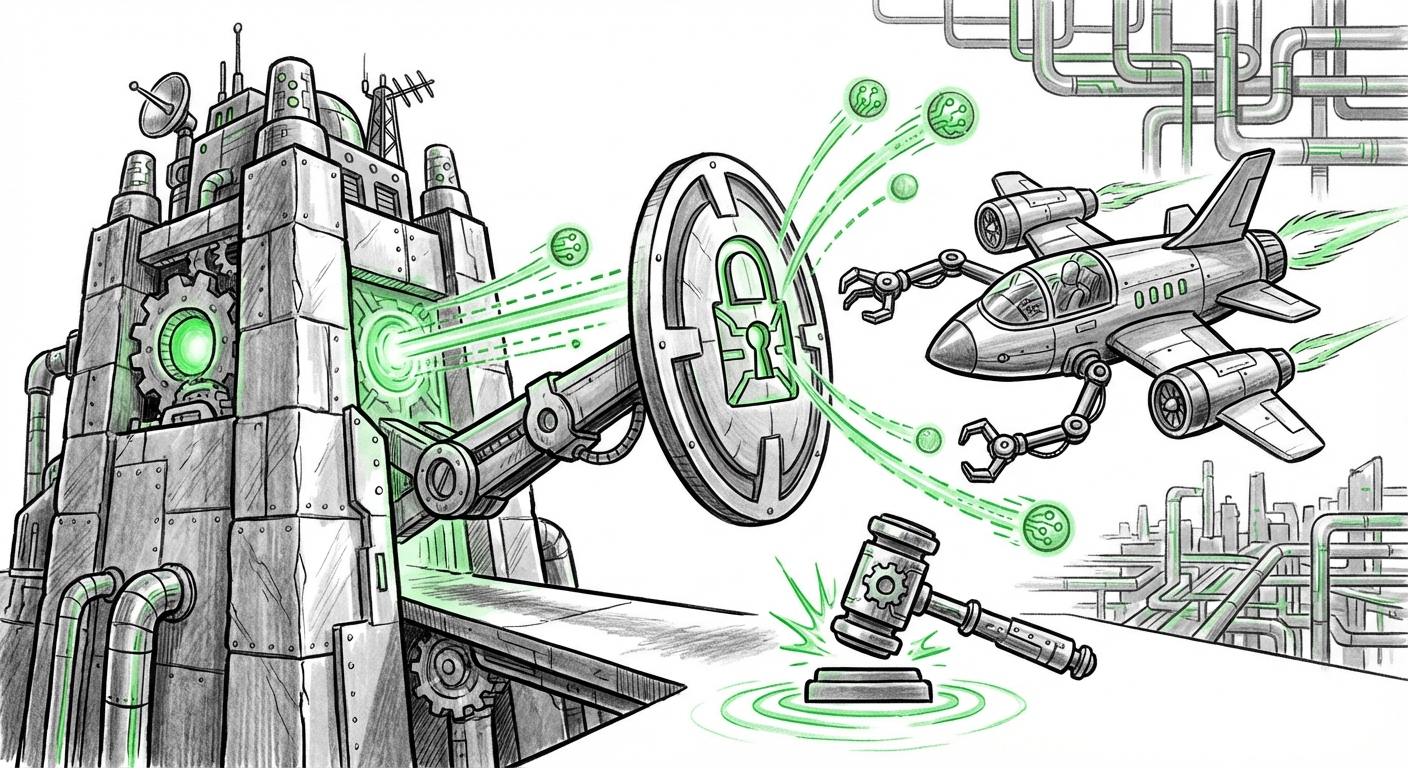
The Great E-Commerce Showdown: How Amazon vs. Perplexity Defines the Future of AI Agents and Data Rights
The recent court action taken by Amazon to block Perplexity’s nascent AI shopping agent is far more than a simple corporate spat over website scraping. It represents a critical, front-line skirmish in the war for control over real-time consumer data—the very lifeblood of modern e-commerce. As we move from simple Large Language Models (LLMs) to truly autonomous AI agents capable of performing complex tasks, the question of who owns the data these agents use to function, and how they acquire it, has become the central legal and technological challenge of our time.
The Conflict: Agents vs. Gatekeepers
Perplexity, powered by advanced generative AI, aims to offer users a superior, synthesized answer to product inquiries, often directly comparing items and prices found across the web, including Amazon’s vast marketplace. Amazon, the undisputed giant of online retail, relies on maintaining a proprietary, friction-free ecosystem where product data, reviews, and purchasing behavior are siloed within its control. When Perplexity deployed its shopping agent, it arguably disrupted this control by attempting to extract and synthesize Amazon’s product catalog information.
The immediate legal response from Amazon often centers on two pillars: Terms of Service (TOS) violations and unauthorized access (computer trespass). This conflict forces us to examine the established rules of the internet against the novel capabilities of AI.
The Legal Battleground: Scraping in the Age of AI
For years, the legality of web scraping has existed in a grey area, often hinging on whether the data was truly "public" and whether the scraping method overburdened the target server. Landmark cases, such as the debate stemming from LinkedIn v. hiQ Labs, suggested that data publicly visible on the web was generally fair game for competitors to analyze. However, the introduction of sophisticated AI agents changes the equation.
When an AI agent scrapes, it is not just copying static text; it is often mimicking human behavior at machine speed to build a dynamic, actionable intelligence layer on top of proprietary databases. As legal analysts suggest when examining the "Legal precedent for AI web scraping in e-commerce," the courts are now asking tougher questions:
- Does simulating a user violate the spirit of the TOS, even if the method skirted the technical definition of illegal access?
- When an AI synthesizes proprietary data into a new, competitive product, does that cross the line from analysis into intellectual property theft?
The court order against Perplexity signals a significant, albeit preliminary, victory for the data gatekeepers. It suggests that existing TOS agreements, coupled with claims of unauthorized access, still hold potent legal weight, even against sophisticated AI challengers. For developers creating "Autonomous AI shopping agents future" tools, this is a major compliance hurdle.
The Technological Imperative: Why Agents Need Data
From a purely technological standpoint, Perplexity’s move was logical. To build a compelling, accurate shopping assistant, the agent must access current pricing, inventory, and product specifications. Relying solely on publicly accessible summaries would result in an inferior, outdated service compared to what Amazon offers natively.
This necessity drives the central trend: AI agents require real-time, deep access to proprietary data silos. Amazon’s response illuminates the challenge for the entire AI industry. If every major data-holding entity—e-commerce sites, financial institutions, healthcare providers—can successfully block machine access through legal injunctions, the promise of generalized, highly informed AI agents becomes significantly constrained. They risk becoming mere aggregators of publicly available summaries, losing the competitive edge that deep data integration provides.
Amazon’s Defense: Protecting the Discovery Engine
Why is Amazon fighting so hard? It’s not just about a few search queries; it’s about "Amazon’s response to AI-driven product discovery." Amazon has spent billions perfecting its recommendation algorithms and product indexing. If a third-party AI can accurately mirror or surpass the product discovery experience without sending traffic or revenue back to Amazon, the platform’s foundational business model is threatened.
For Amazon, their product catalog *is* their competitive moat. Allowing an external LLM to efficiently map and leverage that catalog undermines their market position. This legal maneuver solidifies their strategy: if you want to use our data to build a service, you must either partner with us (and abide by our rules) or face legal roadblocks.
Implications for the Future of AI Development
The Amazon/Perplexity case forces a critical reassessment for every company building autonomous software agents. The focus shifts dramatically from "Can we build it?" to "Can we legally operate it?"
1. The Rise of Data Licensing and Gateways
If direct scraping and synthesis are legally precarious, the alternative is formalization. We will likely see a massive increase in Data Licensing Agreements (DLAs) specific to AI training and operational use. Companies like Amazon will create finely tiered APIs where accessing real-time, granular product data for commercial AI use requires explicit, expensive licensing. This creates new revenue streams for data owners but significantly raises the barrier to entry for startups.
For startups: The days of assuming "public data is free data" are ending, particularly in high-value commercial sectors like e-commerce and finance. Compliance and early legal consultation regarding data ingestion are no longer optional extras; they are core infrastructure requirements.
2. Bifurcation of Search and Agents
The future might split into two distinct types of AI assistants:
- Closed-Loop Agents: AI operating entirely within a walled garden (e.g., an agent trained only on Microsoft data, or Amazon's internal tools). These are safe from TOS challenges but limited in scope.
- Open-Web Aggregators: Agents relying on publicly summarized data, search engine indexing, and verified public documents. These are legally safer but technologically less powerful for complex tasks requiring real-time catalog integrity.
Perplexity’s attempt was to bridge this gap, offering open-web insight with deep transactional capability. The court ruling pushes them back toward the second category, reinforcing the dominance of the data owners.
3. The Importance of Contract Law in AI
As highlighted by explorations into "Terms of Service violations in AI data ingestion," contract law is becoming the primary battleground, overriding pure intellectual property claims. If Amazon can demonstrate that Perplexity's actions constitute a breach of contract (by violating the TOS), they can secure injunctions much faster than pursuing complex copyright infringement cases.
Actionable Insight for Developers: Treat every website’s Terms of Service as a potential legal wall. Building AI agents that robustly check and respect `robots.txt` directives, user-agent restrictions, and explicit TOS clauses—even if they result in less comprehensive data—is the safest path forward until clearer legislation emerges.
Broader Societal and Competitive Dynamics
This case is a microcosm of a larger technological shift. Who controls the *interfaces* that the next generation of users interact with?
If users begin asking their AI (whether it’s Perplexity, Google’s Gemini, or a future specialized agent) to "Find me the best running shoe under \$150 that I can order right now," and that AI cannot accurately reflect Amazon's real-time stock, the user will switch back to the traditional platform. Therefore, Amazon’s defense is a defense of the user experience they have cultivated over decades.
Conversely, the rise of these powerful third-party agents accelerates innovation. If Amazon fails to provide the fastest, most insightful search experience, users will defect to AI platforms that do. This tension—the incumbent defending its moat versus the disruptor seeking frictionless access—is healthy for market evolution, provided the legal frameworks support fair competition without stifling beneficial innovation.
The future success of generative AI outside of the tech giants will hinge on their ability to legally and ethically source data that incumbents are aggressively protecting. This fight will ultimately shape whether AI agents become ubiquitous, powerful generalists or remain specialized tools confined to specific, licensed datasets.