The Ambient AI Shift: How Shared Context Across Claude, Excel, and PowerPoint Redefines Productivity Agents
The recent announcement that Anthropic’s Claude add-ins for Microsoft Office applications—specifically Excel and PowerPoint—will now share context across these tools marks a critical inflection point in enterprise AI adoption. This is far more than a software update; it represents a tangible step toward the realization of Ambient AI: an intelligence layer woven so deeply into our daily digital environment that it becomes an invisible, persistent collaborator.
For years, AI assistance in productivity tools has been episodic—you ask a question, you get an answer, and the conversation ends. Anthropic’s move, bolstered by context sharing, signals a transition from discrete assistants to interconnected agents capable of maintaining a continuous, multi-application thread of thought. As an AI technology analyst, I see this development forcing competitors to rapidly redefine the capabilities of the enterprise co-pilot.
The Evolution: From Co-pilot to Contextual Agent
The current landscape is dominated by the "Co-pilot" paradigm, popularized heavily by Microsoft. A co-pilot offers help within a single application context (e.g., drafting an email in Outlook or summarizing a document in Word). Claude’s new feature breaks this silo.
Imagine this workflow:
- You use Claude in Excel to analyze a complex dataset, identify key growth drivers, and generate summary statistics.
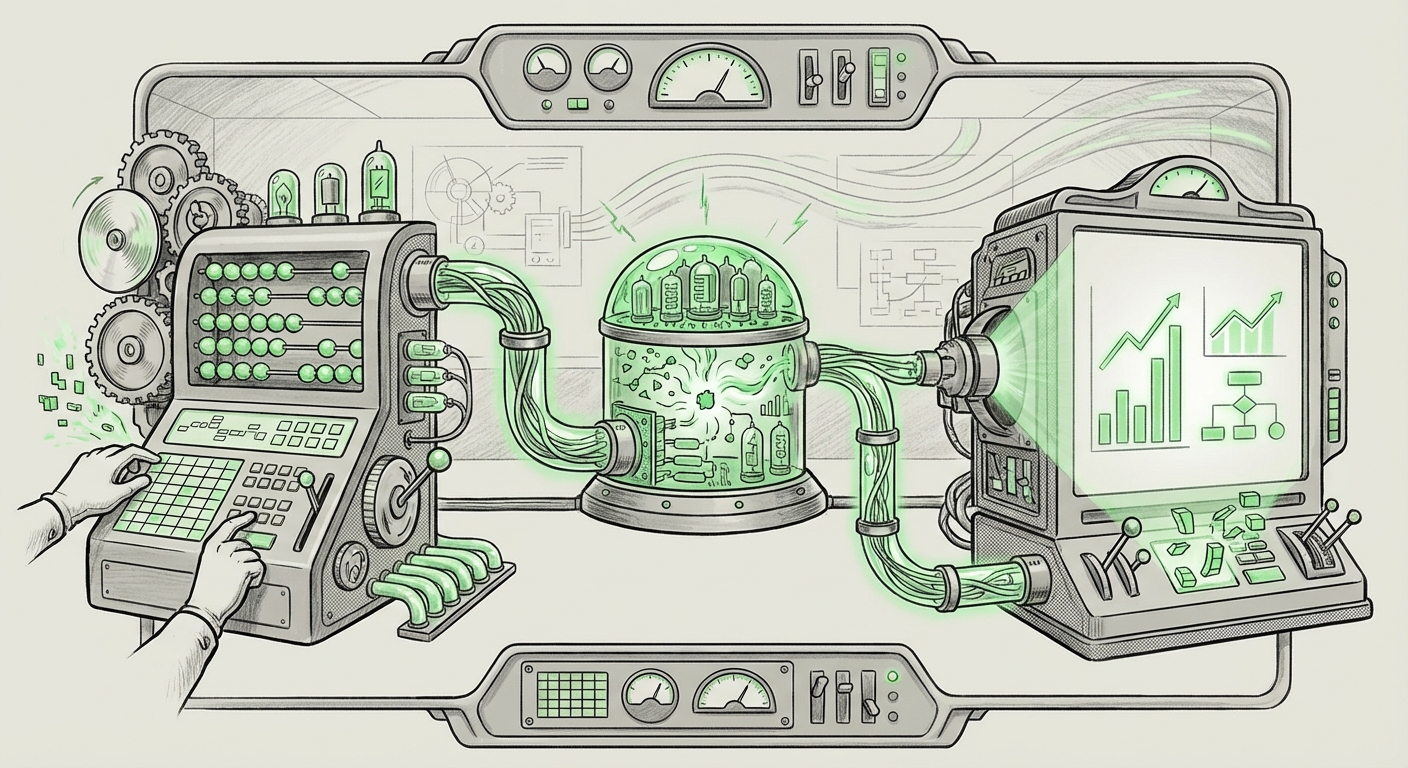
- You then switch to PowerPoint. Claude, having retained the context from the Excel session, automatically pulls those identified statistics, suggests a presentation structure based on the analysis, and begins populating key charts, all without you having to copy, paste, or re-explain your objectives.
This seamless transition illustrates the shift toward agentic behavior. True AI agents don't just process data; they orchestrate tasks across different software environments to achieve a goal. The ability to carry context—the memory of what was done, why it was done, and what the goal is—from a calculation engine (Excel) to a communication tool (PowerPoint) is the foundation of this agentic future.
Benchmarking the Competition: The Co-pilot War
To understand the significance of Claude’s move, we must assess the industry benchmark. Searches tracking competitor updates, such as those concerning "Microsoft Copilot context sharing across Office apps" and "Google Gemini workspace integration," show that maintaining cross-application context is the industry’s current holy grail. Microsoft’s initial Copilot capabilities were strong within their ecosystem, but Anthropic is pressing the advantage by making its intelligence portable across different productivity platforms, often relying on universal add-in standards.
For enterprise IT decision-makers, this means the decision is no longer just about which LLM is "smartest," but which offers the most cohesive and least disruptive integration into existing software stacks. If Claude can prove superior continuity across heterogeneous environments, it provides a compelling alternative to ecosystems where the AI assistant is locked into one vendor’s stack.
The Technological Leap: Orchestration and Memory
How is this possible? It requires sophisticated engineering that goes far beyond basic natural language processing. As we investigate the underlying technology via queries like "LLM orchestration across software tools," we learn that this functionality relies on robust connection points—APIs—and sophisticated memory management.
For the layperson, think of it this way: When you talk to Claude, it needs a notepad. In the old way, it only used the notepad associated with the current app. Now, it has a universal, persistent notebook. When you move from Excel to PowerPoint, the AI reads the last few pages of that notebook to know exactly where you left off. For developers and architects, this points toward successful implementation of tool-use frameworks that allow the Large Language Model (LLM) to call specific functions (like Excel's data manipulation APIs) and then store the *result and the intent* in a session memory that other add-ins can access.
This technical capability is a precursor to true AI agents. An agent needs memory, planning ability, and tool access. By securing the memory layer across two core business applications, Anthropic is demonstrating mastery over the 'planning and memory' components necessary for advanced automation.
The Enterprise Imperative: Security and Trust in Embedded AI
With great context comes great responsibility—and significantly greater risk. When an AI moves from answering general queries to analyzing proprietary sales figures in a spreadsheet and then drafting internal strategy documents based on those figures, the stakes for data security skyrocket.
Our inquiry into "Data governance challenges LLM add-ins Excel PowerPoint" highlights this crucial tension. For Chief Information Security Officers (CISOs), deep integration is often synonymous with increased attack surface area and potential data leakage. If context is shared, where is that context stored? Is it retained by the vendor? Is it encrypted end-to-end? Is the data used for model training?
For Anthropic to succeed in the enterprise, they must clearly delineate their commitment to privacy. Businesses require segregated environments—meaning their sensitive financial models in Excel are only accessible to their dedicated Claude instance, never mixed with training data for the public version. The success of these embedded tools will rely entirely on transparent, robust governance frameworks that assure organizations their intellectual property remains proprietary, even as the AI collaborates on it.
Anthropic's Strategic Play in the AI Ecosystem
This move is also a strategic maneuver in the broader competition against established giants. Anthropic, often seen as a strong challenger to OpenAI, must carve out a unique value proposition. Their focus on safety and constitutional AI provides one angle, but usability and integration are just as vital.
By targeting core productivity apps, Anthropic is making a clear statement about its "enterprise strategy." This isn't about building a niche chatbot; it's about becoming indispensable within the daily workflow. Queries concerning "Anthropic enterprise strategy" reveal a clear intent to move up the value chain by supporting complex, multi-step business processes that traditional APIs struggle to manage.
This emphasis on integration suggests that Anthropic is prioritizing partnerships and deployment models that embed Claude where the work actually happens—whether that’s through direct integration into Microsoft’s ecosystem via add-ins or leveraging cloud partners like AWS for secure infrastructure.
Practical Implications: What Businesses Need to Do Now
The development of shared-context AI demands immediate action from organizations looking to maintain a competitive edge:
1. Audit Integration Readiness
Businesses must begin inventorying their existing productivity tool utilization and identifying high-value, cross-application workflows. Where does data currently stall between analysis and presentation? These are the prime candidates for immediate AI deployment.
2. Develop AI Usage Policies (The "Who, What, Where")
Before deploying enterprise-grade AI tools widely, governance must be established. Policies should dictate which types of data (e.g., PII, confidential M&A data, core financials) can be processed by which versions of the AI (e.g., secured enterprise vs. standard consumer).
3. Invest in Contextual Literacy for Employees
Employees need training not just on *how* to prompt the AI, but on the *limitations of its context*. Understanding that the AI remembers the last 10 steps, but perhaps not the obscure variable set three hours ago, is vital for effective collaboration. This requires training that treats the AI as a colleague with a finite, though expanding, working memory.
The Future is Fluid and Pervasive
The move by Anthropic’s Claude add-ins to share context between Excel and PowerPoint is emblematic of the next phase of generative AI: Ambient and Agentic Workflows. We are moving past the novelty of text generation and entering an era where AI operates as a persistent, goal-oriented entity across our entire digital workspace.
This technology blurs the line between software programs; the boundary between a calculation tool and a communication tool dissolves when the intelligence seamlessly bridges them. While competitors race to match this integrated capability, the core takeaway is that future productivity gains will not come from faster individual tasks, but from the AI's ability to maintain the *thread* of complex projects across application boundaries.
The successful enterprise of tomorrow will be the one that adopts these stateful AI capabilities securely, transforming static documents and siloed data into fluid, intelligent project pipelines.