The Rise of Context-Aware AI: How Claude’s Cross-App Integration Redefines Enterprise Workflows
The artificial intelligence landscape is rapidly shifting from a focus on raw model capability to a focus on integration and applicability. The recent announcement that Anthropic’s Claude add-ins for Microsoft Excel and PowerPoint can now share context across applications is not merely a feature upgrade; it is a landmark event signaling the true arrival of the context-aware enterprise AI assistant.
For years, AI tools operated in silos. You might ask an LLM to summarize a document (in one window) or analyze a data set (in another). If you then wanted to build a presentation based on that analysis, you had to manually copy the findings, paste them, and often re-explain the context to the next AI tool you used. Claude’s move aims to eliminate this digital friction.
The Leap from Chatbot to Workflow Partner
Imagine a typical business process: A sales manager analyzes quarterly performance figures in Excel, noting key underperforming regions. They then need to create a PowerPoint presentation for the executive team to address these findings. Traditionally, this involves several manual steps, often leading to data translation errors or context loss.
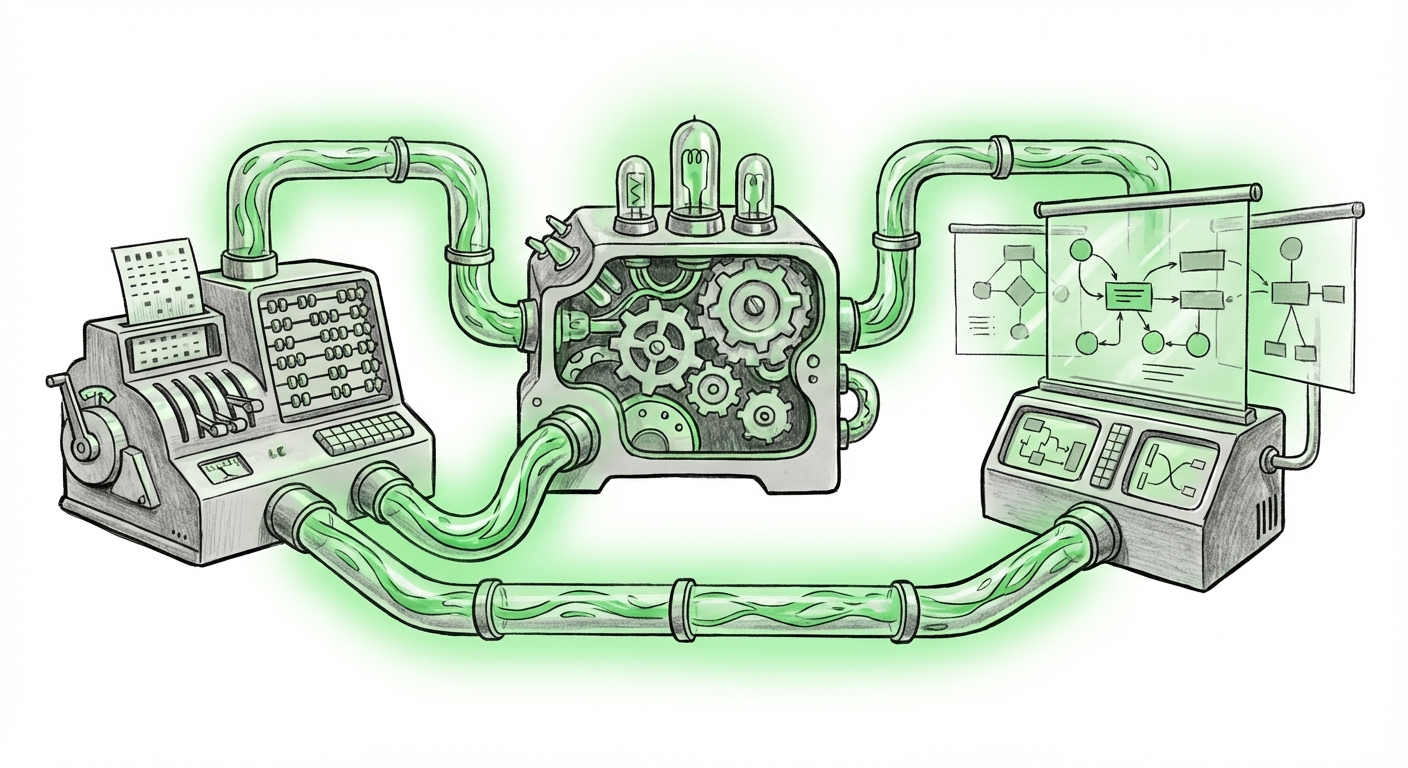
With shared context, the AI assistant tracks the *user's intent* across tools. Claude, having analyzed the raw sales figures in Excel, can automatically generate talking points, identify the most impactful charts, and structure the narrative flow directly within PowerPoint. The AI remembers that the pivot table discussed in Excel required a specific narrative focus for the upcoming slide deck.
This development confirms a major industry trend we have been tracking: The future of productivity software hinges on seamless, stateful AI integration. It’s about building AI that understands the **workflow**, not just the individual document.
Corroborating the Trend: The Competitive Ecosystem
Anthropic is not operating in a vacuum. Their move validates the direction set by tech giants. To fully grasp the significance of Claude’s move, we must look at the prevailing ecosystem strategy, driven heavily by Microsoft. Analysts constantly investigate how native solutions like Microsoft Copilot integrate across its vast suite (Word, Excel, Teams, Outlook). Articles focusing on the implementation of `"Microsoft Copilot integration across Office suite context sharing"` demonstrate the massive market appetite for this exact capability. When a major competitor like Anthropic builds robust, context-sharing add-ins, it confirms that cross-application intelligence is now table stakes for enterprise AI relevance.
This competition accelerates innovation. If Copilot masters integration within its walled garden, third-party providers like Anthropic must offer superior context sharing or specialized capabilities to win over users who prefer or require non-native solutions. This forces rapid advancement across the board.
The Technical Foundation: Context Windows and Modality Management
What makes this cross-app sharing possible is significant advancement in the underlying Large Language Models (LLMs). Sharing context across Excel (structured, tabular data) and PowerPoint (visual structure and narrative text) requires more than just holding a longer conversation; it requires multimodal reasoning.
We see this in research concerning `"AI large language models shared context across different data types"`. The underlying technology must intelligently translate structured data (like a spreadsheet formula or a dataset’s metadata) into a format the model can reason about for narrative generation, and vice-versa. This moves AI away from being purely a text processor toward being a true data interpreter capable of switching modalities effectively.
For business leaders, this means the AI is less likely to hallucinate or misunderstand the source material because the *state* of the information—its context, structure, and purpose—is being maintained throughout the entire task lifecycle, regardless of which application window the user happens to be in at that moment.
Practical Implications: Beyond Simple Automation
The shift toward workflow-aware AI has profound practical implications for how work gets done:
- Reduced Cognitive Load: Employees spend less time managing data transfer and manually restating objectives. The AI remembers the goal (e.g., "Prepare a quarterly review based on the Q3 pivot table").
- Consistency and Compliance: When the AI maintains context, the risk of slight factual drift between documents decreases. The narrative in the presentation accurately reflects the numbers in the workbook, improving internal compliance and trust in the AI-generated output.
- Complex Task Chaining: Users can now reliably automate multi-step processes that span disparate tools, such as: analyze data (Excel) -> draft executive summary (Word/Email) -> build visuals (PowerPoint) -> schedule follow-up meeting tasks (Teams/Outlook).
The Enterprise Adoption Reality Check
While the technological capability is exciting, the real test lies in enterprise deployment. Businesses are naturally cautious about feeding proprietary or sensitive data into third-party cloud services, especially within core applications like Excel, which often hold financial blueprints.
Therefore, examining trends in `"Enterprise adoption trends for third-party AI productivity tools vs native offerings"` is essential. Anthropic’s success in this space hinges on security assurances, robust data handling policies, and proving ROI over deeply embedded native solutions. For CIOs, the decision isn't just about which AI is "smarter," but which AI integrates safely and predictably into their existing IT governance framework.
The fact that Anthropic is pushing forward with these deep integrations suggests a confidence that their enterprise security posture is competitive, acknowledging that if users adopt these tools, they must do so in a way that aligns with corporate data governance.
The Future: AI Agents and Perpetual Context
What Claude is building with shared context is a foundational step toward true AI Agents.
An AI Agent is not just a reactive tool; it’s a proactive entity that manages complex goals over extended periods. Today, the shared context is limited to the current session or project file structure. Tomorrow, we anticipate models gaining true perpetual context. Imagine an AI that remembers project goals, team dynamics, and past feedback from 18 months ago, applying that historical context to the new Q4 review.
This evolution means that AI will transition from being a co-pilot performing tactical tasks to becoming an indispensable, persistent team member that manages strategic continuity. If an employee leaves, the organizational knowledge encapsulated in their workflow context (maintained by the AI) remains accessible and actionable.
Actionable Insights for Businesses Today
To harness this immediate trend, businesses should take these steps:
- Audit Workflow Bottlenecks: Identify the recurring processes that require significant manual data translation between Excel, Word, and PowerPoint. These are prime candidates for immediate AI augmentation via tools offering shared context.
- Pilot Securely: Begin limited, low-risk pilots of cross-application add-ins. Focus initial testing on non-sensitive data analysis to benchmark performance gains before deploying to mission-critical financial modeling or HR documentation.
- Invest in Prompt Engineering for Workflows: Train teams not just on how to write better single prompts, but how to structure multi-stage tasks that leverage the AI's ability to "remember" previous steps. For instance: "Using the attached Q2 report (Excel), create the first five slides of a summary deck, focusing only on findings related to the Western region."
- Establish Vendor Dialogue: Engage with AI providers (like Anthropic and Microsoft) regarding their data retention, security protocols, and how context is stored and isolated between different clients. Security is the gateway to deeper integration.
Conclusion: The Era of Unified Intelligence
The announcement of shared context between Claude’s Excel and PowerPoint add-ins is a powerful signal. It underscores that the next great competitive advantage in enterprise technology will come not just from models that are smarter in isolation, but from systems that are better integrated into the actual mechanics of human work. We are moving definitively beyond the single-task chatbot and into the age of the unified, context-aware digital collaborator.
As AI models become fluent in moving seamlessly between structured data, narrative prose, and visual presentation, the gap between analysis and action will shrink dramatically. For organizations ready to embrace this architectural shift, the efficiency gains promise to be transformative, effectively turning complex, multi-app projects into streamlined, single-prompt endeavors.