The Conversational Map: How Gemini is Turning Google Maps into a Personalized AI Travel Advisor
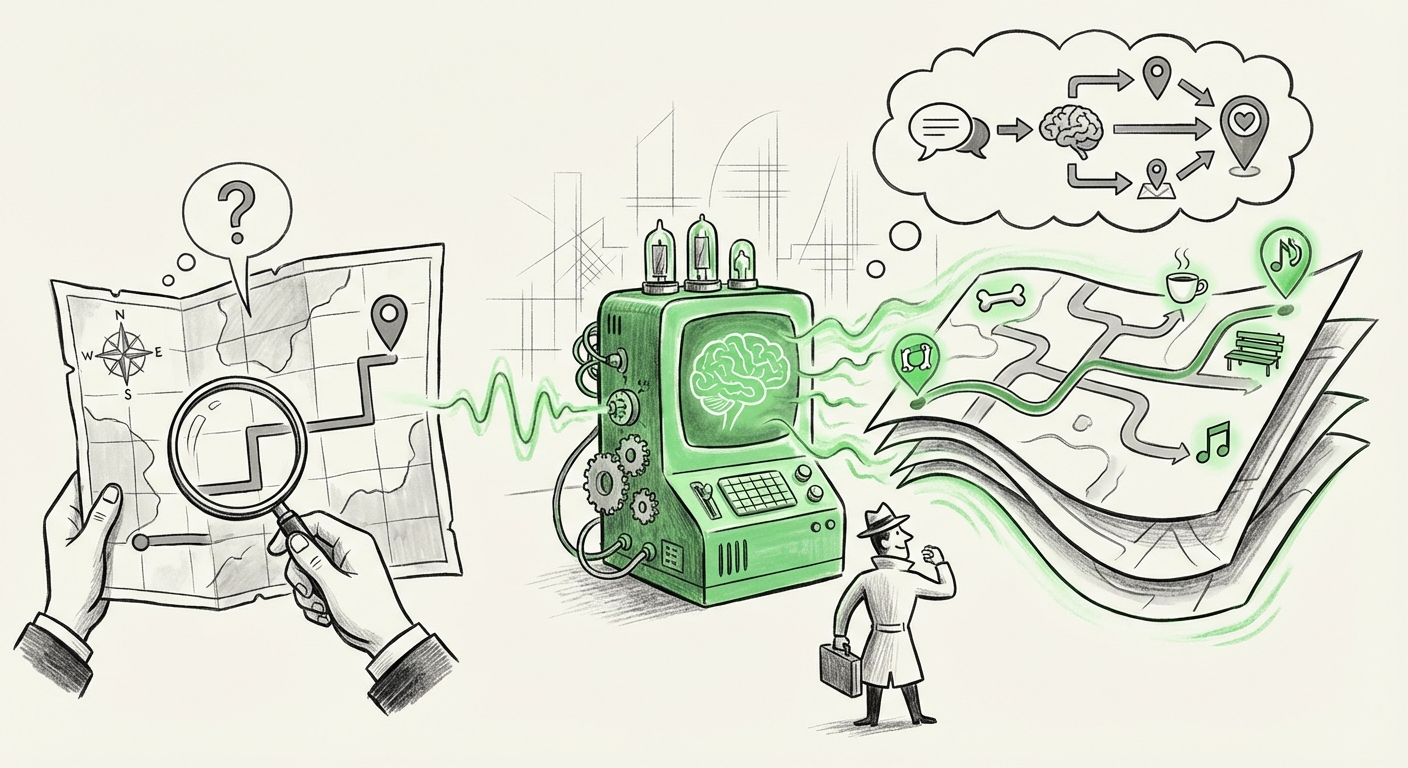
The world is getting conversational. For years, our interactions with digital assistants and software were transactional: we typed keywords, clicked links, and followed precise instructions. This era of simple information retrieval is rapidly concluding. The recent unveiling of Google’s "Ask Maps," powered by the Gemini AI model, is not just a new feature—it is a foundational shift toward personalized, conversational discovery embedded directly into essential, real-world utilities.
When a user can ask a mapping service, "Show me quiet, dog-friendly bakeries near the river that are open late," and receive a customized, visual map response, we are witnessing Generative AI leap off the chatbot interface and become a genuine, proactive travel and utility advisor. This evolution forces us to analyze three critical areas: the overarching trend of LLM integration into spatial computing, the technical hurdles overcome, and the inevitable competitive response.
The Great Migration: LLMs Move from Chat to Utility (Corroboration 1)
The integration of Large Language Models (LLMs) into mapping services like Google Maps signals a crucial development: AI is optimizing for action rather than just *answering*. Previous iterations of mapping apps were excellent at getting you from Point A to Point B, or listing businesses based on rigid categories. But they failed at synthesizing complex, subjective user intent across multiple parameters.
This trend aligns perfectly with broader industry movements analyzed in current technology literature. As AI researchers explore advancements in multimodal AI—the ability to process text, images, and spatial data simultaneously—mapping becomes the ultimate testbed. Ask Maps combines three data types seamlessly:
- Textual Query: Understanding "quiet," "dog-friendly," and "open late." (The LLM function)
- Database Mapping: Knowing where all the bakeries are. (The traditional function)
- Visual/Spatial Context: Pinpointing proximity to a "river" boundary. (The multimodal layer)
This moves the user experience from searching to advising. Analysts tracking Generative AI in location-based services trends note that this convergence is inevitable because location is inherently complex and context-dependent. Simple keyword searches are insufficient for real-life planning. The technology is shifting from *SEO-driven search* (what keywords do I need?) to *intent-driven search* (what is my actual goal?).
Implication for AI Development: Multimodality is Key
For developers, this signifies that general-purpose LLMs are being specialized for specific, high-value contexts. The technical success of Ask Maps relies on the LLM’s ability to remain grounded in factual, up-to-date geospatial data, avoiding hallucination in real-world directions or recommendations. This demands robust grounding techniques that tie the generative output directly to verified map data.
Gemini as the Ecosystem's Nervous System (Corroboration 2)
Ask Maps is more than a Maps upgrade; it is a visible component of Google's larger commitment to making Gemini the central intelligence layer across its entire product suite. Understanding this feature requires looking beyond the map and toward the entire Gemini AI integration into Google ecosystem roadmap.
If Gemini is unifying the functionality previously housed in separate systems—like the older Google Assistant or specialized search functions—then Maps is simply the first major public utility to get the conversational brain transplant. This systemic overhaul has massive implications:
- Consistency of Experience: Users will expect the same level of nuanced understanding whether they are asking Gemini to draft an email in Workspace or find a complex route via Maps.
- Data Synergy: The insights gained from millions of conversational map queries can refine Gemini's understanding of human intent, which can then feed back into improving search results or even Android device personalization.
- Developer Potential: We anticipate that Google will eventually expose these conversational mapping capabilities via APIs. Developers will no longer integrate static map layers but conversational reasoning engines, allowing third-party apps to build highly intelligent location-aware tools.
This strategic move counters previous fragmentation. By consolidating intelligence under one powerful model, Google aims for efficiency and superior performance, making the entire ecosystem smarter, faster, and more unified.
The Seismic Shift in Local Commerce and Discovery (Corroboration 3)
Perhaps the most immediate and disruptive implication of conversational mapping lies in its effect on how businesses are found. The era dominated by optimizing for keywords to capture the "Top 3 local pack" in search results is facing obsolescence.
When a user asks for a subjective recommendation ("a cozy spot for a first date"), the AI doesn't just pull the highest-rated venue; it must synthesize reviews, ambiance data, location proximity, and perhaps even current wait times (if data allows) to generate a *synthesized recommendation*. This fundamentally alters the economics of local visibility.
This leads directly to the impact of conversational search on local SEO and advertising. Businesses must pivot their focus:
- From Keywords to Quality: Businesses must ensure their underlying data (attributes, reviews, operational hours) is meticulously accurate and richly detailed. The AI judges quality based on the data it consumes.
- From Ranking to Relevance: Being ranked #1 for "coffee shop" is less valuable if the AI determines your shop is too loud or too far from the user's current complex criteria.
- New Ad Inventory: We should anticipate new advertising slots where businesses pay to have their attributes highlighted or prioritized when an LLM synthesizes an answer that matches a complex query.
For small business owners, this is a call to action: treat your digital attributes as seriously as your storefront signage. The AI is reading every word on your profile.
Beyond the Map: The Future of AI in Spatial Computing
The integration of Gemini into Maps sets a precedent for all spatial computing applications. What happens when this technology moves into augmented reality (AR) glasses or future car navigation systems? The possibilities move from planning trips to *guiding experiences* in real-time.
3D Navigation and Immersive Context
The mention of a revamped 3D navigation system alongside Ask Maps is vital. This pairing means the AI's conversational advice can be immediately rendered in an immersive, photorealistic environment. Imagine asking your car AI: "Take the most scenic route through the historic district, and point out the best view of the cathedral," and having the windshield overlay highlight the exact turn and the view spot in high fidelity.
This fusion—conversational reasoning + visual rendering—is the next frontier for AI, making digital assistance feel less like a device in your pocket and more like an intelligent co-pilot in your environment.
Challenges Ahead: Privacy and Bias
This heightened level of personalization demands ever-deeper user data access. For the AI to be a perfect advisor, it must know your preferences, your schedule, and potentially even who you are traveling with. This raises critical concerns around data privacy and location tracking. Furthermore, if the training data reflects societal biases, the AI might consistently recommend certain types of businesses or routes based on demographics inferred from the conversational context, leading to digital redlining.
Actionable Insights for Industry Stakeholders
For technology leaders, marketers, and everyday users, adapting to this new conversational paradigm requires a strategic outlook:
- For Developers & Product Teams: Prioritize building systems that interface with unified AI layers rather than siloed features. Focus on how your application can provide rich, factual data that an LLM can confidently ground its responses upon. Invest in multimodal data structures.
- For Businesses: Audit and enrich all structured data related to your location, services, and ambiance. Move beyond basic listings to detailed attribute tagging that complex LLMs can interpret subjectively.
- For Consumers: Embrace the power of detailed, natural language queries. The better you articulate your complex needs, the better the AI advisor will serve you. Understand that your preferences are now actively shaping the results you see.
The transition exemplified by "Ask Maps" confirms that Generative AI's primary long-term value lies not in creating novel content, but in synthesizing complexity across vast, real-world datasets to facilitate superior, context-aware action. The map is no longer just a tool for navigation; it is becoming an extension of our intent, powered by the smartest algorithms yet conceived.