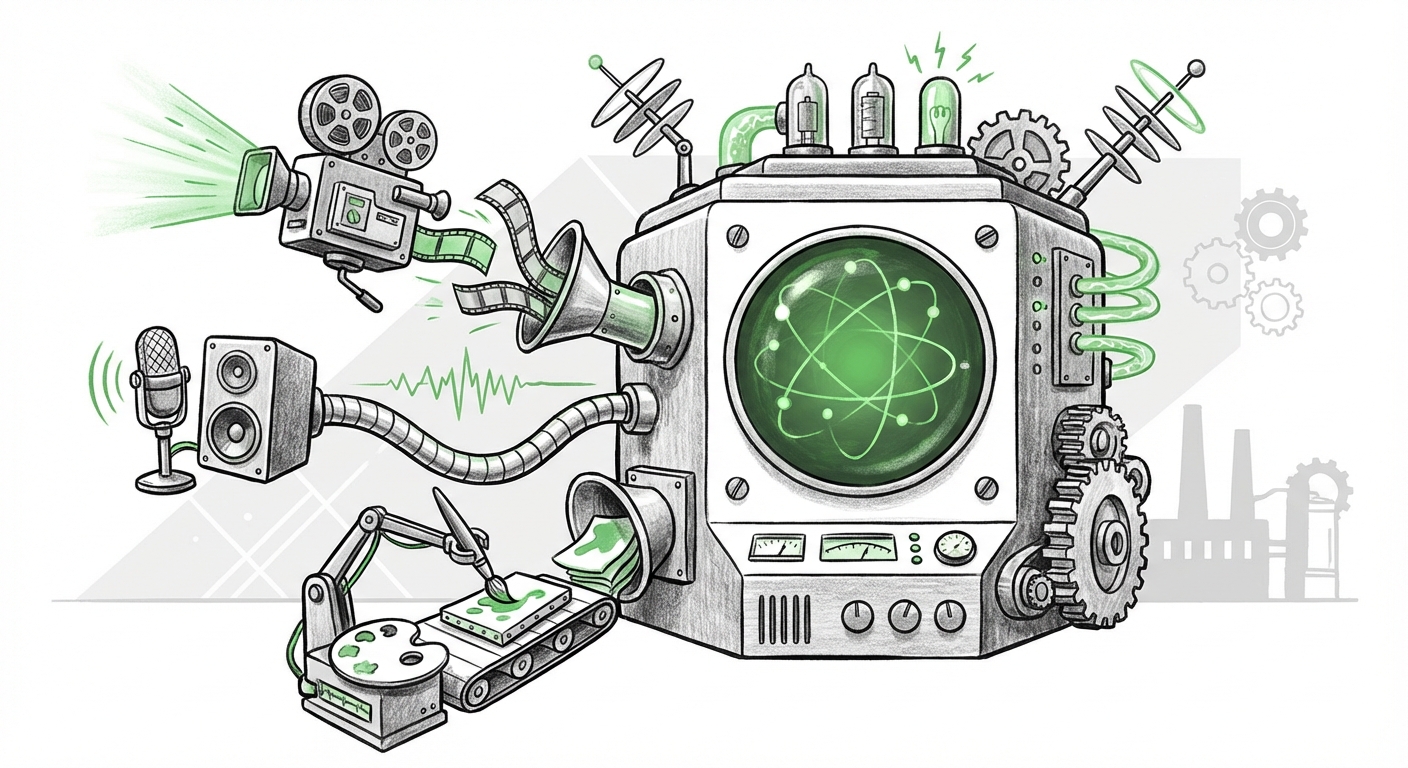
The Unification of AI: Why Integrating Sora into ChatGPT Signals the End of Siloed Generative Tools
The technology landscape is currently defined by an arms race toward ever more sophisticated Artificial Intelligence models. Among the most dazzling recent innovations is OpenAI’s Sora, a text-to-video model capable of generating high-fidelity, complex scenes that redefine the boundaries of synthetic media. Yet, recent reports suggest a crucial strategic pivot: rather than letting Sora thrive as a standalone application, OpenAI plans to fold this powerhouse technology directly into its reigning giant, ChatGPT.
As an analyst observing these tectonic shifts, this move is far more than a simple feature update. It represents a decisive bet on the future of user interaction—a move away from specialized apps and toward a single, unified, multimodal AI operating system. To understand the depth of this implication, we must analyze the underlying market forces, from user experience friction to the escalating competitive pressure.
The Friction of Fragmentation: Why Standalone Apps Stumble
Innovation often outpaces adoption, especially when new technology is packaged in a way that demands a new user habit. The initial buzz surrounding Sora suggests that while the output quality is groundbreaking, the path to accessing it might have introduced too much friction. Reports indicating the standalone Sora application saw a steep drop in App Store rankings—from No. 1 to No. 165—serve as a critical case study in product strategy.
The User Experience Hurdle
Why would users abandon the top spot so quickly? The answer lies in the nature of modern digital consumption. Users are suffering from "app fatigue." Every new, specialized AI tool—one for text, one for images, one for coding, and now one for video—requires users to context-switch, manage separate logins, and learn distinct workflows. This fragmentation kills retention.
The integration of Sora into ChatGPT leverages its massive existing user base—reportedly 920 million potential users. For a user, the process changes from:
- Opening the Sora app.
- Writing a complex video prompt.
- Waiting for the standalone generation.
To:
- Asking ChatGPT: "Generate a 10-second cinematic clip of a vintage robot making coffee in a futuristic kitchen."
This reduction of complexity into a natural language prompt within a familiar interface is the definitive victory of convenience over novelty. Our analysis into "OpenAI Sora adoption challenges" suggests that success in the generative AI space is no longer solely about model performance; it’s about accessibility and integration into existing workflows.
The Inevitable March Toward Multimodality
OpenAI’s move is not an isolated event; it mirrors a broader industry consensus that AI must become fully multimodal to be useful. Multimodal AI simply means the system can understand, process, and generate information across different formats—text, image, audio, and video—simultaneously.
The Competitive Mandate
If we examine the competitive environment, particularly the moves by rivals like Google, the pressure to unify is immense. Competitors are aggressively embedding multimodal capabilities into their core products. When researching "Generative AI multimodal integration trends 2024", the common theme is platforms battling to become the central hub of digital interaction. If ChatGPT remains purely textual while its competitor can analyze an uploaded image, generate related video, and summarize the results, ChatGPT becomes instantly dated.
Sora integration ensures OpenAI maintains parity—and potentially leapfrogs—its rivals in the crucial domain of visual generation. It transforms ChatGPT from a powerful text assistant into a comprehensive Creative Director. This means a business user could ask:
- "Draft the marketing copy for a new sneaker line." (Text)
- "Generate three lifestyle images featuring the sneakers on diverse models." (Image, likely DALL-E integration)
- "Create a 5-second video montage showing the sneaker in action, suitable for a TikTok ad." (Video, using Sora)
All within the same conversation thread. This unified approach establishes the benchmark for next-generation conversational AI.
The Business Case: Democratizing High-Fidelity Video Creation
While consumer adoption struggles with application silos, the business world hungers for powerful tools that reduce overhead. The third critical piece of context—the "business case for embedding generative video models"—explains the high-stakes B2B rationale behind this integration.
From Novelty to Necessity
Generative video is a significant leap in resource saving. Producing high-quality video content traditionally requires substantial investment in studios, actors, cameras, and editing suites. Sora, accessible via a simple chat interface within ChatGPT, effectively places this production power into the hands of any salaried employee.
For Enterprise Adoption Leaders, this means:
- Rapid Prototyping: Marketing teams can instantly visualize campaign concepts before committing expensive resources.
- Internal Training: Creating bespoke, short instructional videos tailored to specific departmental needs within minutes.
- Personalized Content Scaling: Generating unique video assets for thousands of targeted customer segments without scale limitations.
By embedding Sora into ChatGPT, OpenAI is maximizing the potential for API monetization and enterprise subscription tiers. They are not just selling access to a model; they are selling the instantaneous creation of high-value digital assets through the easiest possible user pathway.
Practical Implications: Redefining Roles and Skills
This consolidation has profound implications that stretch beyond OpenAI’s balance sheet, impacting job roles and societal interaction with media.
For Product and UX Professionals
The takeaway here is clear: Infrastructure over Interface. Building a standalone application for a groundbreaking model is an effective way to prove capability (a crucial step for models like Sora), but sustained growth demands embedding that capability into the most sticky, high-traffic user environments. Product managers should focus less on designing entirely new siloed experiences and more on how new foundational models can enhance existing, proven user journeys.
For Business Leaders and Investors
The trend is toward platformization. Investors should look favorably upon companies that successfully unify disparate AI capabilities under a single, dominant brand interface. The value shifts from the specific model architecture (e.g., Sora's technical design) to the distribution channel (ChatGPT's massive user base). Companies relying on outsourced, complex video production will need to rapidly develop internal prompt engineering and AI governance policies to capitalize on this immediate accessibility.
Societal Echoes: The Challenge of Veracity
As text, image, and video generation converge in one conversational window, the challenge of distinguishing reality from synthetic content intensifies. When a user can request a photorealistic video of an event simply by talking to ChatGPT, the stakes for deepfake detection and AI watermarking escalate dramatically. This integration necessitates that OpenAI—and the entire industry—prioritizes robust provenance tracking alongside feature releases.
Actionable Insights for Navigating the Integrated AI Future
For organizations looking to stay ahead of this rapidly evolving terrain, several proactive steps are necessary:
- Audit Existing Workflows for Integration Potential: Identify every workflow that currently requires switching between different specialized AI tools (e.g., ChatGPT for text summaries, a separate tool for mock-up images). These are your immediate targets for efficiency gains once multimodal ChatGPT rolls out widely.
- Invest in Prompt Mastery Across Modalities: Training should shift from specialized tool usage to mastering complex, cross-modal prompting. Employees must learn how to ask for video clips that visually align with brand-approved text and image styles.
- Establish Internal AI Governance Early: Given the power of text-to-video, establish clear guidelines on what types of content can be generated internally and for external use. This preempts ethical and compliance risks before the technology becomes ubiquitous.
The reported integration of Sora into ChatGPT is more than just exciting news; it is a clear declaration of intent that marks a pivotal moment in AI adoption. The era of discreet, specialized AI tools is giving way to the era of the ambient, unified AI companion. By prioritizing seamless integration over isolated brilliance, OpenAI is cementing ChatGPT not just as a market leader, but as the foundational operating system for the next wave of digital creation.