The $200 Tireless Agent: Analyzing Perplexity's 'Personal Computer' and the Rise of Persistent AI
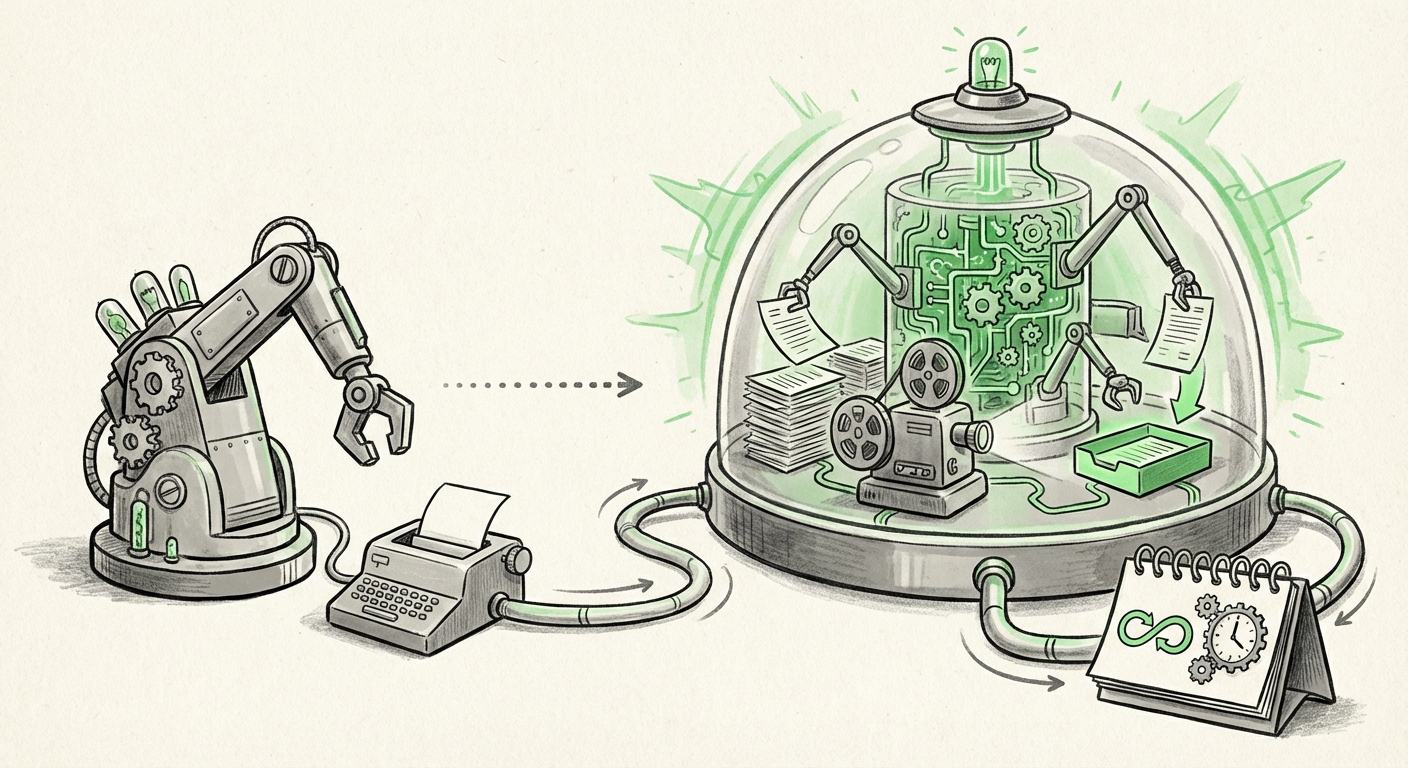
The world of Artificial Intelligence is rapidly evolving beyond the reactive chatbot. For years, our interaction with AI has been defined by a Q&A session: we ask, it answers, and the connection resets. However, a recent development from Perplexity AI—the proposal of a dedicated, always-on, $200-per-month "Personal Computer" powered by AI—signals a profound structural shift. This isn't just a better search engine; it’s the introduction of a *persistent, proactive agent* designed to live within our digital workflow, handling tasks like email management and presentation creation tirelessly.
To understand the gravity of this move, we must look beyond the headline price tag. We need to contextualize this offering within the broader trajectory of agentic AI, evaluate the market's readiness for high-cost, specialized subscriptions, and weigh the technical hurdles of true persistence. This development forces us to re-examine the definition of personal computing itself.
The Critical Leap: From Chatbot to Tireless Agent
The fundamental difference between current market leaders (like standard ChatGPT or basic Perplexity) and the proposed "Personal Computer" lies in *persistence* and *autonomy*. Traditional Large Language Models (LLMs) are stateless; they require constant re-prompting and lack long-term memory across sessions.
Perplexity's vision, however, aligns perfectly with emerging trends identified in the broader ecosystem. The industry is universally moving toward Autonomous AI Agents—systems capable of breaking down complex goals into sub-tasks, executing those tasks across multiple tools, and self-correcting. This movement is well-documented as competitors race to build sophisticated agentic capabilities, seeking to transition from being mere knowledge tools to genuine digital employees.
If Perplexity succeeds, it means the AI isn't just summarizing information; it's taking *ownership* of workflow segments. Managing an overflowing inbox or drafting the initial structure of a business presentation are actions that require continuous context. This level of functionality validates the industry push for agentic workflows, where the ROI isn't just faster answers, but time reclaimed entirely.
Corroborating the Agent Trend
Industry analysts are tracking this shift closely. The move toward "do-bots" over simple "chatbots" suggests that investors and enterprise strategists are expecting AI to graduate from assistant to executor. This validates the technological direction Perplexity is taking. The challenge, as noted in discussions around Autonomous AI Agents market trends and adoption rates, is moving these proofs-of-concept into reliable, production-ready systems that can handle real-world friction.
The Calculus of Cost: Analyzing the $200 Monthly Barrier
The $200 per month price point is steep for an individual, placing this "Personal Computer" in competition not just with software, but with entry-level human assistants or specialized B2B SaaS tools. This brings us directly to the question of subscription viability and consumer readiness.
The New SaaS Ceiling
We are witnessing "SaaS fatigue" in many sectors, yet the appetite for transformative AI seems willing to absorb premium pricing, particularly in professional settings. Microsoft’s introduction of its Copilot suite at premium monthly costs demonstrates that high-value B2B AI integration can command significant fees. Perplexity is attempting to democratize this premium capability for the individual professional.
For the $200 subscription to be viable, the agent must deliver value far exceeding that of current $20 or $40-per-month subscriptions. It must genuinely replace hours of focused, administrative, or repetitive cognitive labor. This necessitates a deep dive into The future of personal productivity software subscriptions versus perpetual licenses. If this agent genuinely handles 10–15 hours of email processing or document structuring per month, the cost might be justifiable as a time-saving expense rather than a software purchase.
The Technical Tightrope: Feasibility of Tireless Operation
The promise of "tireless" operation is perhaps the most ambitious technical claim. Maintaining context over days or weeks—necessary for managing an ongoing email thread or tracking a complex project deliverable—is exponentially harder than managing a 30-minute chat session.
The Context and Memory Problem
AI models have historically been limited by context windows—how much data they can "remember" during a single interaction. To be a tireless agent, Perplexity must solve long-term, continuous memory management. This isn't solved by simply having a larger input box; it requires sophisticated, tiered memory systems, often involving advanced Retrieval Augmented Generation (RAG) architectures that selectively store and retrieve relevant historical data without crashing the system or incurring astronomical inference costs.
Technical discussions focusing on the Challenges in maintaining continuous, context-aware AI operation reveal that reliability is the key obstacle. An agent that randomly forgets instructions or introduces "hallucination drift" over time will quickly be abandoned, regardless of its initial capabilities. The $200/month fee must translate directly into guaranteed uptime and statefulness that mimics human continuity.
Societal Ripples: Reshaping the Knowledge Worker
If a single individual can effectively outsource their low-to-mid-level administrative and drafting work to a $200/month agent, the implications for the labor market are immediate and profound.
Disruption in White-Collar Roles
The targeted tasks—emails and presentations—are the bedrock of middle-management and entry-level corporate roles. Articles examining How AI agents will disrupt traditional knowledge worker roles suggest that the focus must shift rapidly from task execution to oversight, strategy, and emotional intelligence.
This isn't just about efficiency gains; it’s about role obsolescence for tasks easily codified. For businesses, the calculus becomes: is it cheaper to retain a junior analyst whose core function is data aggregation and initial report writing, or to invest in this agent and upskill the human for higher-value strategic thinking? The answer heavily favors the agent, provided the technology is reliable.
Implications for Human Skill Development
For the individual user, adopting such a tool requires a change in mindset. You move from being the *doer* to being the *editor* and *director*. Your new core skill set must revolve around:
- Prompt Engineering for Agents: Giving high-level, strategic directives rather than step-by-step instructions.
- Verification and Vetting: Critically reviewing the agent’s output for accuracy, tone, and ethical alignment.
- Integrating Emotional Context: Handling sensitive communications or negotiations that require nuance beyond the AI’s current scope.
Actionable Insights for Navigating the Agent Economy
Perplexity’s offering is a bellwether—a sign that the market is hungry for high-fidelity, persistent AI solutions. What should technology leaders and individual professionals do now?
For Businesses and Enterprise Strategists:
- Pilot Agent Frameworks Now: Don't wait for the perfect enterprise agent suite. Begin piloting open-source or early-stage agent frameworks to understand internal friction points and determine which workflows are most amenable to autonomy. This directly ties into assessing Autonomous AI Agents market trends.
- Reassess Tiered Roles: Immediately begin modeling the impact of agents on entry-level and administrative roles. Focus on creating clear upskilling paths toward strategic oversight roles that rely on AI-generated drafts.
- Budget for High-Value Subscriptions: Anticipate that the productivity SaaS budget will shift from multiple low-cost tools to fewer, high-cost, deeply integrated AI services. Factor the $200/user/month cost as a baseline for high-end productivity.
For Individual Professionals:
- Identify Your Cognitive Surplus: List the tasks you spend significant time on that require low-to-medium creativity (e.g., summarizing meetings, drafting first-pass internal memos). These are the tasks you should aim to delegate first.
- Become a Master Director: Focus your personal development budget on strategic communication and complex problem-solving, not on mastering basic software functions. Your value will increasingly lie in the *questions* you ask and the *decisions* you make based on AI output.
- Test High-Cost Tiers Cautiously: When a service like Perplexity offers a high-cost commitment, test its capabilities exhaustively for one month against your most critical workflows before committing long-term. The value proposition must be undeniable.
The idea of a $200 "Personal Computer" powered by AI moves us from an era where we use software to a reality where we *employ* digital entities. This shift is defining the next decade of technology, demanding both technical excellence in building reliable agents and societal adaptation in redefining what human work truly means.