The Great Convergence: Why Sora’s Integration Into ChatGPT Signals the End of Standalone AI Apps
In the fast-moving world of Artificial Intelligence, news cycles are measured in weeks, not months. But every so often, a development emerges that feels less like an incremental update and more like a tectonic shift in strategy. The recent reports suggesting OpenAI plans to fold its revolutionary video AI, Sora, directly into its flagship product, ChatGPT, is precisely that kind of pivot.
The initial narrative around Sora was one of pure technological awe—a tool capable of generating photorealistic, complex video scenes from simple text prompts. However, the data point that truly frames this strategic decision is sobering: reports indicate that the standalone Sora app saw its App Store ranking plummet, falling from the top tier to outside the top 165. This failure to launch as a popular standalone entity has triggered a necessary course correction: leverage the established behemoth.
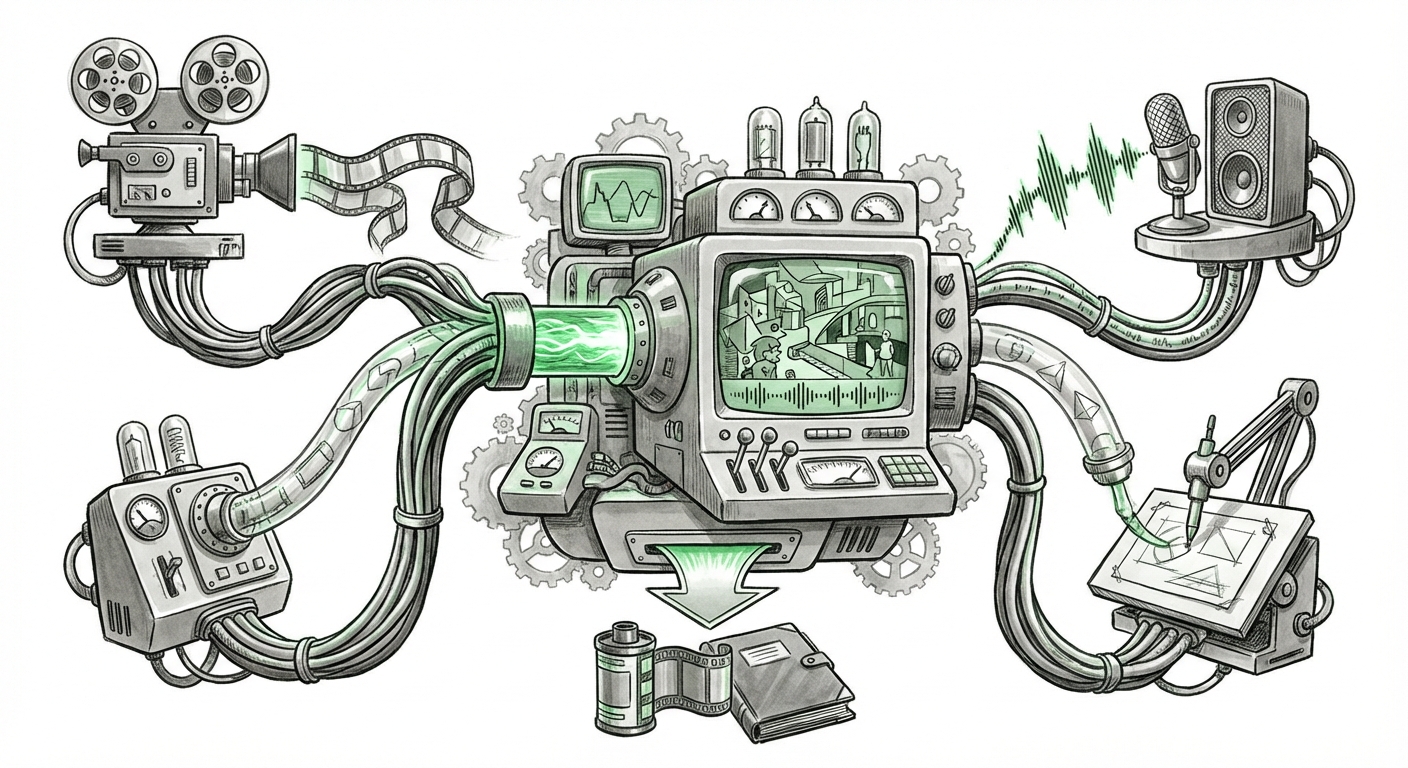
As an AI technology analyst, the crucial question is no longer *if* multimodal AI will dominate, but *how* it will be delivered. This integration plan suggests the answer is consolidation. We are witnessing the strategic death of the separate, single-function AI application and the birth of the truly intelligent conversational agent.
The Logic of Consolidation: Why Standalone AI Apps Fail
The early days of generative AI saw a rush to build specialized apps—one for text, one for images, one for voice clones. While exciting for early adopters, this fragmented approach creates user friction. Why would a user download, manage, and pay for a separate app when their primary AI interaction point is already ChatGPT?
The apparent decline in Sora’s standalone app ranking highlights several core technological and business realities:
1. The Compute Cost Conundrum
Generating high-fidelity video is notoriously expensive in terms of computational power (inference costs). Offering this immediately to millions of free or low-tier users via a dedicated app is financially unsustainable. By integrating Sora into the established ChatGPT architecture—likely reserved for higher-tier subscribers (like ChatGPT Plus or Enterprise)—OpenAI can better manage server load and tie the most expensive features to the highest-value customers. This ensures a sustainable business model for frontier AI.
2. The Path of Least Resistance
For the average user, accessibility trumps novelty. When an idea strikes, the user should not have to open three different applications to execute it. If a user can simply tell ChatGPT, "Draft an email about X, create an accompanying diagram of Y, and generate a 10-second promotional clip for Z," the barrier to creation vanishes. This seamless workflow is the ultimate goal of user-centric AI.
This strategic move corroborates a broader industry realization: the interface for the future is not a specialized app; it is a universal conversational interface, akin to a personalized operating system. Our search for corroborating trends suggests this is not unique to OpenAI. Competitors are already pursuing this unified path.
The Multimodal Mandate: Industry Convergence
The integration of text, image, and now video within one chat window is the definition of a multimodal strategy. This isn't just about adding features; it’s about enabling AI to reason across different data types simultaneously, a capability that mimics human thought more closely.
The Competitive Landscape Forces Integration
OpenAI is operating under immense competitive pressure. If they hesitated to integrate Sora, they risked being seen as lagging behind competitors who prioritize platform unification. Reports on industry peers, such as Google’s Gemini ecosystem or Meta’s foundational model rollouts, reveal a shared vision:
- Google's Gemini/Veo: Google has consistently aimed to embed its capabilities—text, code, image (Imagen), and video (Veo)—directly into the Gemini interface. This forces users to interact with Google's entire AI stack through one door.
- The Agentic Shift: The goal across the industry is to build AI *agents*—systems capable of planning, executing, and revising complex tasks using whatever tool is necessary (whether that tool is a code interpreter, an image generator, or a video renderer). Sora becomes just another specialized tool in the ChatGPT agent's toolbox.
For AI developers and product managers, this convergence implies that future innovation success hinges not on building the best *single model*, but on building the best *orchestration layer* to deploy those models intelligently.
Future Implications: The Democratization of High-Fidelity Content
When a powerful tool like Sora—which previously felt like it belonged only in the hands of Hollywood VFX studios—is accessible via a monthly subscription to millions, the impact on creative industries is profound. This shift moves generative video from a niche, experimental technology to a mainstream utility.
Disruption in the Content Creation Workflow
For creative professionals, marketers, educators, and small business owners, easy access to video generation via chat fundamentally changes workflows:
- Rapid Prototyping: A marketing team can now generate dozens of visual concepts for an ad campaign in the time it used to take a designer to sketch the first idea. The prompt becomes the storyboard.
- Personalized Education: Educators can instantly generate visual examples to explain complex scientific or historical concepts, moving beyond static slides to dynamic, custom-made instructional clips.
- Small Business Empowerment: Small businesses that could never afford professional video production can now create high-quality product demos or social media content instantly, leveling the playing field against larger corporations.
The crucial implication here is the shift in value. The scarce resource is no longer the technical ability to create the video (the AI handles that); the scarce resource is the quality of the prompt, the strategic vision, and the editing skill applied afterward. The job of the creative shifts from being a technician of the brush or camera to being an architect of language and narrative.
Navigating the New Ecosystem: Actionable Insights
This strategic consolidation demands a response from both users and established businesses. How should we prepare for a world where text, images, and video generation flow from a single chat interface?
For Businesses and Enterprises: Integrate or Be Left Behind
Enterprises must move beyond experimenting with single-use AI plugins. The focus must be on how to embed these multimodal capabilities directly into existing internal workflows:
- Rethink Training & Documentation: If training videos can be generated on demand for new software features, the entire process of creating internal onboarding materials changes.
- Adopt Platform-First APIs: Instead of relying on potentially unstable third-party apps, businesses should prioritize using APIs from the major foundational providers (OpenAI, Google, Anthropic) that promise greater stability and control over model versions.
- Invest in Prompt Engineering for Video: Just as prompt engineering unlocked image generation, teams need expertise in crafting detailed, cinematographic prompts that yield production-ready video outputs from Sora within the ChatGPT environment.
For Developers and Tech Watchers: Platform Lock-In vs. Open Source
The move by OpenAI strengthens the walled garden effect. By integrating Sora, they increase the stickiness of ChatGPT, making it harder for users to switch to competitors whose multimodal offerings might be less integrated. This creates a high barrier to entry for new startups hoping to carve out a niche as the "best video generator."
Conversely, this trend fuels the need for robust, high-performing, and accessible open-source alternatives that can run locally or on smaller cloud instances, offering a viable, decentralized route for those wary of platform dependence.
Conclusion: The Era of the Unified AI Agent
The reported strategy of merging Sora into ChatGPT is a powerful market signal. It confirms that the race in frontier AI is no longer about developing the most novel model in isolation; it is about delivery. The user experience demands seamlessness, and that demands consolidation.
While the standalone app might have struggled to find its footing outside the initial hype cycle—perhaps due to high costs or limited utility compared to the sheer versatility of ChatGPT—embedding it transforms the platform into something profoundly more powerful. ChatGPT is evolving from a smart chatbot into a true, general-purpose creative partner, capable of handling complex, multimodal tasks with a single conversational prompt.
We are entering the age of the Unified AI Agent. The next few quarters will reveal how effectively Google, Meta, and others can match this integration depth. For now, OpenAI appears to be cementing its lead not just through superior technology, but through superior strategic packaging.