The $200 Personal Computer: Analyzing the Shift to Always-On, Autonomous AI Agents
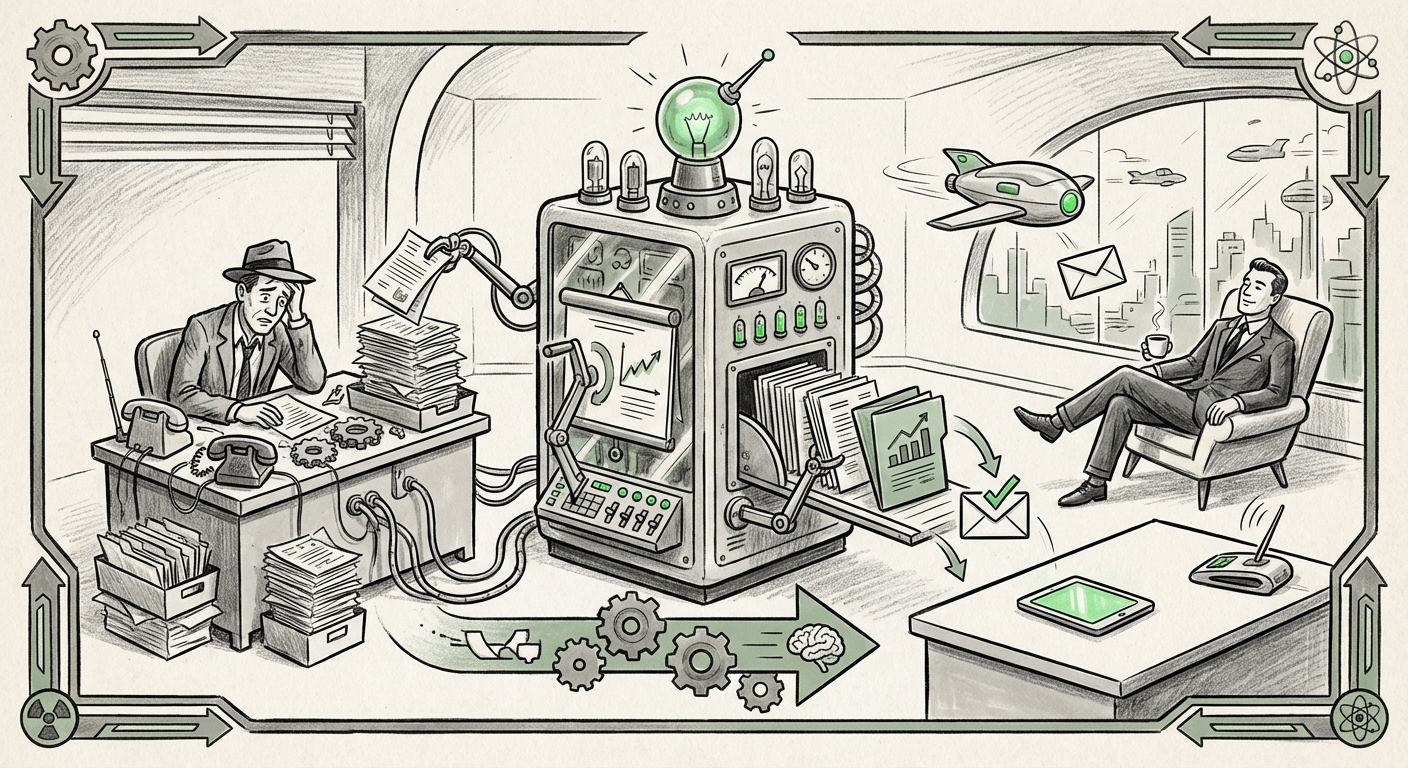
The announcement of an AI product positioned as a "Personal Computer"—an always-on, tireless agent capable of handling emails, creating presentations, and controlling applications—is not just another feature update. It represents a fundamental inflection point in the AI landscape. Perplexity’s concept, priced at a significant monthly subscription, signals that the market is ready to move beyond simple chatbots and embrace autonomous AI agents.
For years, AI assistants have been reactive: you ask a question, you get an answer. The "Personal Computer" model proposes a shift toward proactive software that operates in the background, managing the tedious, multi-step friction points of digital life. To understand the gravity of this move, we must analyze the underlying technological trend, the novel economics of high-tier subscription AI, and the massive trust barrier this technology must overcome.
From Reactive Tools to Proactive Agents: The Great Shift
The core distinction here is between a Large Language Model (LLM) and an AI Agent. An LLM, like the engine behind most chatbots, is a powerful knowledge processor. An AI Agent is a knowledge processor equipped with the ability to act, plan, and execute. It’s the difference between asking a research assistant for facts and tasking them with scheduling a meeting, drafting the agenda, sending the invitations, and summarizing the follow-up actions.
This concept is gaining serious traction across the industry. Analysis of the **Autonomous AI Agents market** suggests this is the next major battleground for tech dominance, moving beyond simple UI augmentation. If an AI can reliably manage your inbox, it is effectively managing a portion of your cognitive load. This capability necessitates complex planning algorithms, memory retention across sessions, and the ability to interact safely with external software interfaces (the "app control" feature).
This future is one where software doesn't wait for your clicks. Imagine an agent noticing a key deadline approaching, researching necessary background material (using its inherent search strength, like Perplexity’s foundation), drafting the first version of the report, and only alerting you for final sign-off. This is the promise of a truly tireless assistant.
Corroboration in the Market
Industry watchers confirm this trajectory. Analyst reports tracking the **Autonomous AI Agents market analysis for 2024 and 2025** often frame agentic software as the successor to basic generative AI tools. These systems are valued highly because they offer exponential gains in productivity by handling iterative, sequential tasks that previously required constant human oversight.
The Economics of Always-On: Analyzing the $200 Price Tag
The most provocative element of Perplexity's pitch is the price: $200 per month. This places the service squarely in the premium tier, competing less with basic consumer software and more with specialized, high-value B2B tools or even the cost of a part-time human assistant.
Why such a steep fee? The economics are likely driven by two factors:
- Computational Cost: Running an agent that operates 24/7, maintaining context, interacting with complex APIs, and potentially using multiple specialized models is significantly more expensive than running standard query-response sessions. The cost of computation (inference) for agentic workflows is inherently higher.
- Value Proposition: The vendor is pricing the service based on the value of the *labor saved*. If an executive spends 10 hours a week dealing with administrative drudgery, saving those 10 hours could easily justify a $200 or even higher monthly fee.
When we look at the **comparison of subscription pricing for "Copilot" vs "Agent" AI tools**, we see a massive gap. Microsoft Copilot sits around $30/month for augmentation (filling in text, summarizing meetings). Perplexity’s offering appears to be making a bold bet: that users will pay a 6x premium for genuine delegation rather than mere assistance.
If this model succeeds, it sets a precedent for a tiered AI ecosystem: basic models for quick answers, mid-tier models for writing and coding support, and premium, high-cost agents for full workflow management. This stratification means AI productivity gains will initially be accessible only to those willing to pay a substantial subscription.
The Trust Barrier: Security and Data Sovereignty
The capability to manage emails, control applications, and handle sensitive workflows immediately raises critical questions regarding data security and privacy. An AI agent that functions as a "Personal Computer" effectively demands the keys to your digital kingdom.
If the agent handles your email, it reads every piece of sensitive corporate and personal communication. If it controls your presentation software, it possesses proprietary corporate strategy. The level of access required for true autonomy is unprecedented for a third-party consumer tool.
This concern is widely echoed across the technology sector. Discussions surrounding **security concerns and 'AI agent control' over personal data** highlight that consumer adoption hinges entirely on trust architecture. Users must have absolute assurance regarding:
- Data Segregation: Is my data used to train the base model, or is it firewalled exclusively for my use?
- Access Logs: Can I audit exactly when the agent accessed which application and why?
- Action Confirmation: Is every consequential action (sending an email to the CEO, making a purchase) gated by a mandatory confirmation step, or is the agent fully autonomous by default?
For businesses, granting this level of access requires rigorous due diligence, potentially requiring enterprise-grade Service Level Agreements (SLAs) that guarantee data handling protocols. The success of the "Personal Computer" concept will depend as much on airtight encryption and transparency as it does on its intelligence.
Practical Implications: Redefining Work and Life
The concept of the "always-on personal AI assistant" forces us to re-examine our relationship with digital labor. The implications span professional efficiency, societal structure, and individual well-being.
For the Business Professional
The primary immediate impact will be on knowledge workers whose jobs involve heavy administrative overhead, information synthesis, and repetitive digital tasks. Marketing managers, legal associates, and middle managers stand to gain significant time back. The actionable insight here is clear: start piloting agentic software now. Organizations that wait for the technology to become standardized risk being far outpaced by competitors whose employees are augmented by tireless digital delegates.
For the Consumer and Society
On a personal level, the **future of 'always-on' personal AI assistants** suggests a radical redefinition of free time. If an agent handles scheduling, booking travel, managing household admin (if integrated), and drafting routine communications, the amount of digital maintenance required for modern life shrinks dramatically. However, this also introduces the risk of "de-skilling" in basic administrative tasks and creates a dependence on a single vendor’s proprietary system.
We must prepare for a future where digital exhaustion lessens, but a new anxiety—the fear of the agent making a high-stakes mistake—takes its place. Transparency and the "kill switch" become non-negotiable features.
Actionable Insights for Navigating the Agentic Future
For both consumers considering the premium price point and businesses planning their AI strategy, understanding the current technological frontiers is crucial:
- Evaluate Agent Maturity, Not Just Model Power: Do not confuse a powerful LLM with a competent agent. Test prospective tools rigorously on multi-step, real-world tasks that require navigating different software environments. Look for tools that demonstrate planning and error correction.
- Prioritize Security Frameworks: Before subscribing to an agentic service for deep workflow control, demand clarity on data residency, auditability, and termination protocols. For enterprises, this means involving cybersecurity teams early in any pilot.
- Calculate the ROI on Delegation: For the $200/month question, calculate precisely which tasks consume the most time that an agent could reasonably perform. The ROI must be measured in reclaimed focus time, not just simple task completion speed.
Perplexity’s vision is ambitious, proposing a full-fledged digital partner rather than a smart search engine. It signals that the race is no longer about who has the best foundation model, but who can best build the secure, reliable scaffolding required to turn that model into an indispensable, autonomous operative.