The Age of the AI Solopreneur: China's Subsidized 'One-Person Companies' and the Future of Work
The technological landscape is perpetually shifting, but every so often, a development emerges that doesn't just change *how* we work, but fundamentally redefines *what* a "company" even means. We are witnessing such a pivot point today with reports indicating that several local governments in China are aggressively subsidizing the creation of **"OpenClaw" companies**. These are not traditional startups; they are entities designed to be run by a single human founder, whose entire workforce consists of sophisticated Artificial Intelligence agents.
This initiative signals a deliberate, state-level strategy to integrate autonomous AI agents directly into the micro-economy. For technology analysts, this development is a crucial data point. It forces us to move past hypothetical discussions about future job displacement and confront the immediate reality of AI-powered economic units being intentionally deployed. To understand the magnitude of this shift, we must contextualize the OpenClaw model against global AI agent adoption, existing economic policy, and the inevitable legal quandaries that follow.
The Radical Concept: One Human, Infinite Agents
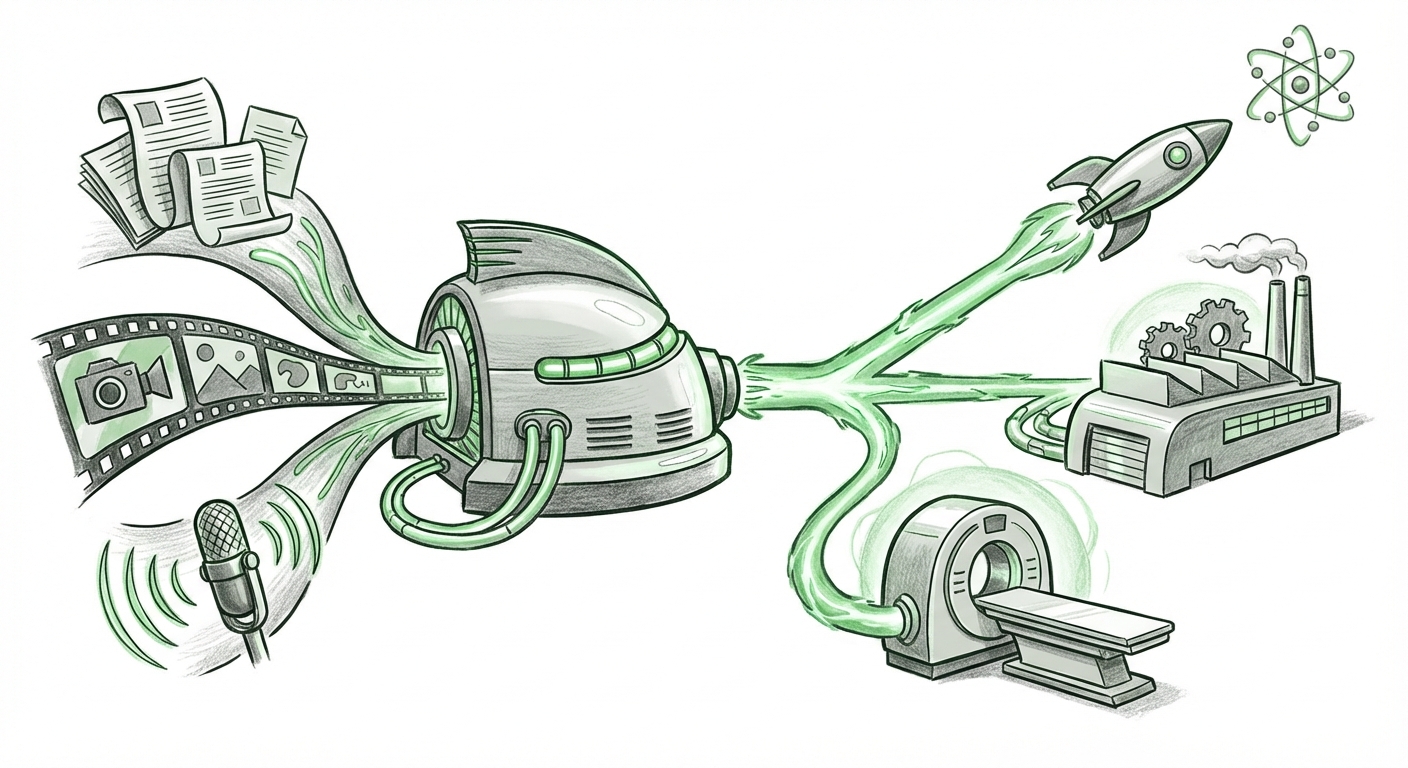
Imagine a business where the owner handles high-level strategy and oversight, while an army of AI agents—some handling customer acquisition, others executing code, others managing logistics—handle the day-to-day operations. This is the vision underpinning the OpenClaw model. The term suggests clawing back productivity and economic output through automation, driven by a singular human decision-maker.
The government subsidy aspect is what elevates this from a niche tech experiment to a significant economic signal. By injecting millions into these projects, local authorities are effectively subsidizing the *creation of virtual labor*. This isn't just about encouraging the use of a new software tool; it’s about institutionalizing the structure of the AI agent workforce.
Benchmarking Against Global Agent Integration
While China’s approach is overtly subsidized, the underlying technological trend is global. Markets in the US and Europe are seeing rapid adoption of autonomous agents for internal efficiencies. We see this trend playing out in various sectors:
- Software Development: AI agents are increasingly used to write, debug, and test codebases, moving beyond simple auto-completion tools.
- Customer Operations: Complex, multi-step customer service and sales qualification are being handed entirely to agentic workflows.
- Data Synthesis: Agents autonomously scrape data, synthesize findings, and generate reports without step-by-step human prompting.
The value here, as noted in broader industry reports on **"AI agent workforce integration"**, lies in exponential productivity gains. Where a small team might take weeks to launch a product iteration, a single founder with subsidized, specialized agents could potentially achieve the same output in days. The OpenClaw model essentially takes this private productivity gain and attempts to scale it rapidly across the national SME landscape.
The Geopolitical and Economic Context: Why Now?
Understanding *why* China is pushing this specific model requires looking beyond the technology itself and examining national strategy. This move aligns closely with macro-economic objectives focused on technological self-sufficiency and leveraging AI to counteract demographic headwinds.
Countering Demographic Shifts with Digital Labor
Many developed economies, including China, face shrinking working-age populations and rising dependency ratios. Traditional labor growth is plateauing or declining. The OpenClaw initiative provides a potent answer: substitute traditional human labor not with robots on an assembly line, but with software agents in the service and digital economy. By researching reports related to **"China digital economy strategy"** and the **"dual circulation strategy"**, we see this isn't merely about efficiency; it’s about maintaining or increasing GDP output despite a smaller workforce. The AI agent becomes a critical, subsidized factor of production.
Fostering Deep AI Integration
Subsidizing the creation of these companies forces entrepreneurs to deeply integrate complex agent systems into their business models immediately. This creates a rapid feedback loop. Founders must become experts in prompt engineering, agent orchestration, and testing AI reliability—effectively creating a large, decentralized pool of practical AI deployment expertise that benefits the national tech ecosystem far beyond the initial subsidy recipients.
The Inevitable Friction: Legal Status and Liability
The most complex implication of the OpenClaw structure is the collision between autonomous operational capacity and established legal structures. If an AI agent, acting on behalf of the "one-person company," commits a contractual error, generates libelous content, or fails to adhere to financial regulations, where does the liability fall?
This intersects directly with ongoing global debates concerning the **"legal status of AI agents."** Currently, most jurisdictions treat AI software as a tool, meaning the ultimate legal liability rests with the human operator or the company that deployed it. In the OpenClaw scenario, the human founder is theoretically the sole principal, but their operational control over every AI decision is, by definition, minimized.
For the founders, navigating this means understanding that the government might fund the *creation* of the enterprise, but the legal system will still hold the human owner accountable for the *actions* of their synthetic workforce. Legal frameworks, perhaps those being debated under regulations like the EU AI Act (though focused elsewhere), must adapt quickly to define chains of responsibility when agency is distributed across multiple software entities controlled by one human overseer.
Impact on the Global Labor Market and Sentiment
The rollout of subsidized AI solopreneurship in a massive economy like China will inevitably generate significant global sentiment and economic ripple effects, particularly regarding the **"future of work."**
The Dual Narrative: Liberation vs. Displacement
For advocates, the OpenClaw model represents the ultimate liberation from traditional employment. It empowers the *micro-entrepreneur*—the individual who can now run a company with the capability of a small firm, unshackled by high labor costs. This fuels the narrative of **"micro-entrepreneurship powered by AI."**
However, for those observing from traditional labor markets, the narrative often shifts toward **"AI replacement fear."** If a subsidized, single-person entity can perform the work of five salaried employees, the pressure on wages and employment stability in comparable industries worldwide increases dramatically. This doesn't just affect entry-level roles; it impacts specialized digital freelancers whose work—from graphic design coordination to administrative support—can now be encapsulated within a single, government-backed agent structure.
Implications for Global Competition
Businesses outside China competing in service or digital goods markets must recognize that they are now competing against subsidized, highly automated entities. This creates an uneven playing field where overhead costs for the OpenClaw firms are artificially lowered via government incentives, potentially leading to price undercutting in global markets.
Actionable Insights: Navigating the Agent Economy
For technology strategists, business leaders, and policymakers, the rise of the OpenClaw entity demands a proactive response:
- Benchmark Agent ROI Now: Companies must aggressively test and measure the ROI of autonomous agents internally. If the productivity gains seen globally (Query 1) are real, the OpenClaw model is an inevitability, subsidized or not.
- Focus on Human-Centric Value: If AI agents handle operational tasks, human roles must pivot entirely toward tasks that require true novelty, deep emotional intelligence, cross-domain synthesis, and ethical judgment—areas where current agents still struggle significantly.
- Demand Regulatory Clarity: Legal departments must begin modeling potential liability scenarios based on agent interaction. Waiting for regulation is no longer feasible; modeling risk *now* is essential for deploying complex autonomous systems safely.
- Monitor Policy Spillover: Pay close attention to how other nations respond to this subsidy structure. Will the US or EU introduce counter-incentives for localized AI deployment, or will they focus strictly on regulatory frameworks to manage geopolitical competition?
Conclusion: The Dawn of the Agent-Centric Corporation
China’s subsidy of OpenClaw one-person companies is more than a fascinating local policy—it is a glimpse into the near future of the decentralized, hyper-efficient digital economy. It signals that the concept of an enterprise staffed primarily by software is moving from whiteboard theory to state-supported reality.
This trend mandates a profound rethinking of economic value creation. If the marginal cost of generating complex output approaches zero due to agent proliferation, the value shifts entirely to the quality of the initial strategic direction provided by the single human overseer, and the robustness of the regulatory/legal scaffolding built around these new entities. The AI agent is no longer just a tool; it is rapidly becoming the *employee*, and the structure of the entire business world is beginning to reshape itself to accommodate this revolutionary new workforce.