Revolutionizing AI: How Compression and Voice Models are Shaping Tomorrow's Technology
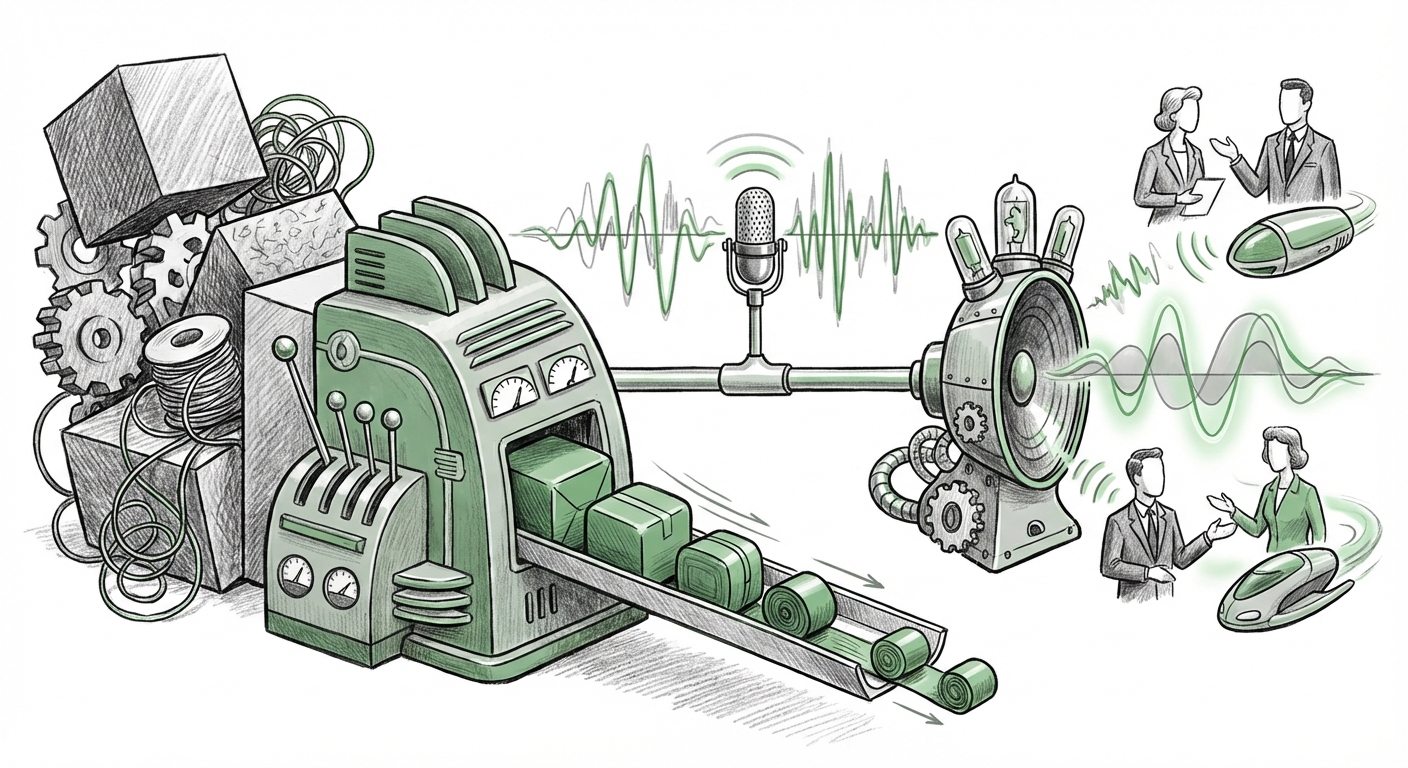
Artificial intelligence is rapidly changing, and two key areas are leading the charge: compression algorithms and voice models. These advancements are not just about making things smaller or sounding better; they're about unlocking new possibilities for how we interact with technology and how AI can be used in every aspect of our lives. Let's dive into what these innovations mean for the future.
The Power of Compression in AI
Imagine trying to send a huge file over the internet with a slow connection. It would take forever, right? That's where compression comes in. Compression algorithms are like magic tricks for data. They shrink large files into smaller ones, making them easier and faster to store, share, and process. In AI, this is incredibly important because AI models often deal with massive amounts of data.
Think about training a self-driving car. The AI needs to learn from countless hours of video footage, sensor data, and maps. Without compression, storing and processing all that information would be incredibly expensive and time-consuming. New compression algorithms are making it possible to handle these huge datasets more efficiently, which means AI models can be trained faster and deployed on devices with limited storage and processing power.
Why Does Compression Matter?
- Faster Training: AI models learn much faster when data is compressed.
- Lower Costs: Storing and processing data becomes cheaper.
- Wider Deployment: AI can run on smaller devices, like smartphones and embedded systems.
- Improved Efficiency: Less energy is needed to handle data, making AI more sustainable.
The Rise of Innovative Voice Models
Voice models are the brains behind technologies like voice assistants (think of smart speakers) and speech recognition software. They allow computers to understand and respond to human speech. Recent advancements in voice models are making them more accurate, natural-sounding, and versatile than ever before.
These new models are not just about recognizing words; they're about understanding the nuances of human language, like tone, emotion, and context. This opens up exciting possibilities for more natural and intuitive interactions with technology. Imagine having a conversation with your computer that feels as natural as talking to another person. That's the direction we're heading with these advancements.
What's New in Voice Models?
- Improved Accuracy: Voice models are now better at understanding speech in noisy environments or with different accents.
- More Natural Sounding: Synthesized speech sounds more human-like, with realistic intonation and emotion.
- Contextual Understanding: Voice models can understand the meaning of speech in context, leading to more relevant and helpful responses.
- Multilingual Capabilities: Many voice models can now understand and speak multiple languages.
The Future of AI: A Symbiotic Relationship
The advancements in compression algorithms and voice models are not happening in isolation. They are interconnected and mutually reinforcing. Better compression allows us to store and process the vast amounts of data needed to train advanced voice models. And more sophisticated voice models can be used to improve compression techniques, for example, by identifying and prioritizing the most important parts of a speech signal.
This symbiotic relationship is driving innovation across the entire AI landscape. We can expect to see even more breakthroughs in the coming years as researchers and engineers continue to push the boundaries of what's possible.
Practical Implications for Businesses and Society
The advancements discussed have far-reaching implications for businesses and society as a whole:
For Businesses:
- Enhanced Customer Service: AI-powered chatbots and virtual assistants can provide more personalized and efficient customer support.
- Improved Productivity: Voice-activated software can streamline workflows and make employees more productive.
- New Product Development: AI can be used to create innovative products and services that were previously impossible.
- Data-Driven Decision Making: Businesses can leverage AI to analyze large datasets and gain valuable insights.
For Society:
- Accessibility: Voice-controlled devices can empower people with disabilities to interact with technology more easily.
- Education: AI-powered tutoring systems can provide personalized learning experiences for students.
- Healthcare: AI can assist doctors in diagnosing diseases and developing new treatments.
- Communication: Real-time translation tools can break down language barriers and facilitate cross-cultural communication.
Actionable Insights
So, what can you do to take advantage of these advancements in AI?
- Stay Informed: Keep up with the latest research and developments in compression algorithms and voice models.
- Experiment: Explore different AI tools and platforms to see how they can be applied to your specific needs.
- Invest in Training: Equip your employees with the skills they need to work with AI technologies.
- Consider Ethical Implications: Think about the potential ethical and societal impacts of your AI applications.
Conclusion: The Future is Intelligent
The rapid advancements in compression algorithms and voice models are transforming the world of AI, making it more efficient, accessible, and intelligent. By understanding these trends and taking proactive steps, businesses and individuals can harness the power of AI to create a better future for all.