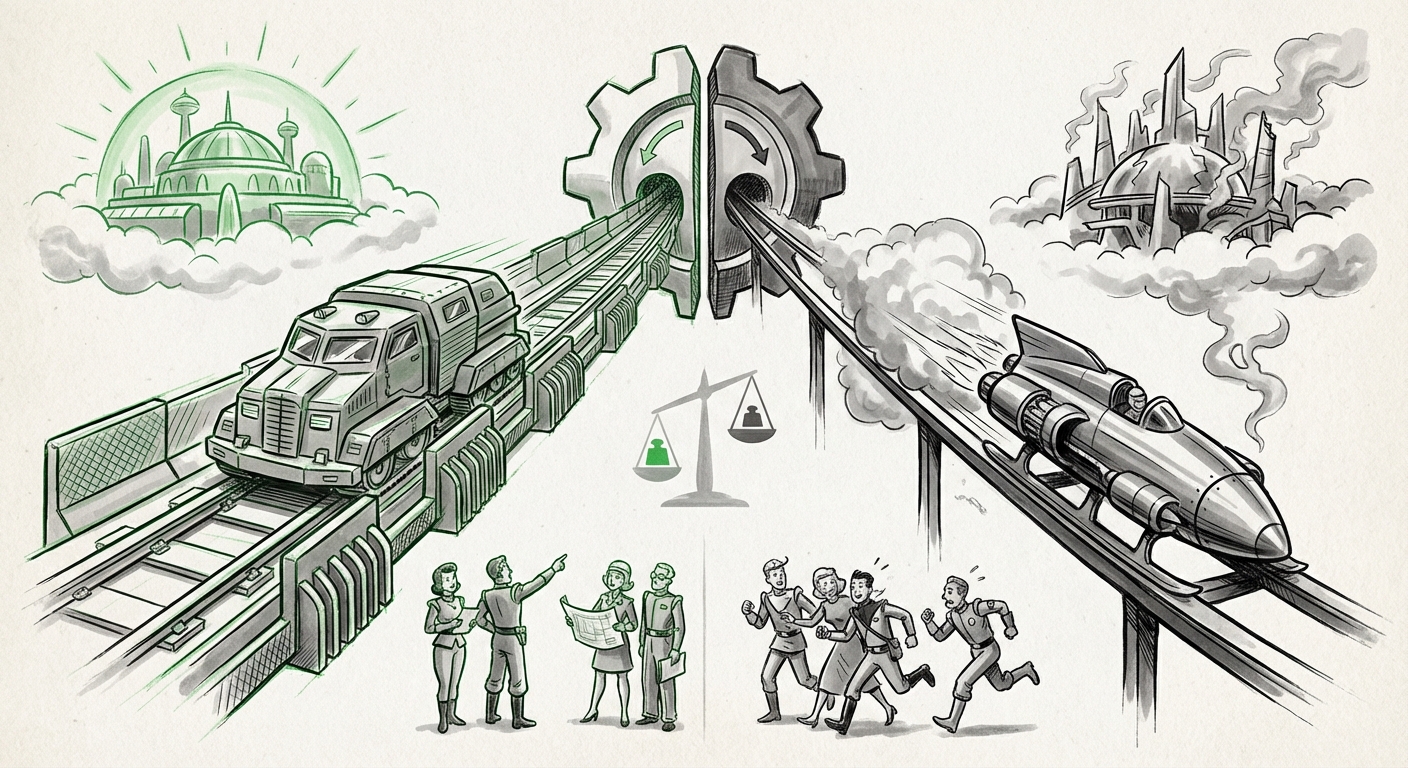
Anthropic vs. OpenAI: The Battle for the Soul of AI
The world of artificial intelligence is rapidly evolving. Companies like OpenAI are pushing the boundaries of what AI can do. However, not everyone agrees on the best path forward. Anthropic, another key player in the AI field, reportedly sees itself as offering a different, safer approach to AI development, especially in contrast to what it views as OpenAI's potentially risky strategies. This difference in approach stems from the very origins of Anthropic.
The Genesis of Anthropic: A Clash of Visions
Anthropic wasn't just formed out of thin air. It emerged from a significant split within OpenAI, driven by concerns about AI safety, internal power dynamics, and differing strategic visions. According to a report by Keach Hagey, Sam Altman's biographer, personal conflicts and disagreements about the direction of AI development played a crucial role in this separation. This wasn't just a simple disagreement; it was a fundamental divergence in how these experts believed AI should be built and deployed.
"Tobacco Industry" Approach: What Does It Mean?
The phrase "tobacco industry" approach, reportedly used by Anthropic to describe OpenAI's methods, is a powerful analogy. It suggests that Anthropic believes OpenAI may be prioritizing rapid growth and innovation above potential long-term risks and ethical considerations, similar to how the tobacco industry once downplayed the health risks associated with smoking. This highlights a critical debate within the AI community: how do we balance innovation with responsibility?
The Future of AI: Two Paths Diverging
The contrasting approaches of Anthropic and OpenAI have significant implications for the future of AI. If Anthropic's concerns are valid, a reckless pursuit of AI capabilities could lead to unintended consequences, such as biased algorithms, job displacement, or even security vulnerabilities. On the other hand, slowing down innovation to prioritize safety could hinder progress and potentially allow other countries or actors to gain a significant advantage in the AI race.
Practical Implications for Businesses
For businesses, this divide means carefully considering which AI solutions to adopt. Companies need to assess not only the capabilities of different AI models but also the ethical frameworks and safety measures implemented by their developers. Choosing an AI partner is not just a technology decision; it's a values decision. Here are some actionable insights for businesses:
- Due Diligence: Thoroughly research the AI providers you are considering. Understand their approach to safety, ethics, and transparency.
- Pilot Projects: Before fully integrating an AI solution, start with small-scale pilot projects to assess its impact and identify potential risks.
- Employee Training: Invest in training programs to educate employees about the ethical implications of AI and how to use AI tools responsibly.
- Bias Detection: Implement mechanisms to detect and mitigate bias in AI algorithms.
- Transparency: Be transparent with your customers and stakeholders about how you are using AI.
Societal Implications
The choices made by AI developers today will shape the future of society. If AI systems are developed without adequate consideration for fairness, accountability, and transparency, they could exacerbate existing inequalities and erode public trust. It is crucial to foster a broad societal conversation about the ethical implications of AI and to develop appropriate regulations and guidelines.
- Ethical Frameworks: Governments and organizations need to develop comprehensive ethical frameworks for AI development and deployment.
- Public Education: Invest in public education initiatives to raise awareness about AI and its potential impact on society.
- Regulatory Oversight: Establish regulatory bodies to oversee the development and use of AI, ensuring compliance with ethical guidelines and safety standards.
- International Collaboration: Foster international collaboration to address the global challenges posed by AI.
Actionable Insights
Here are a few things to keep in mind:
- Understand the risks: AI is powerful, but it's not without risks. Be aware of the potential downsides, such as bias and privacy violations.
- Demand transparency: Ask AI developers about their safety measures and ethical guidelines. Support companies that prioritize responsible AI development.
- Stay informed: Keep up with the latest developments in AI and the ongoing debates about its future.