Meta's AI Reads Your Mind! Predicting Brain Responses to Images, Sounds, and Speech
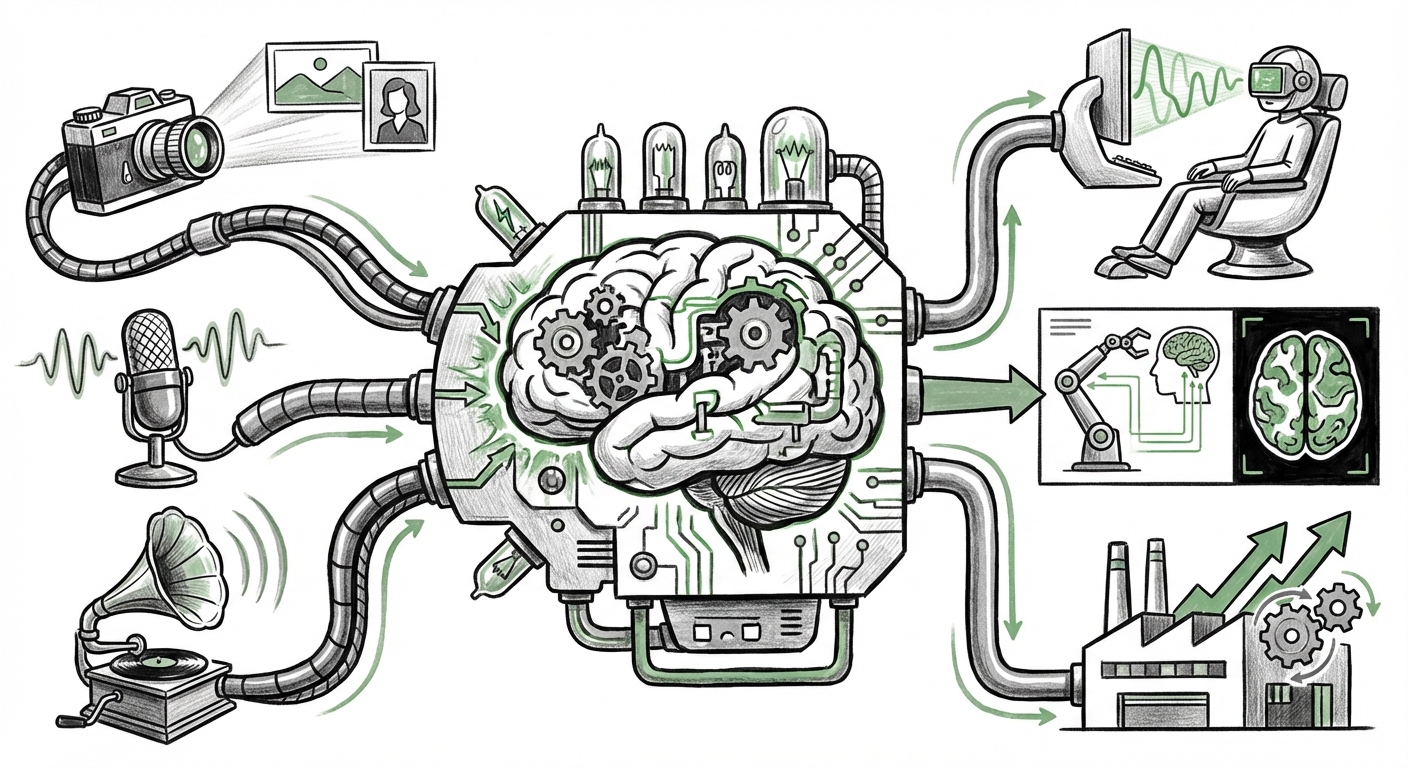
Imagine a world where AI can understand not just what you say or do, but how your brain reacts to the world around you. Meta has taken a giant leap in that direction by building an AI model that can predict how the human brain responds to images, sounds, and speech. This isn't just a cool tech demo; it has huge implications for the future of AI and how we interact with technology.
How Does It Work? Meta's Mind-Reading AI
Meta's new AI model is designed to forecast brain activity when a person is exposed to different stimuli. Think about looking at a picture of a cat, listening to your favorite song, or having a conversation with a friend. The AI attempts to predict what areas of your brain will light up and how they will respond. The amazing part? In tests, the AI's predictions were more accurate at matching typical brain responses than an actual brain scan from a single individual.
The Future of AI: Understanding the Human Brain
This development signals a major shift in AI research. Instead of just processing data, AI is starting to understand the complexities of the human brain. Here's what this means for the future:
- More Personalized AI: Imagine AI that adapts to your individual preferences and needs based on your brain's responses. This could lead to hyper-personalized learning experiences, entertainment, and even healthcare.
- Improved Brain-Computer Interfaces: This research could significantly advance the development of brain-computer interfaces (BCIs). BCIs could allow people with disabilities to control devices with their minds or even restore lost functions.
- Better Understanding of Neurological Disorders: By accurately predicting brain responses, the AI could help researchers better understand and diagnose neurological disorders like Alzheimer's disease or autism.
- Next-Level Marketing: Brands could use this technology (ethically, of course!) to understand how consumers react to their products and advertising on a neurological level. This could lead to more effective and engaging marketing campaigns.
Practical Implications for Businesses
Businesses across various industries can leverage this technology to gain a competitive edge:
- Healthcare: Pharmaceutical companies could use AI to predict how patients will respond to new drugs, accelerating the drug development process and personalizing treatment plans.
- Education: Educators could create personalized learning programs tailored to each student's brain, optimizing learning outcomes and engagement.
- Entertainment: Game developers and filmmakers could use AI to create more immersive and emotionally engaging experiences by understanding how audiences react to different stimuli.
- Advertising: Marketers could refine their campaigns by predicting how consumers' brains will respond to different ads, leading to higher conversion rates and brand loyalty.
Societal Impact: Opportunities and Challenges
While the potential benefits are enormous, it's crucial to consider the ethical and societal implications:
- Privacy Concerns: The ability to predict brain responses raises serious privacy concerns. It's essential to establish clear regulations and ethical guidelines to protect individuals' brain data.
- Algorithmic Bias: AI models are trained on data, and if that data reflects existing biases, the AI could perpetuate those biases in its predictions. It's important to ensure that the data used to train these models is diverse and representative.
- Accessibility: It's crucial to ensure that the benefits of this technology are accessible to everyone, regardless of their socioeconomic status or geographic location.
- Job Displacement: As AI becomes more capable of performing tasks that were previously done by humans, there is a risk of job displacement. It's important to invest in education and training programs to help workers adapt to the changing job market.
Actionable Insights: Preparing for the Future
Here are some actionable insights for businesses and individuals:
- Invest in AI Education: Stay informed about the latest developments in AI and their potential impact on your industry or career.
- Explore AI Applications: Identify opportunities to leverage AI to improve your products, services, or processes.
- Prioritize Ethical Considerations: Develop ethical guidelines for the use of AI and ensure that your AI systems are fair, transparent, and accountable.
- Advocate for Responsible AI Development: Support policies that promote responsible AI development and deployment.
Conclusion: A Glimpse into the Future of AI
Meta's AI model that predicts brain responses is a groundbreaking achievement with far-reaching implications. It opens up new possibilities for personalized AI, brain-computer interfaces, and a deeper understanding of the human brain. As this technology continues to evolve, it's essential to address the ethical and societal challenges to ensure that it benefits all of humanity. The future of AI is not just about creating intelligent machines; it's about creating machines that understand us, and this is a major step in that direction.