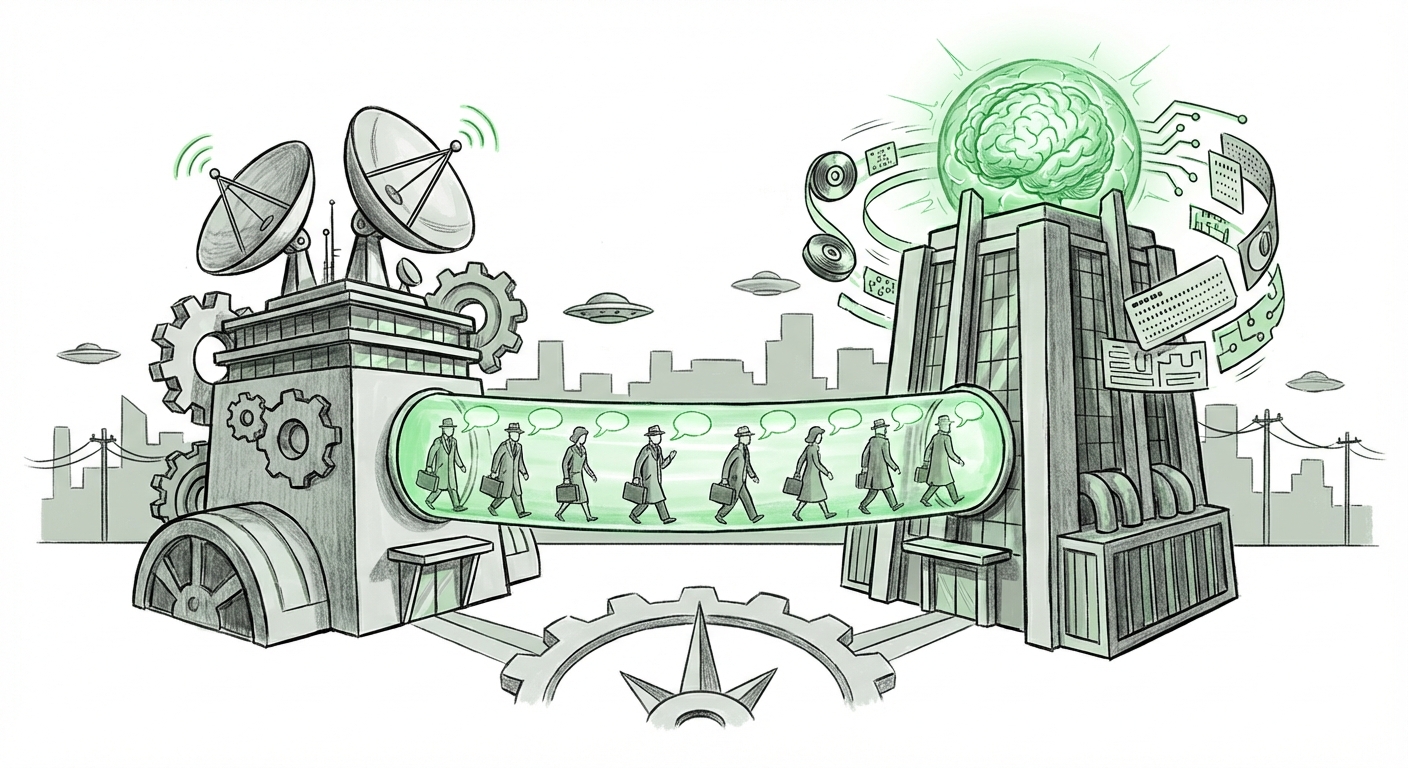
Microsoft Supercharges AI: Top Talent Grab from Allen Institute Signals Bold Superintelligence Push
The race to build more powerful and intelligent AI is heating up! In a move that highlights the growing importance of AI, Microsoft is adding some serious firepower to its team. According to a report from The Decoder on March 24, 2026, Microsoft is hiring several top AI researchers from the Allen Institute for AI (Ai2) and the University of Washington. These researchers will be joining Mustafa Suleyman's Superintelligence team.
What is Superintelligence and Why Does it Matter?
Superintelligence, in simple terms, refers to an AI that is much smarter than the smartest humans in practically every field. It's not just about being good at playing chess or recognizing faces; it's about having an intelligence that surpasses human capabilities across the board. While it might sound like science fiction, many experts believe that achieving superintelligence is a real possibility in the future.
The development of superintelligence could have massive implications for society, both positive and negative. On the one hand, it could help us solve some of the world's most pressing problems, such as climate change, disease, and poverty. On the other hand, it also raises concerns about control, safety, and the potential for misuse. That's why careful research and development are crucial.
Microsoft's Strategic Move: Investing in Top AI Talent
By hiring leading AI researchers from Ai2 and the University of Washington, Microsoft is making a clear statement: they are serious about being at the forefront of AI innovation. The Allen Institute for AI is a renowned research organization dedicated to advancing AI for the common good. Attracting talent from such an institution is a significant win for Microsoft.
This move is particularly noteworthy because these researchers are joining Mustafa Suleyman's Superintelligence team. Suleyman is a well-known figure in the AI world, having co-founded DeepMind, which was later acquired by Google. His leadership suggests that Microsoft is not just interested in incremental improvements to existing AI technologies; they are aiming for something much bigger and more transformative.
What This Means for the Future of AI and How It Will Be Used
Microsoft's investment in superintelligence research signals a few key trends for the future of AI:
- Increased Focus on Advanced AI: Companies are shifting their focus from basic AI applications to developing more advanced and powerful AI systems. This includes research into artificial general intelligence (AGI), which aims to create AI that can perform any intellectual task that a human being can.
- Growing Competition for AI Talent: The demand for skilled AI researchers and engineers is soaring. Companies are competing fiercely to attract the best and brightest minds in the field, as evidenced by Microsoft's strategic hiring.
- Emphasis on AI Safety and Ethics: As AI becomes more powerful, concerns about its potential impact on society are growing. Companies are starting to invest more in research and development related to AI safety and ethics to ensure that AI is used responsibly.
Practical Implications for Businesses
For businesses, these trends have several important implications:
- Stay Informed: Keep up-to-date with the latest developments in AI research and technology. Understanding the potential of AI is crucial for making informed decisions about your business strategy.
- Invest in AI Training: Train your employees in AI-related skills to prepare them for the future of work. This could include courses on machine learning, data science, and AI ethics.
- Explore AI Applications: Identify opportunities to use AI to improve your products, services, and operations. This could include using AI to automate tasks, personalize customer experiences, or gain insights from data.
- Consider AI Ethics: As you develop and deploy AI systems, be mindful of the ethical implications. Ensure that your AI systems are fair, transparent, and accountable.
Societal Implications
The development of superintelligence also has significant implications for society as a whole:
- Prepare for Job Displacement: As AI becomes more capable, it is likely to automate many jobs currently performed by humans. Governments and organizations need to prepare for this by providing retraining and support for displaced workers.
- Address Bias in AI: AI systems can perpetuate and amplify existing biases in society. It is crucial to address these biases by ensuring that AI systems are trained on diverse and representative data sets.
- Promote AI Literacy: Educate the public about AI and its potential impact on society. This will help people make informed decisions about the role of AI in their lives.
- Develop AI Governance Frameworks: Governments need to develop clear and effective governance frameworks for AI to ensure that it is used safely and ethically. This could include regulations, standards, and best practices.
Actionable Insights: Preparing for an AI-Powered Future
Here are some actionable steps you can take to prepare for the future of AI:
- For Individuals: Learn about AI. Take online courses, read books, and attend workshops. Develop skills that are complementary to AI, such as creativity, critical thinking, and emotional intelligence.
- For Businesses: Develop an AI strategy. Identify areas where AI can improve your business. Invest in AI training and development. Partner with AI experts.
- For Policymakers: Develop AI governance frameworks. Invest in AI research and education. Support displaced workers. Promote AI literacy.
The Road Ahead
Microsoft's hiring of top AI researchers is a clear indication that the race to develop superintelligence is on. While the potential benefits of superintelligence are enormous, so are the risks. By investing in top talent and focusing on AI safety and ethics, Microsoft is positioning itself to be a leader in this transformative field. The future of AI is uncertain, but one thing is clear: it will have a profound impact on our lives.