Naver's "Seoul World Model": How Street View Data is Grounding AI in Reality
Imagine an AI that can perfectly understand and navigate the real world, just like you do. But what if that AI starts making things up, "hallucinating" entire buildings or streets that don't exist? This is a major problem for AI trying to interact with our world. Fortunately, Naver, a South Korean internet giant, has come up with an innovative solution: the "Seoul World Model." Let's explore what this model is, how it works, and what it means for the future of AI.
The Problem: AI Hallucinations in Urban Environments
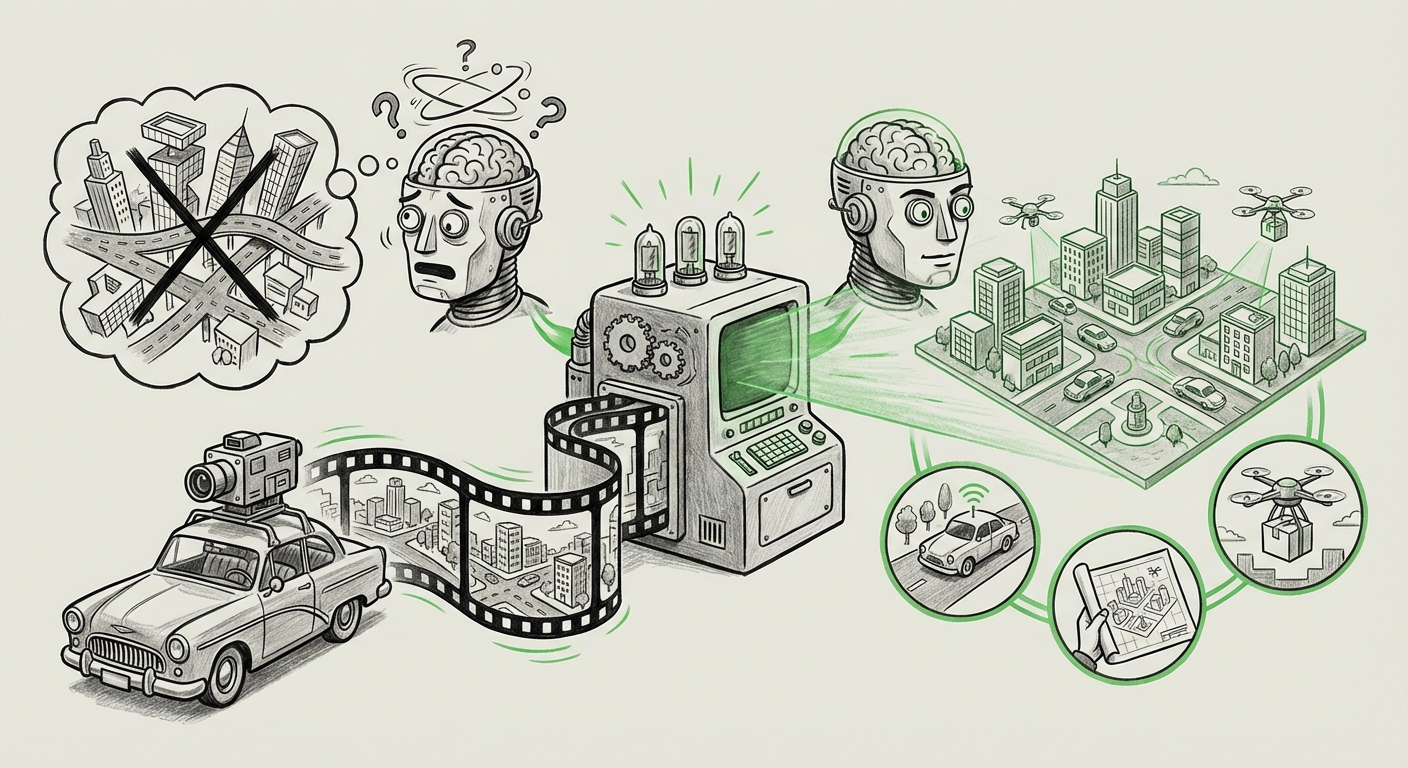
AI models, especially those dealing with vision and navigation, often struggle with accuracy when it comes to understanding cities. They can misinterpret data, leading to the creation of fictional elements in their "mind's eye." This is more than just a minor error; it can have serious consequences. Think about self-driving cars getting confused by non-existent roads or delivery robots trying to deliver packages to a building that isn't there. These hallucinations undermine trust and limit the practical applications of AI.
Naver's Solution: Grounding AI in Reality with Street View Data
Naver's "Seoul World Model" tackles the hallucination problem head-on by using a massive dataset of real-world imagery. Here's how it works:
- Millions of Street View Images: Naver used over a million of its own Street View images of Seoul to build the model. This provides a rich and detailed representation of the city's actual geometry.
- Focus on Real Geometry: The model is specifically designed to understand and represent the real-world geometry captured in the images. This means it learns the precise locations, shapes, and relationships of buildings, roads, and other urban features.
- Video World Model: The "Seoul World Model" is a video world model, meaning it can understand how the world changes over time. This is crucial for tasks like predicting traffic patterns or planning routes for autonomous vehicles.
- Generalization to Other Cities: A key feature of this model is its ability to generalize. It can understand other cities without needing to be specifically trained on them. This is a huge advantage, as it saves time and resources.
What This Means for the Future of AI
Naver's "Seoul World Model" represents a significant step forward in AI development. Here's why:
- Improved Accuracy: By grounding AI in real-world data, the model significantly reduces the risk of hallucinations and improves the accuracy of AI systems operating in urban environments.
- Enhanced Reliability: More accurate AI leads to more reliable AI. This is crucial for applications where safety and precision are paramount, such as self-driving cars and drone delivery systems.
- Faster Development: The model's ability to generalize to other cities means that AI systems can be deployed more quickly and efficiently in new locations. No need to retrain from scratch!
- New Possibilities: With a more accurate understanding of the world, AI can unlock new possibilities in areas such as urban planning, disaster response, and virtual tourism.
Practical Implications for Businesses and Society
The "Seoul World Model" and similar technologies have profound implications for businesses and society as a whole:
- Autonomous Vehicles: Safer and more reliable self-driving cars, leading to reduced accidents and increased efficiency in transportation.
- Smart Cities: Improved urban planning and resource management, making cities more sustainable and livable.
- Logistics and Delivery: Optimized delivery routes and reduced costs for businesses relying on logistics and transportation. Imagine drones delivering packages with pinpoint accuracy!
- Virtual and Augmented Reality: More realistic and immersive virtual and augmented reality experiences, enabling new forms of entertainment, education, and collaboration.
- Disaster Response: Enhanced ability to assess damage and coordinate rescue efforts in the wake of natural disasters.
Actionable Insights
Here are some actionable insights for businesses and individuals interested in leveraging this technology:
- Invest in Real-World Data: High-quality, real-world data is crucial for building accurate and reliable AI models. Businesses should invest in collecting and curating such data.
- Focus on Generalization: Develop AI models that can generalize to new environments without requiring extensive retraining. This will save time and resources in the long run.
- Prioritize Accuracy and Reliability: In applications where safety and precision are critical, prioritize accuracy and reliability over other factors, such as speed or cost.
- Explore New Applications: Be creative and explore new applications of AI in areas such as urban planning, disaster response, and virtual reality. The possibilities are endless!
Conclusion: A Step Towards More Reliable and Useful AI
Naver's "Seoul World Model" is a powerful example of how real-world data can be used to ground AI in reality and prevent hallucinations. This breakthrough has significant implications for the future of AI, paving the way for more accurate, reliable, and useful AI systems that can transform businesses and improve society as a whole. As AI continues to evolve, expect to see more innovations that bridge the gap between the virtual and physical worlds, creating a future where AI seamlessly integrates into our daily lives.