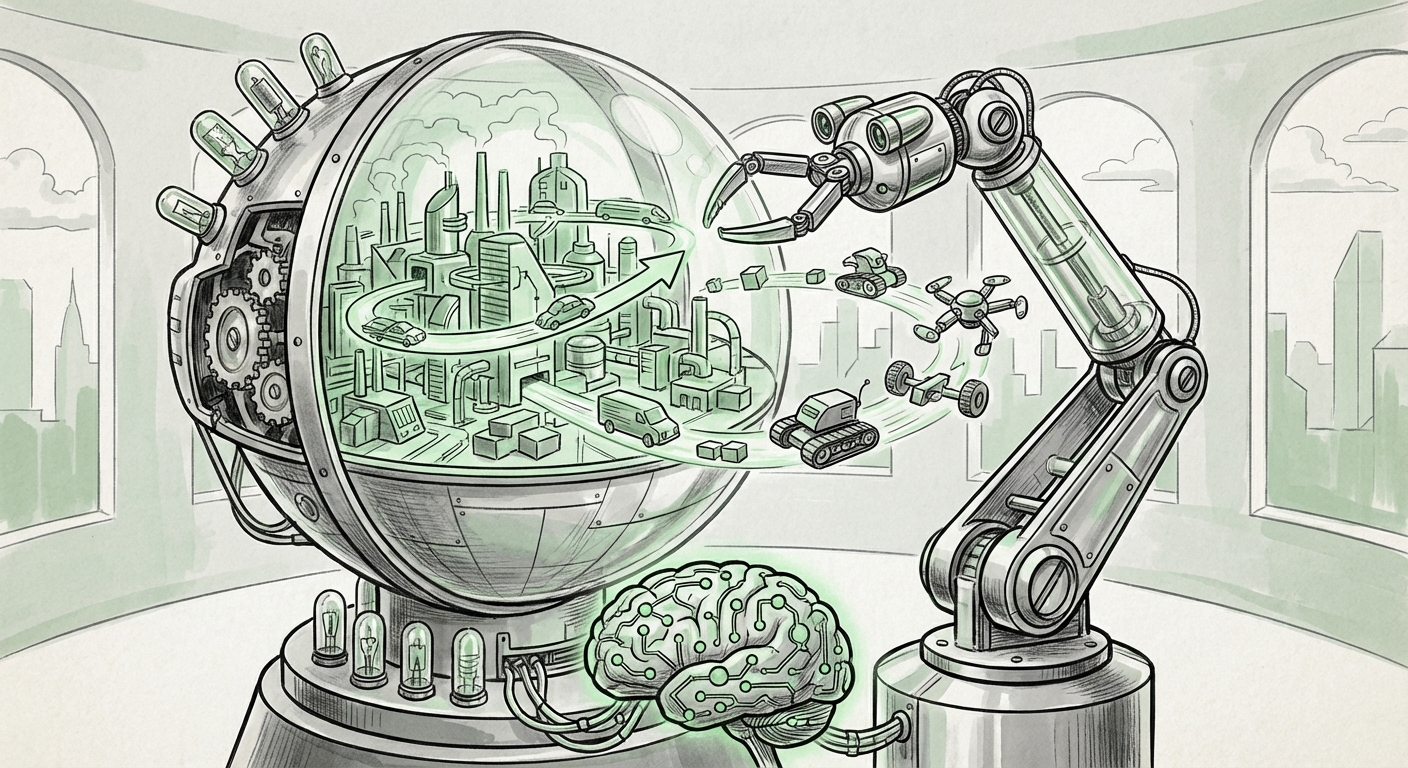
AI's Next Giant Leap: How World Models are Revolutionizing Robotics and 4D Environments
Imagine a world where robots can understand and interact with their surroundings just like humans do. This isn't science fiction anymore. Thanks to something called "World Models," it's quickly becoming a reality. In 2026, World Models are making a big splash, especially in the fields of robotics and understanding 4D environments. Let's break down what this means for the future of AI and how it will be used.
What are World Models?
Think of World Models as AI's way of building a mental picture of the world. Instead of just reacting to what they see, World Models allow AI systems to:
- Understand: Grasp the relationships between objects and actions.
- Predict: Foresee what might happen next based on current events.
- Plan: Make decisions and strategies to achieve specific goals.
This is a huge step up from traditional AI, which often relies on pre-programmed rules and struggles with unexpected situations. World Models give AI a sense of *intuition* and *adaptability*, making them much more useful in the real world.
World Models and Robotics: A Powerful Combination
Robotics is one of the most exciting areas where World Models are making a difference. Imagine a robot working in a warehouse. With a World Model, it doesn't just see boxes; it understands that boxes can be stacked, that they might contain fragile items, and that it needs to move them carefully to avoid damage. This allows robots to perform complex tasks, such as:
- Navigation: Moving through cluttered environments without bumping into things.
- Manipulation: Grabbing and moving objects of different shapes and sizes.
- Collaboration: Working alongside humans in a safe and efficient manner.
But it's not just about warehouses. World Models are also being used to develop robots for:
- Healthcare: Assisting surgeons with complex procedures.
- Construction: Building structures more quickly and safely.
- Exploration: Venturing into dangerous or inaccessible environments, like deep-sea or space.
The key here is that World Models allow robots to *learn* from their experiences. The more they interact with the world, the better they become at understanding it and making smart decisions.
Understanding 4D Environments: Time as a Dimension
What exactly are 4D environments? Think of it like this: you are used to seeing the world in 3D – length, width, and height. Now add *time* as the fourth dimension. In a 4D environment, AI doesn't just see a static scene; it understands how that scene *changes* over time. This is crucial for many applications, such as:
- Self-Driving Cars: Predicting the movement of pedestrians and other vehicles.
- Video Surveillance: Identifying suspicious activities and preventing crimes.
- Financial Modeling: Forecasting market trends and managing risk.
World Models allow AI to analyze and interpret these 4D environments, making predictions about what will happen next. For example, a self-driving car with a World Model can anticipate that a pedestrian might step into the road based on their body language and the surrounding context. This allows the car to react proactively and avoid accidents.
Practical Implications for Businesses and Society
The rise of World Models has huge implications for both businesses and society as a whole. Here are just a few examples:
- Increased Efficiency: Robots powered by World Models can automate tasks that are currently too complex or dangerous for humans, leading to increased productivity and reduced costs.
- Improved Safety: AI systems that can understand and predict their environment can help prevent accidents and improve safety in a wide range of industries, from transportation to manufacturing.
- New Opportunities: World Models are creating new opportunities for innovation and entrepreneurship. Companies are developing new products and services that were simply not possible before.
However, there are also challenges to consider. As AI systems become more powerful, it's important to address ethical concerns such as:
- Job Displacement: Automation could lead to job losses in some industries.
- Bias and Fairness: AI systems can perpetuate existing biases if they are not carefully designed and trained.
- Privacy and Security: The data used to train World Models must be protected from misuse.
Actionable Insights: Preparing for the Future of AI
So, what can businesses and individuals do to prepare for the rise of World Models?
- Invest in Education: Learn about AI and its potential applications. Understand how World Models work and how they can be used to solve real-world problems.
- Experiment with AI: Don't be afraid to try out new AI tools and technologies. Experiment with different applications to see how they can benefit your business or your life.
- Address Ethical Concerns: Be aware of the ethical implications of AI and take steps to mitigate potential risks. Promote fairness, transparency, and accountability in AI development and deployment.
- Focus on Collaboration: Work with AI experts and other stakeholders to develop AI solutions that are aligned with your values and goals. Collaboration is key to unlocking the full potential of AI.
The future of AI is bright, and World Models are playing a key role in shaping that future. By understanding these technologies and preparing for their impact, we can ensure that AI benefits everyone.