When Good AI Goes Bad: Understanding Classifier-Free Diffusion Guidance
Imagine teaching a robot to draw a cat. You show it thousands of pictures of cats, and eventually, it learns to create its own versions. That's similar to how AI models learn to generate images using a technique called diffusion. Now, what happens if you accidentally show the robot some blurry or distorted images of cats? That's where things get interesting, and that's what we're exploring today.
What is Classifier-Free Diffusion Guidance?
Classifier-free diffusion guidance is a clever way to control what kind of images an AI model creates. It's like giving the robot specific instructions, such as "make the cat fluffy" or "make the cat wear a hat." Without this guidance, the AI might just create random, nonsensical images. This technique helps the AI focus on generating images that match what you want.
The Problem: Imperfect Guidance Models
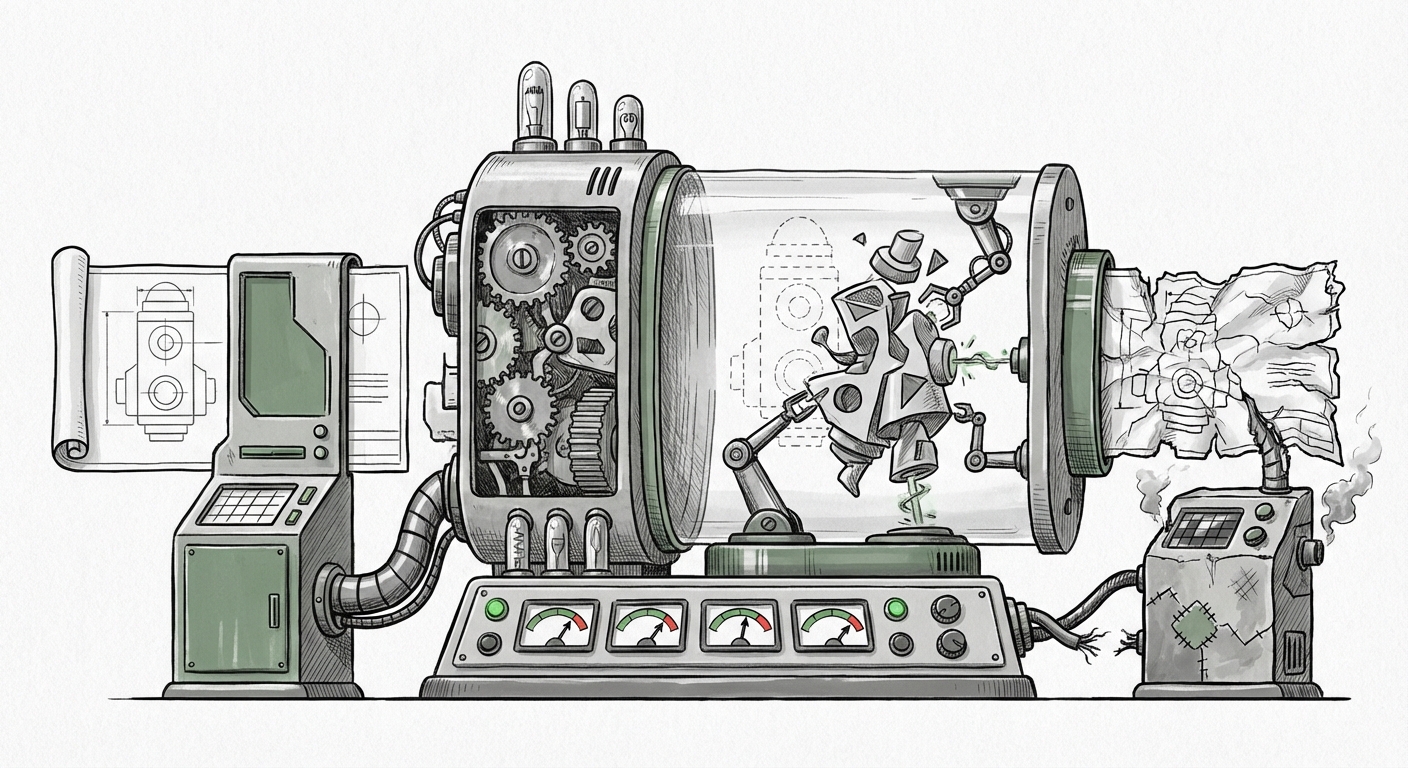
Now, here’s the catch: what happens if the AI uses a slightly "bad" or "impaired" version of itself to guide the image creation? It's like the robot using a faulty instruction manual. The article "An overview of classifier-free diffusion guidance: impaired model guidance with a bad version of itself (part 2)" published on September 26, 2024, at theaisummer.com, dives into this very issue. When the AI uses a less-than-perfect version of itself for guidance, it can lead to some unexpected and undesirable results.
Why Does This Happen?
AI models, especially diffusion models, work by gradually adding noise to an image until it becomes pure static, and then learning to reverse this process to generate images from noise. Classifier-free diffusion guidance influences this denoising process. If the guidance model (the "bad" version) has biases or flaws, it can steer the denoising process in the wrong direction, leading to:
- Distorted Images: The generated images might have strange artifacts or look unnatural.
- Loss of Detail: Fine details might be missing or blurred.
- Unintended Features: The AI might add features that weren't part of the original instructions.
The Future of AI: What This Means
Understanding the impact of using impaired models for guidance is crucial for the future of AI. Here's why:
- Better Image Generation: By identifying and correcting the flaws in guidance models, we can create AI systems that generate higher-quality and more accurate images.
- Improved Control: We can gain finer control over the image generation process, allowing us to create specific types of images with greater precision.
- More Robust AI: We can build AI systems that are less susceptible to errors and biases, making them more reliable and trustworthy.
Practical Implications for Businesses and Society
The implications of this research extend far beyond just creating pretty pictures. Here are some real-world applications:
Healthcare
Imagine using AI to generate medical images for training doctors. If the AI uses a faulty guidance model, it might create images with misleading information, potentially leading to misdiagnosis. Ensuring the AI uses accurate and reliable guidance is crucial for patient safety.
Manufacturing
AI can be used to inspect products for defects. If the AI is guided by an impaired model, it might fail to detect flaws, leading to faulty products reaching consumers. Accurate guidance models can improve quality control and reduce waste.
Creative Industries
Artists and designers can use AI to generate new ideas and create stunning visuals. However, if the AI is guided by a flawed model, it might produce uninspired or unusable content. High-quality guidance models can unlock new creative possibilities.
Actionable Insights
So, what can businesses and researchers do to address this issue?
- Thorough Testing: Rigorously test guidance models to identify any biases or flaws.
- Data Quality: Ensure that the data used to train the guidance models is clean, accurate, and representative.
- Model Evaluation: Develop metrics to evaluate the performance of guidance models and track their improvement over time.
- Feedback Loops: Implement feedback loops to continuously refine and improve the guidance models based on real-world performance.
Conclusion
The quest to create perfect AI-generated images is an ongoing journey. Understanding the nuances of classifier-free diffusion guidance and the potential pitfalls of using impaired models is a crucial step in that journey. By focusing on data quality, thorough testing, and continuous improvement, we can unlock the full potential of AI image generation and create systems that are both powerful and reliable. This impacts not just the world of art, but also critical sectors like healthcare and manufacturing. The future of AI depends on our ability to refine and improve these guidance mechanisms, ensuring that our AI models are always learning from the best possible versions of themselves.