NEAR AI: Revolutionizing AI Through Decentralization and Privacy
Artificial intelligence (AI) is rapidly changing the world, impacting everything from how we work to how we interact with each other. But as AI becomes more powerful, important questions arise about who controls it, how it's used, and how we can ensure it benefits everyone. One promising approach involves decentralizing AI – distributing its power and control – and prioritizing privacy. Let's explore what this means for the future.
The Promise of Decentralized AI
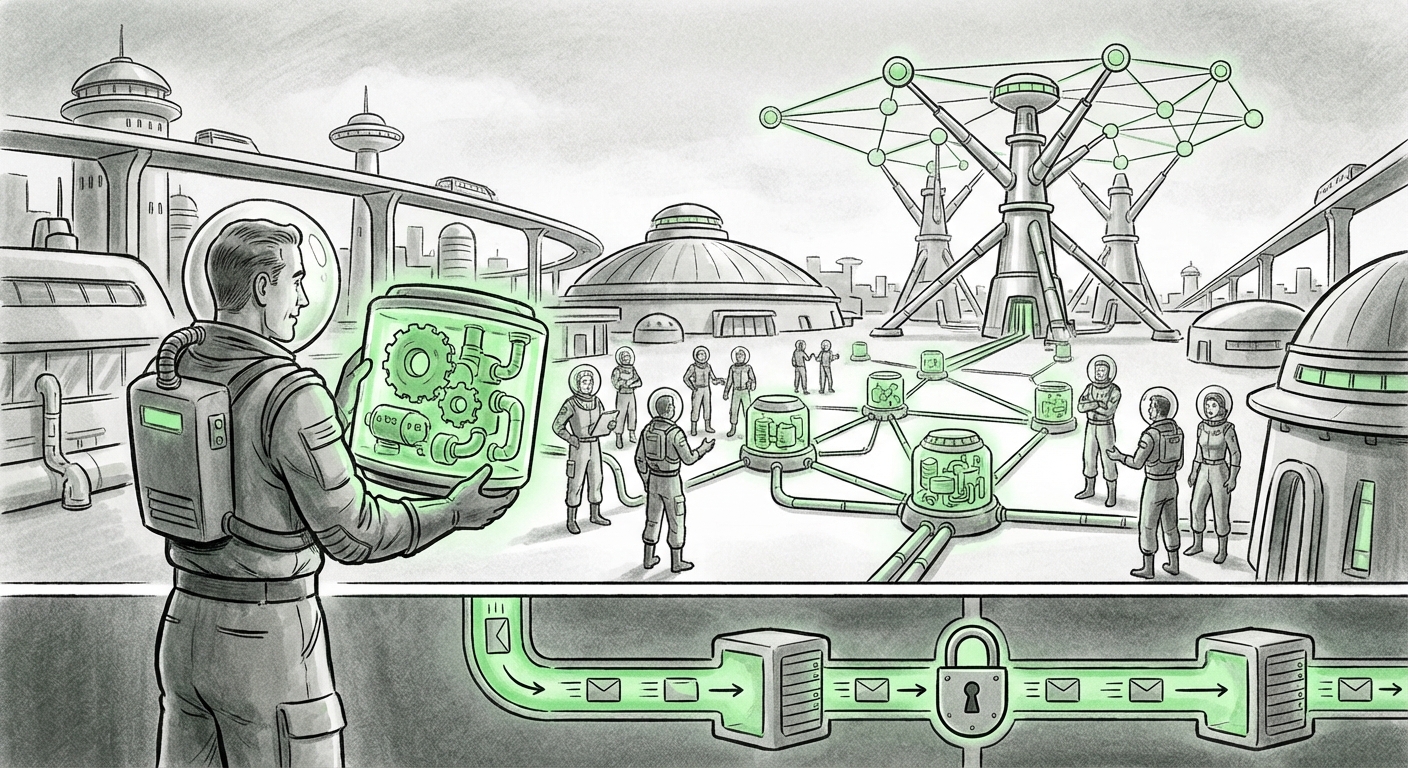
Imagine a world where AI isn't controlled by a handful of tech giants, but instead is accessible and governed by a diverse community. This is the vision behind decentralized AI. Instead of relying on centralized servers and proprietary algorithms, decentralized AI leverages blockchain technology and distributed computing to create AI systems that are more transparent, secure, and equitable.
According to Illia Polosukhin, a key figure in AI and one of the authors of the groundbreaking "Transformer" paper, projects like NEAR AI are at the forefront of this movement. NEAR AI aims to build the infrastructure needed for decentralized AI applications, empowering developers and users to participate in the AI revolution without sacrificing control or privacy.
Why Decentralization Matters
- Increased Transparency: Decentralized AI systems can be more transparent because the code and data are often open-source and auditable. This allows users to understand how AI models are making decisions.
- Reduced Bias: Centralized AI systems can perpetuate and amplify biases present in the data they are trained on. Decentralization can help mitigate this by allowing for more diverse datasets and model development processes.
- Greater Accessibility: By lowering the barriers to entry, decentralized AI can empower more individuals and organizations to build and deploy AI applications.
- Enhanced Security: Distributing data and computation across multiple nodes makes decentralized AI systems more resilient to attacks and censorship.
Privacy-Preserving AI: Protecting Your Data
Another critical aspect of the future of AI is privacy. As AI models become more sophisticated, they require vast amounts of data to train effectively. However, this data often contains sensitive personal information. Privacy-preserving AI techniques aim to enable AI development without compromising individual privacy.
Several approaches are being developed, including:
- Federated Learning: This technique allows AI models to be trained on decentralized data sources without the need to share the raw data. Instead, models are trained locally on each device or server, and only the model updates are shared with a central server.
- Differential Privacy: This adds noise to the data in a way that protects individual privacy while still allowing AI models to learn useful patterns.
- Homomorphic Encryption: This allows computations to be performed on encrypted data without decrypting it first, ensuring that the data remains private throughout the process.
The Impact on Businesses and Society
The rise of decentralized and private AI has profound implications for businesses and society as a whole.
For Businesses:
- New Business Models: Decentralized AI enables new business models based on data sharing and collaboration. Companies can contribute data to train AI models and receive compensation for their contributions, creating a more equitable and sustainable AI ecosystem.
- Improved Data Governance: Privacy-preserving AI techniques can help businesses comply with increasingly stringent data privacy regulations, such as GDPR and CCPA.
- Competitive Advantage: By embracing decentralized and private AI, businesses can differentiate themselves from competitors and build trust with customers.
For Society:
- Empowerment of Individuals: Decentralized AI puts individuals in control of their data and allows them to participate in the AI economy.
- Increased Trust in AI: By making AI systems more transparent and accountable, we can increase public trust in AI and encourage its adoption.
- More Equitable Distribution of Benefits: Decentralized AI can help ensure that the benefits of AI are shared more broadly, rather than concentrated in the hands of a few powerful companies.
Actionable Insights: Preparing for the Future
So, what can businesses and individuals do to prepare for the future of decentralized and private AI?
For Businesses:
- Educate Yourself: Learn about the latest developments in decentralized and private AI.
- Experiment with New Technologies: Explore using decentralized AI platforms and privacy-preserving AI techniques in your projects.
- Collaborate with Others: Partner with other organizations to build and deploy decentralized AI solutions.
- Prioritize Data Privacy: Implement strong data privacy policies and practices to protect your customers' data.
For Individuals:
- Learn About AI: Understand how AI works and its potential impact on your life.
- Support Decentralized AI Initiatives: Contribute to open-source AI projects and advocate for policies that promote decentralized AI.
- Protect Your Data: Be mindful of the data you share online and take steps to protect your privacy.
- Demand Transparency: Ask companies to be transparent about how they are using AI and your data.
The Transformative Potential of NEAR AI
NEAR AI, spearheaded by figures like Illia Polosukhin, represents a significant step towards realizing this vision of a more decentralized and privacy-respecting AI landscape. By building the necessary infrastructure and fostering a community of developers, NEAR AI is empowering individuals and organizations to create AI applications that are both powerful and ethical.
The journey toward decentralized and private AI is just beginning, but its potential to transform businesses, empower individuals, and create a more equitable future is immense. By embracing these principles, we can ensure that AI benefits everyone, not just a select few.