Unleashing Local AI: How llama.cpp is Transforming LLM Inference
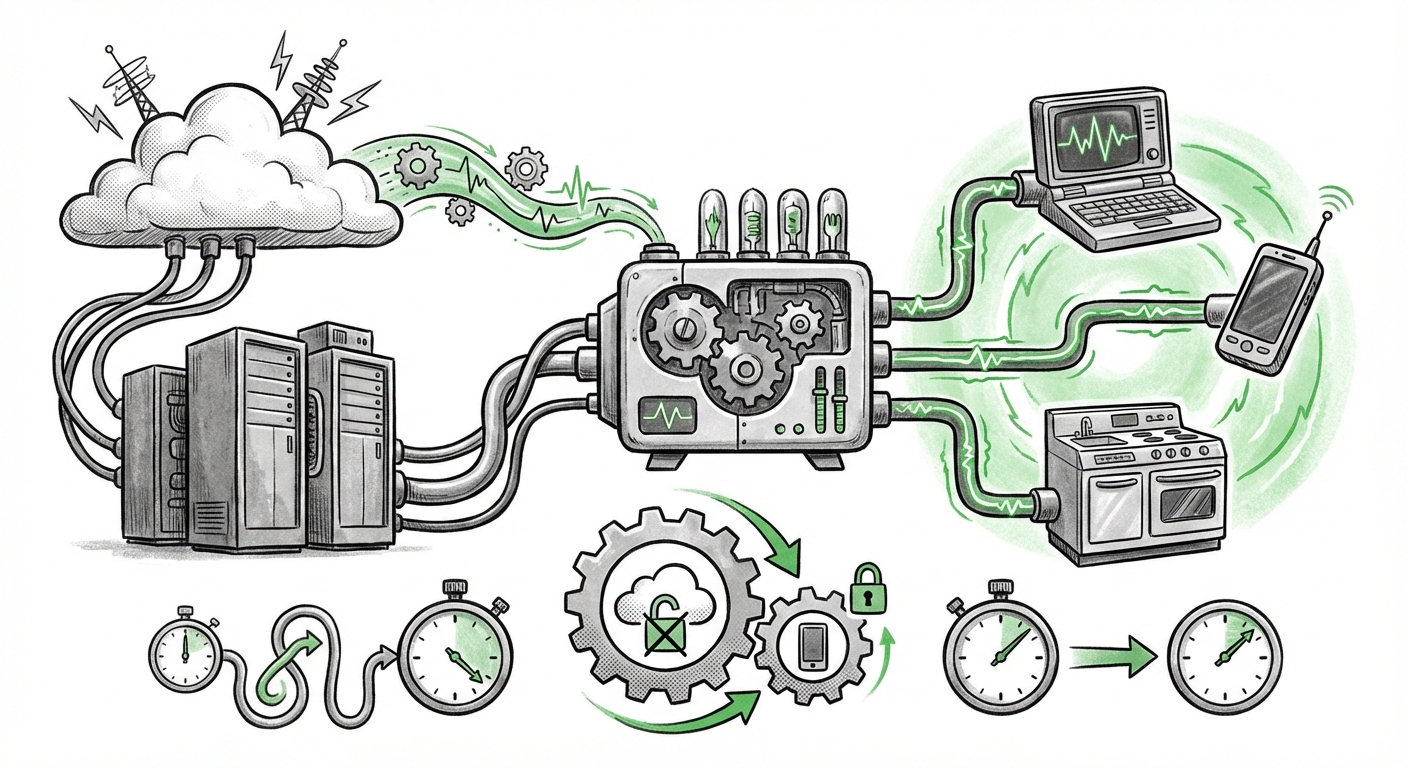
Imagine a world where powerful AI language models run directly on your devices – your laptop, your phone, even your smart fridge! This isn't science fiction; it's the promise of llama.cpp, a project that's rapidly changing how we think about and use Large Language Models (LLMs).
What is llama.cpp and Why Does it Matter?
llama.cpp is all about making LLMs run faster and more efficiently on local hardware. Traditionally, running these massive AI models required powerful servers in the cloud. This meant relying on a constant internet connection, dealing with latency (delays), and being concerned about data privacy. llama.cpp changes all of that.
Think of it like this: instead of always asking a super-smart friend for help (the cloud), you're giving yourself the tools and knowledge to figure things out on your own (your local device). This has huge implications for:
- Speed: Local inference means faster response times because data doesn't have to travel back and forth to a remote server.
- Privacy: Your data stays on your device, reducing the risk of it being intercepted or misused.
- Accessibility: You can use AI even without an internet connection, making it available in remote areas or during outages.
- Cost: Running models locally reduces reliance on expensive cloud computing resources.
The Technical Magic Behind llama.cpp
So, how does llama.cpp achieve this feat? It's a combination of clever engineering and optimization techniques, focusing on:
- C++ Implementation: Using a low-level programming language like C++ allows for fine-grained control over hardware resources and memory management. This results in highly efficient code.
- Quantization: This technique reduces the size of the model by using fewer bits to represent the model's parameters. This makes the model smaller and faster, but can sometimes impact accuracy (though advancements are minimizing this).
- Hardware Optimization: llama.cpp is designed to take advantage of specific hardware features, such as SIMD instructions (Single Instruction, Multiple Data), which allow the processor to perform multiple calculations simultaneously.
These optimizations allow llama.cpp to run surprisingly large language models on modest hardware, like laptops and even smartphones. This opens up a world of possibilities for on-device AI applications.
Hardware Choices and Tuning: Making the Most of Your Resources
One of the key advantages of llama.cpp is its flexibility. It allows you to tailor the performance of the LLM to the specific hardware you're using. This involves:
- Selecting the Right Model: Different LLMs have different sizes and performance characteristics. Choosing a model that's appropriate for your hardware is crucial.
- Quantization Levels: Experimenting with different quantization levels can help you find the sweet spot between model size, speed, and accuracy.
- Hardware Acceleration: Leveraging hardware-specific features, such as GPUs (Graphics Processing Units) or specialized AI accelerators, can significantly boost performance.
The ability to fine-tune these parameters empowers users to optimize their AI experience based on their individual needs and resources. It's about striking the right balance between performance, accuracy, and hardware constraints.
The Future of AI: Decentralized and Accessible
llama.cpp represents a significant step towards democratizing AI. By enabling local LLM inference, it empowers individuals and organizations to harness the power of AI without relying on centralized cloud infrastructure. This has profound implications for:
- Edge Computing: Imagine smart devices that can understand and respond to your requests instantly, without sending data to the cloud. This is the promise of edge computing, and llama.cpp is a key enabler.
- Offline AI Applications: From language translation to code completion, many AI tasks can now be performed offline, opening up new possibilities for productivity and creativity in areas with limited or no internet access.
- Personalized AI Assistants: Local LLMs can be tailored to your specific needs and preferences, creating truly personalized AI assistants that understand your context and anticipate your requests.
Practical Implications for Businesses and Society
The rise of local LLMs will have a wide-ranging impact on businesses and society as a whole. Here are just a few potential applications:
- Healthcare: Doctors can use local LLMs to quickly access medical information and provide personalized treatment recommendations, even in remote areas.
- Education: Students can benefit from personalized tutoring and language learning tools that work offline, making education more accessible to everyone.
- Customer Service: Businesses can deploy local LLMs to provide instant customer support, without relying on expensive call centers or cloud-based AI services.
- Creative Industries: Artists, writers, and musicians can use local LLMs to generate new ideas, compose music, and create stunning visuals, all without an internet connection.
Furthermore, the emphasis on local processing enhances data privacy, a growing concern in today's digital world. Individuals and organizations can maintain greater control over their sensitive information, reducing the risk of data breaches and misuse.
Actionable Insights: Getting Started with llama.cpp
If you're excited about the possibilities of local LLMs, here are a few steps you can take to get started with llama.cpp:
- Explore the Documentation: The llama.cpp project has excellent documentation that provides detailed instructions on how to install and use the library.
- Experiment with Different Models: Try different LLMs to see which one works best for your hardware and use case.
- Join the Community: Connect with other llama.cpp users and developers to share your experiences and learn from others.
- Contribute to the Project: If you have programming skills, consider contributing to the llama.cpp project to help improve its performance and features.
The world of local LLMs is still in its early stages, but the potential is enormous. By embracing this technology, we can unlock new possibilities for AI-powered applications that are faster, more private, and more accessible than ever before.