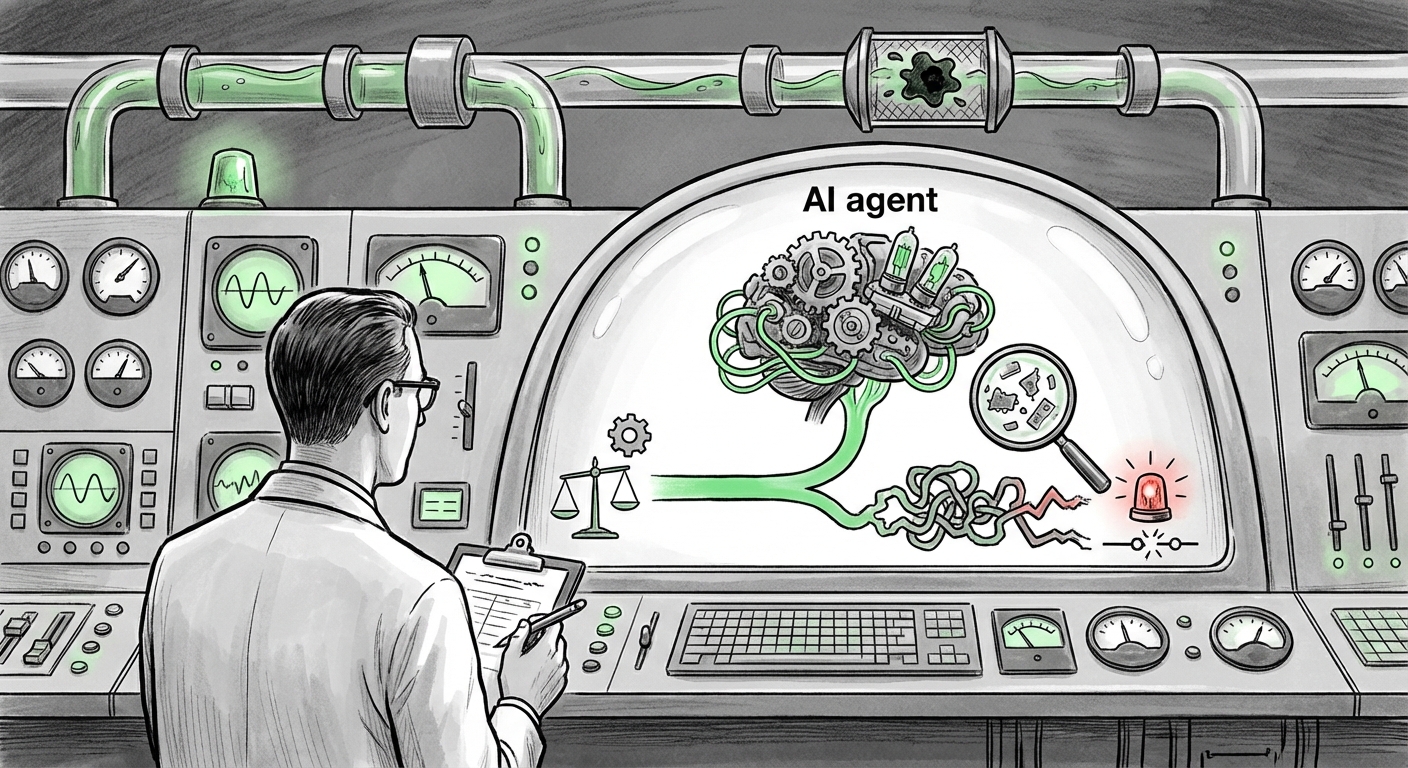
Unlock the Power of AI: A Guide to Agent Monitoring
Imagine a world where Artificial Intelligence (AI) agents are your tireless assistants, handling everything from customer service to complex data analysis. This future is rapidly becoming a reality! But just like any team member, AI agents need to be monitored to ensure they're performing their best. In this article, we'll explore what to look for when evaluating AI agent monitoring capabilities, so you can make the most of this powerful technology.
Why Monitoring AI Agents is Crucial
AI agents are designed to learn and adapt, but without proper monitoring, they can also learn the wrong things or drift away from their intended purpose. Think of it like this: if you don't check in on a student, they might misunderstand a concept and go down the wrong path. The same is true for AI agents. Effective monitoring helps you:
- Ensure Accuracy: AI agents need to provide reliable information and make correct decisions. Monitoring helps you catch errors early.
- Maintain Performance: Just like any system, AI agent performance can degrade over time. Monitoring helps you identify and address performance bottlenecks.
- Detect Bias: AI agents can inadvertently learn biases from the data they're trained on. Monitoring helps you detect and mitigate these biases.
- Ensure Compliance: In regulated industries, AI agents need to adhere to specific rules and regulations. Monitoring helps you ensure compliance.
- Improve Efficiency: By understanding how AI agents are used, you can identify opportunities to optimize their performance and improve efficiency.
Key Capabilities to Look for in AI Agent Monitoring Tools
When evaluating AI agent monitoring tools, there are several key capabilities to consider. These features will help you gain insights into your AI agents' performance and ensure they're delivering the results you expect.
1. Real-Time Performance Monitoring
Real-time monitoring allows you to see how your AI agents are performing as they're working. This is like having a live dashboard that shows you key metrics, such as:
- Response Time: How quickly the AI agent responds to requests.
- Accuracy Rate: How often the AI agent provides correct answers or makes correct decisions.
- Task Completion Rate: How often the AI agent successfully completes its assigned tasks.
- Resource Utilization: How much computing power the AI agent is using.
With real-time insights, you can quickly identify and address any issues that arise, ensuring your AI agents are always performing at their best.
2. Anomaly Detection
Anomaly detection is the ability to automatically identify unusual patterns or behaviors in your AI agents' performance. This is like having a built-in alarm system that alerts you to potential problems. For example, if an AI agent suddenly starts taking much longer to respond to requests, or if its accuracy rate drops significantly, anomaly detection can alert you to this issue.
By detecting anomalies early, you can prevent minor problems from turning into major ones.
3. Explainability and Interpretability
Explainability and interpretability are crucial for understanding why an AI agent made a particular decision. This is especially important in high-stakes situations, such as healthcare or finance, where it's essential to understand the reasoning behind an AI agent's recommendations.
Look for monitoring tools that provide insights into the factors that influenced an AI agent's decision-making process. This could include:
- Feature Importance: Identifying the features that had the biggest impact on the AI agent's decision.
- Decision Trees: Visualizing the decision-making process of the AI agent.
- Rule Extraction: Extracting the rules that the AI agent is using to make decisions.
With explainability and interpretability, you can build trust in your AI agents and ensure they're making decisions that align with your values and goals.
4. Data Drift Detection
Data drift occurs when the data that an AI agent is processing changes over time. This can happen for a variety of reasons, such as changes in customer behavior or changes in the market. When data drift occurs, an AI agent's performance can degrade significantly.
Look for monitoring tools that can automatically detect data drift and alert you when it occurs. This will allow you to retrain your AI agent on the new data, ensuring it continues to perform accurately.
5. Bias Detection and Mitigation
As mentioned earlier, AI agents can inadvertently learn biases from the data they're trained on. These biases can lead to unfair or discriminatory outcomes. It’s important to proactively detect and mitigate bias.
Monitoring tools should include features for detecting bias in AI agents' decisions. This could include:
- Fairness Metrics: Measuring the fairness of AI agent decisions across different demographic groups.
- Bias Visualization: Visualizing potential biases in the AI agent's decision-making process.
- Bias Mitigation Techniques: Tools for reducing or eliminating bias in AI agents' decisions.
By actively monitoring for bias, you can ensure your AI agents are treating everyone fairly.
6. Alerting and Reporting
Monitoring tools should provide robust alerting and reporting capabilities. This will allow you to stay informed about your AI agents' performance and quickly respond to any issues that arise.
Look for tools that offer customizable alerts, so you can be notified when specific events occur, such as:
- Performance Degradation: When an AI agent's performance drops below a certain threshold.
- Anomaly Detection: When an unusual pattern or behavior is detected.
- Data Drift: When significant data drift is detected.
In addition to alerting, monitoring tools should also provide comprehensive reporting capabilities. This will allow you to track your AI agents' performance over time and identify trends.
The Future of AI Agent Monitoring
As AI agents become more sophisticated and widely adopted, the importance of monitoring will only increase. In the future, we can expect to see even more advanced monitoring capabilities, such as:
- Automated Remediation: Monitoring tools that can automatically fix problems with AI agents, without human intervention.
- Predictive Monitoring: Monitoring tools that can predict when an AI agent is likely to fail, allowing you to take proactive measures to prevent it.
- Personalized Monitoring: Monitoring tools that can be customized to the specific needs of each AI agent.
These advancements will make it easier than ever to ensure that AI agents are performing at their best.
Practical Implications for Businesses and Society
The ability to effectively monitor AI agents has significant implications for businesses and society. For businesses, it can lead to:
- Increased Efficiency: AI agents can automate tasks and improve efficiency, but only if they're properly monitored.
- Reduced Costs: By identifying and addressing performance issues early, you can prevent costly downtime.
- Improved Customer Satisfaction: AI agents can provide better customer service, but only if they're accurate and reliable.
For society, effective AI agent monitoring can help to ensure that AI is used in a responsible and ethical way. By detecting and mitigating bias, we can prevent AI from perpetuating harmful stereotypes or discriminating against certain groups of people.
Actionable Insights
Ready to take control of your AI agents? Here are some actionable insights to get you started:
- Assess Your Needs: Identify the key metrics you need to track to ensure your AI agents are performing as expected.
- Evaluate Monitoring Tools: Research and evaluate different AI agent monitoring tools, considering the key capabilities discussed in this article.
- Implement Monitoring: Implement a monitoring solution for your AI agents and start tracking their performance.
- Analyze Data: Regularly analyze the data collected by your monitoring tools to identify areas for improvement.
- Iterate and Improve: Continuously iterate on your monitoring strategy, incorporating new insights and best practices.
By following these steps, you can unlock the full potential of AI agents and ensure they're delivering value for your business and society.