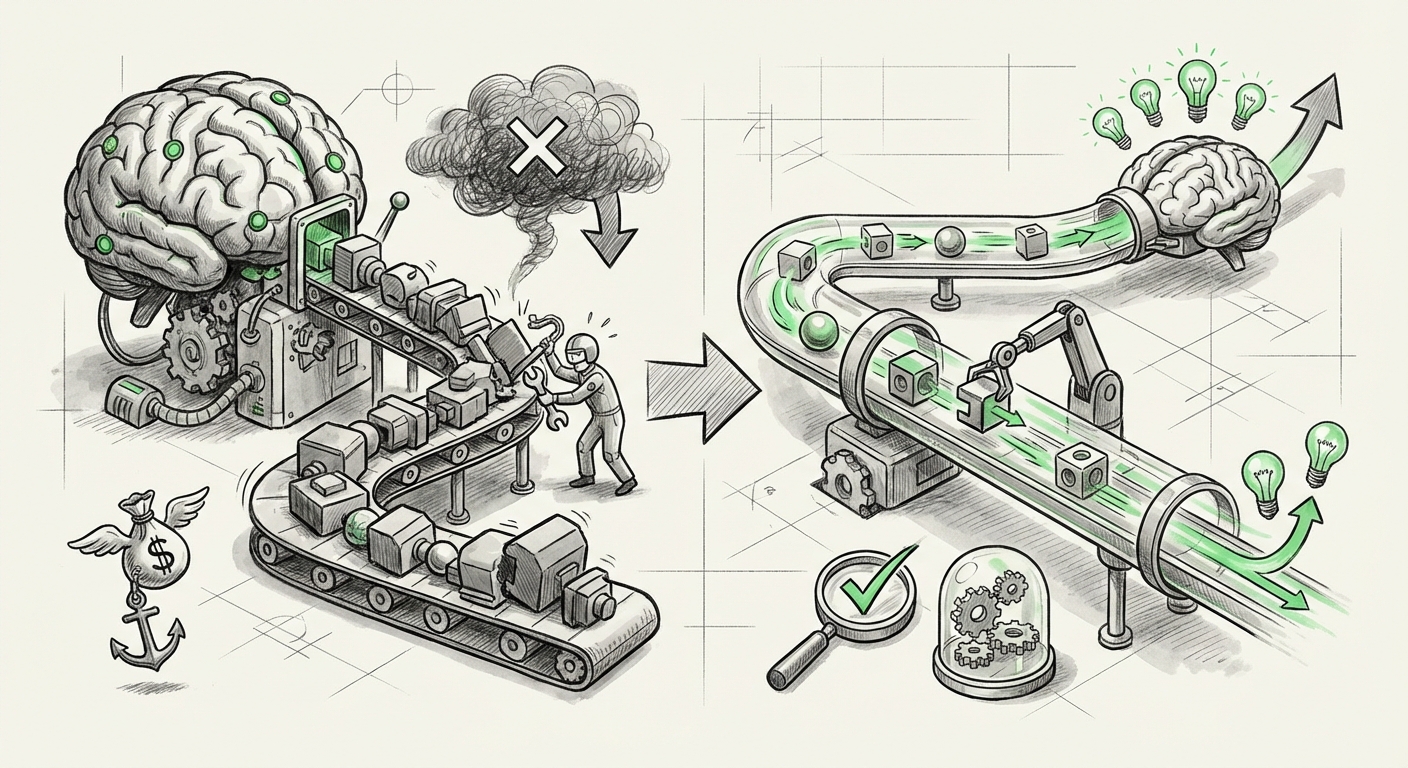
Agentic AI Iteration Crisis: Unveiling the Hidden Costs and Future Solutions
Agentic AI is becoming a hot topic. It promises AI systems that can act independently to achieve specific goals. But there's a problem lurking beneath the surface that could significantly impact its future: slow iteration cycles. This article dives into why these slow cycles are a problem, what they mean for the future of AI, and what businesses and society can do about it.
What is Agentic AI?
Before we get into the problem, let’s define what we mean by Agentic AI. Imagine giving an AI a goal, like "book a flight and hotel for a conference in New York," and it handles all the steps itself: searching for flights, comparing prices, checking hotel availability, and making the bookings. That's the power of Agentic AI. These systems are designed to perceive their environment, make decisions, and take actions to achieve specific objectives without constant human intervention.
The Hidden Cost: Slow Iteration Cycles
The big challenge with Agentic AI isn't just building the initial system; it's improving it over time. This improvement relies on iteration – the process of testing, learning, and refining the AI based on its performance. However, Agentic AI systems often face extremely slow iteration cycles. Why is this a problem?
Slow iteration means:
- Higher Costs: Longer development times translate directly into higher costs. More time spent debugging, retraining, and re-evaluating means more resources are consumed.
- Slower Progress: If it takes a long time to test and improve an AI, progress stagnates. The potential benefits of Agentic AI are delayed.
- Reduced Competitiveness: In a fast-moving AI landscape, companies that can iterate quickly have a significant advantage. Slow iteration puts businesses at a disadvantage.
Why Are Iteration Cycles So Slow?
Several factors contribute to the slow iteration cycles in Agentic AI:
- Complexity: Agentic AI systems are complex, involving multiple components like perception, planning, and action execution. Debugging and optimizing these complex systems is challenging and time-consuming.
- Data Requirements: Agentic AI needs vast amounts of data to learn effectively. Gathering, cleaning, and labeling this data can be a bottleneck.
- Evaluation Challenges: Evaluating the performance of an agent in a complex environment is difficult. It's hard to define clear metrics and benchmarks for success.
- Real-World Interactions: Many Agentic AI systems are designed to interact with the real world. Testing and debugging these systems in real-world scenarios can be expensive and time-consuming.
What This Means for the Future of AI
The slow iteration problem has significant implications for the future of AI:
- Focus on Efficiency: The AI community will likely shift its focus toward developing tools and techniques that accelerate iteration. This includes better debugging tools, more efficient data collection methods, and improved evaluation metrics.
- Rise of Simulation: Simulation environments will become increasingly important for testing and debugging Agentic AI. Simulations allow developers to quickly test different scenarios and identify potential problems without the cost and risk of real-world testing.
- Modular Design: Agentic AI systems may become more modular, with clearly defined components that can be tested and improved independently. This will make it easier to identify and fix problems.
- Emphasis on Explainability: As Agentic AI becomes more prevalent, there will be a greater emphasis on explainability. Developers need to understand why an agent makes a particular decision to improve its performance.
Practical Implications for Businesses and Society
The challenges of slow iteration cycles directly impact businesses and society:
- Businesses: Companies investing in Agentic AI need to be aware of the potential for slow iteration cycles and factor this into their budgets and timelines. They should also prioritize tools and techniques that accelerate iteration.
- Researchers: Researchers need to focus on developing new methods for debugging, evaluating, and improving Agentic AI systems. This includes developing better simulation environments, more efficient data collection techniques, and more explainable AI models.
- Society: As Agentic AI becomes more widespread, it's important to consider the ethical implications. Slow iteration cycles can make it difficult to identify and address potential biases or unintended consequences.
Actionable Insights
Here are some actionable insights for navigating the challenges of slow iteration in Agentic AI:
- Invest in Tooling: Invest in robust debugging and testing tools specifically designed for Agentic AI systems.
- Embrace Simulation: Use simulation environments to accelerate testing and reduce the cost of real-world experimentation.
- Prioritize Data Quality: Focus on collecting and cleaning high-quality data to improve the learning efficiency of your agents.
- Set Clear Metrics: Define clear and measurable metrics for evaluating the performance of your agents.
- Foster Collaboration: Encourage collaboration between researchers, developers, and ethicists to address the challenges of Agentic AI.
Conclusion
Agentic AI holds immense potential, but the challenge of slow iteration cycles cannot be ignored. By understanding the factors that contribute to this problem and taking proactive steps to address it, we can unlock the full potential of Agentic AI and create systems that are more efficient, reliable, and beneficial to society.