Netflix's VOID: The AI That Makes Objects Vanish and Rewrites Reality in Video
Imagine watching a movie and suddenly realizing a distracting object is in the scene. Or perhaps a boom mic dips into the frame. Traditionally, fixing these issues meant reshoots or complex visual effects work. But now, thanks to advancements in AI, Netflix is changing the game.
Introducing VOID: The Future of Video Editing is Open Source
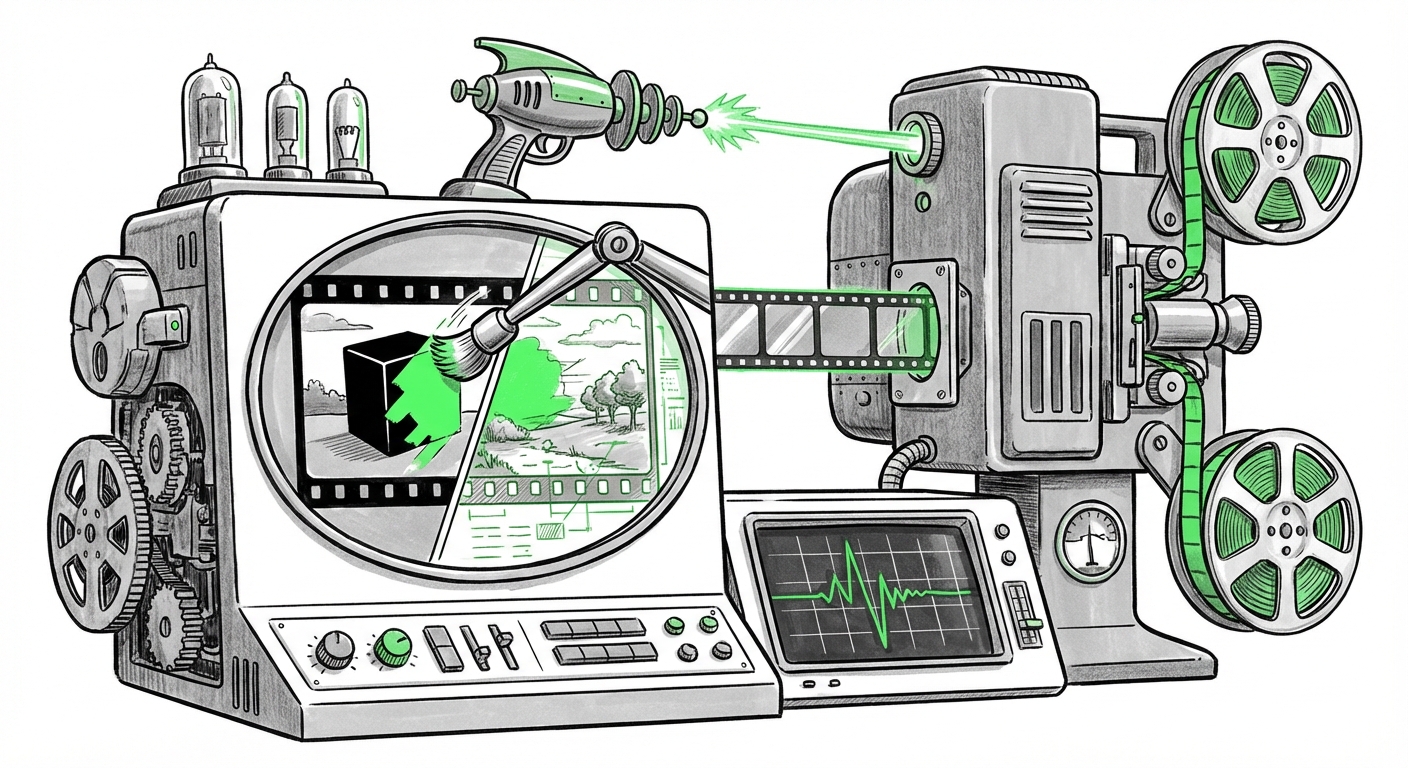
Netflix has open-sourced VOID, an AI framework designed to erase objects from video and intelligently fill in the space they leave behind. But VOID isn't just about simple object removal. It goes a step further, rewriting the physics of the scene to ensure the removal is seamless and believable.
So, what does this mean for the future of AI and how will it be used?
The Power of Object Removal and Physics Simulation
VOID stands out because it combines two powerful AI capabilities: advanced object removal and realistic physics simulation. Object removal, powered by machine learning, identifies and erases unwanted elements from a video frame. The AI then analyzes the surrounding environment, predicting how light, shadows, and textures would behave if the object were never there in the first place. It then convincingly recreates the background, making the edit virtually invisible.
This ability to simulate physics is what sets VOID apart. Instead of simply patching the hole left by an object, VOID attempts to understand how the object interacted with its environment. This results in far more realistic and believable video edits. For example, if a ball is removed from a scene, VOID can fill in the resulting empty space on the floor, replicating the correct texture and shadow that was previously occluded by the ball.
Practical Implications for Businesses and Society
The implications of VOID are far-reaching, impacting numerous industries and aspects of society:
- Film and Television Production: VOID can significantly reduce post-production costs by automating the removal of unwanted objects, fixing errors, and streamlining the editing process.
- Content Creation: Independent creators and YouTubers can use VOID to enhance their videos, removing distractions and improving the overall quality of their content.
- Advertising: VOID can be used to dynamically adjust advertisements, removing specific products or logos based on viewer demographics or regional preferences.
- Security and Surveillance: While raising ethical considerations, VOID-like technology could be used (or misused) to alter surveillance footage, potentially obscuring or fabricating events.
- Education and Training: VOID could create immersive educational experiences by removing distracting elements from historical footage or simulations.
- Restoration of Old Films: VOID provides the ability to restore damaged or degraded film footage by removing scratches, blemishes, and other imperfections.
Actionable Insights: Preparing for the AI-Powered Video Revolution
Here are some actionable insights for businesses and individuals looking to leverage the power of AI-driven video editing:
- Embrace Open Source: Netflix's decision to open-source VOID is a significant step. Businesses should actively explore and contribute to open-source AI projects to foster innovation and collaboration.
- Invest in AI Training: Train your employees on the fundamentals of AI and machine learning. Understanding the capabilities and limitations of these technologies is crucial for effective implementation.
- Experiment with AI Tools: Encourage your creative teams to experiment with VOID and other AI-powered video editing tools to discover new workflows and possibilities.
- Focus on Ethical Considerations: Develop clear ethical guidelines for the use of AI in video editing, addressing issues such as manipulation, misinformation, and privacy.
- Prepare for Dynamic Content: As AI becomes more sophisticated, expect to see a rise in dynamically generated and personalized video content. Develop strategies for creating and managing this new wave of media.
The Future of AI: Believable Realism
VOID represents a significant step toward AI that can not only recognize objects but also understand and replicate the physics of the real world. This is part of a broader trend in AI, moving from simple pattern recognition to more sophisticated forms of reasoning and simulation.
In the coming years, we can expect to see AI systems that are capable of creating even more realistic and immersive virtual experiences. This will have a profound impact on everything from entertainment and education to scientific research and engineering.
The open-sourcing of VOID will accelerate the development of AI-powered video editing tools, making these technologies more accessible and affordable for everyone. As the technology matures, we can expect to see a proliferation of AI-enhanced videos, blurring the lines between reality and simulation.