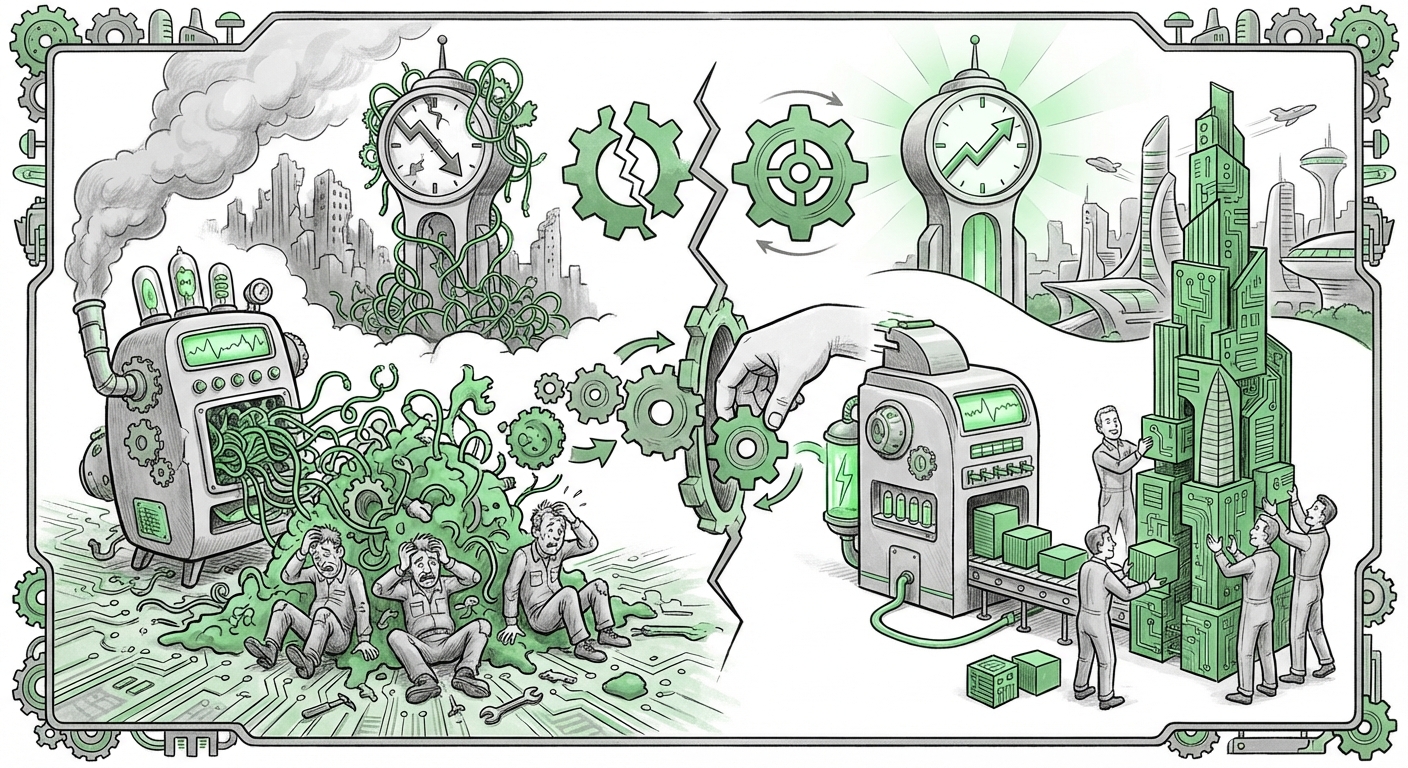
The AI Slop Crisis: How Over-Reliance on AI is Hurting Software Development
Imagine a pasture where everyone can graze their cows. If everyone grazes responsibly, the pasture stays healthy. But if everyone tries to get as much as possible, the pasture becomes overgrazed and unusable. This is the "tragedy of the commons," and a new study says it's happening in software development because of something called "AI slop."
What is "AI Slop"?
"AI slop" is what happens when developers rely too much on AI tools to write code. Instead of carefully crafting each line, they let the AI do most of the work. This can lead to code that's messy, inefficient, and hard to understand – like an overgrazed pasture.
The Study's Findings
A study published on the-decoder.com on 2026-04-05, highlights growing frustration among developers. They're finding that code generated by AI, while quick to produce, often lacks quality. This means other developers have to spend more time cleaning it up, fixing bugs, and making it work properly. The study paints a concerning picture: the more developers lean on AI without proper oversight, the worse the overall codebase becomes.
Why is This a Problem for the Future of AI?
If "AI slop" continues, it could seriously hurt the future of AI in software development. Here's why:
- Lower Quality Software: If AI-generated code is consistently poor, software will become unreliable and buggy. This could erode trust in AI-powered applications.
- Developer Burnout: Spending more time fixing AI's mistakes leads to frustrated and overworked developers. This can decrease job satisfaction and increase turnover.
- Slower Innovation: When developers are stuck cleaning up messes, they have less time for creative problem-solving and building new features. This can slow down innovation in the software industry.
- Increased Technical Debt: "AI slop" contributes to technical debt – the implied cost of rework caused by choosing an easy solution now instead of a better approach that would take longer. The more "AI slop" there is, the more technical debt accumulates, making future development more difficult and expensive.
Practical Implications for Businesses
For businesses, "AI slop" presents some serious challenges:
- Hidden Costs: While AI tools might seem like a way to save money, the cost of fixing "AI slop" can quickly add up. Businesses need to factor in the time developers spend cleaning up AI-generated code.
- Risk of Project Delays: If code is full of errors, projects can get delayed. This can lead to missed deadlines and lost revenue.
- Security Vulnerabilities: Poorly written code is more likely to have security holes. This can make businesses vulnerable to cyberattacks.
- Maintaining Competitive Edge: Relying too heavily on AI-generated code without proper human oversight can stifle innovation and prevent businesses from developing unique, high-quality solutions that differentiate them from competitors.
Practical Implications for Society
The impact of "AI slop" extends beyond businesses and affects society as a whole:
- Unreliable Technology: From banking apps to medical devices, we rely on software for many important things. If software becomes unreliable due to "AI slop," it could have serious consequences.
- Job Displacement: While AI is intended to augment human capabilities, overuse without proper skill development could lead to deskilling and potential job displacement as the ability to write quality code diminishes.
- Ethical Concerns: AI-generated code can sometimes produce biased or discriminatory results. Without careful human review, these biases can be amplified and perpetuate inequality.
Actionable Insights: How to Avoid "AI Slop"
So, how can we avoid the "tragedy of the commons" in software development? Here are some actionable insights:
- Focus on Education and Training: Invest in training developers to use AI tools effectively. Teach them how to review AI-generated code, identify errors, and make improvements.
- Establish Clear Guidelines: Create clear guidelines for when and how AI tools should be used. Encourage developers to use AI as a tool to assist them, not as a replacement for their own skills.
- Implement Code Reviews: Require developers to review each other's code, including AI-generated code. This helps catch errors and ensure code quality.
- Measure Code Quality: Use tools to measure code quality and track improvements over time. This helps identify areas where "AI slop" is a problem.
- Promote a Culture of Ownership: Encourage developers to take ownership of the code they write, even if it's generated by AI. This means they should be responsible for ensuring its quality and correctness.
- Balance AI Assistance with Human Expertise: Recognize that AI is a tool, not a replacement for human expertise. Use AI to automate repetitive tasks, but always rely on experienced developers for critical decision-making and complex problem-solving.
- Continuous Monitoring and Improvement: Regularly evaluate the effectiveness of AI tools and adjust usage guidelines as needed. Stay informed about the latest AI advancements and best practices for responsible AI development.
What This Means for the Future of AI and How It Will Be Used
The "AI slop" phenomenon highlights the importance of responsible AI development. As AI tools become more powerful, it's crucial to use them wisely and ethically. This means focusing on:
- AI Augmentation, Not Replacement: AI should augment human capabilities, not replace them entirely. The best approach is to combine the strengths of AI with the skills and expertise of human developers.
- Ethical Considerations: AI developers need to be aware of the potential biases and ethical implications of their work. They should strive to create AI systems that are fair, transparent, and accountable.
- Continuous Learning: The field of AI is constantly evolving. Developers need to stay up-to-date on the latest advancements and best practices.
By addressing the "AI slop" crisis, we can ensure that AI remains a valuable tool for software development, driving innovation and improving the quality of life for everyone.