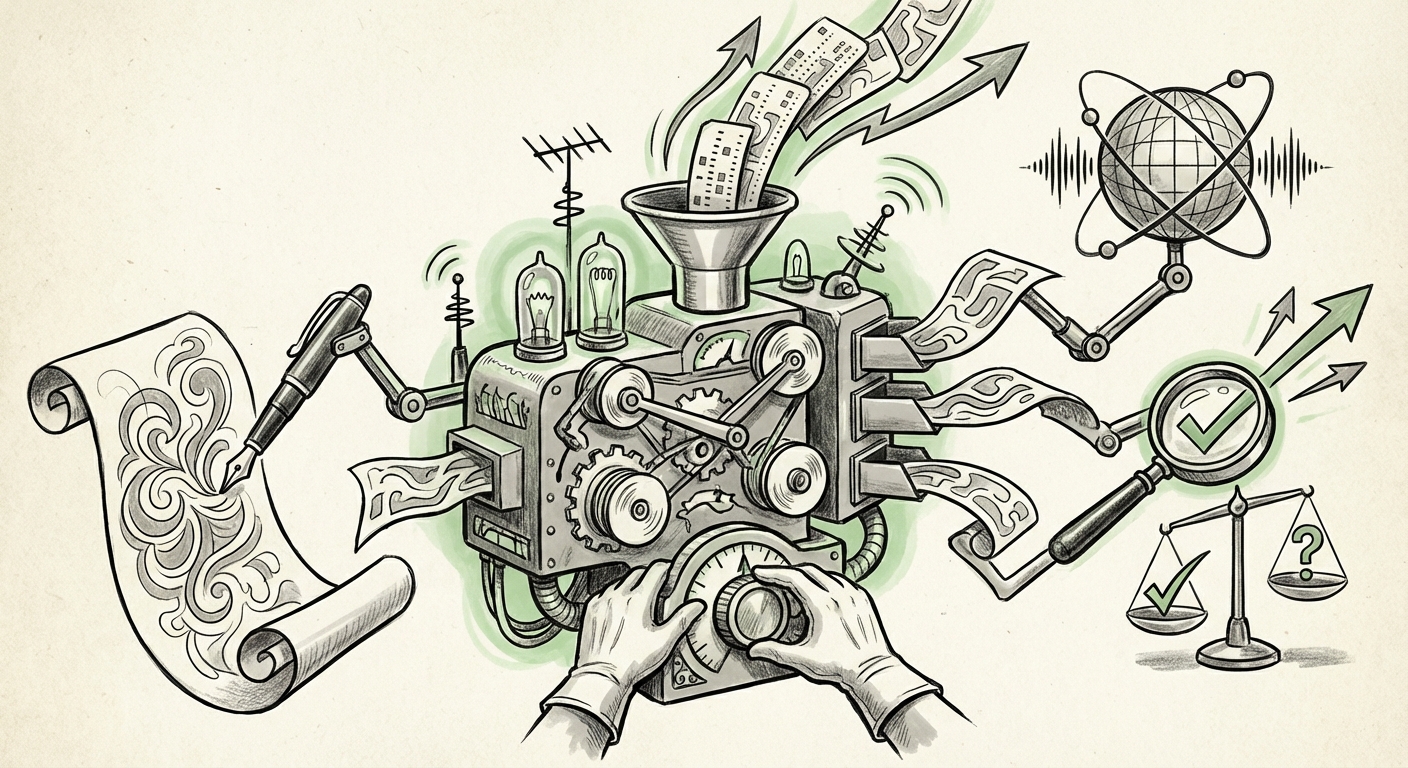
AI Writing Revolution: Top Trends & Future Impact in 2026
Welcome to the cutting edge of content creation! In the first quarter of 2026, AI writing has continued its rapid evolution, transforming how we create and consume information. Let's dive into the top trends and explore what they mean for the future.
Key Trends in AI Writing (Q1 2026)
Based on a report from robotwritersai.com, here's a glimpse into the most significant developments in AI writing during the first three months of 2026. This analysis focuses on the implications of these trends for businesses, individuals, and the AI landscape itself.
1. Hyper-Personalized Content Creation
Imagine AI crafting content so precisely tailored to individual readers that it feels like it was written just for them. That's the power of hyper-personalization. AI algorithms are now sophisticated enough to analyze vast amounts of user data, including browsing history, purchase patterns, and social media activity, to create content that resonates deeply with each person. This includes tailoring the tone, style, and even the specific examples used in the text.
Implications: Businesses can use hyper-personalized content to boost engagement, increase conversion rates, and build stronger customer relationships. Think personalized product descriptions, customized email marketing campaigns, and even AI-generated learning materials adapted to each student's learning style. The future of marketing and education is here.
2. AI-Powered Fact-Checking and Verification
With the rise of misinformation, the ability to verify the accuracy of information is more critical than ever. AI writing tools are now being integrated with advanced fact-checking capabilities. These systems automatically cross-reference claims against reliable sources, flag potential inaccuracies, and even suggest corrections. This helps ensure the integrity of the content and builds trust with the audience.
Implications: This trend is crucial for journalism, research, and any field where accuracy is paramount. Businesses can use AI-powered fact-checking to ensure their marketing materials are truthful and avoid potentially damaging PR crises. It also empowers individuals to critically evaluate the information they encounter online.
3. Multilingual Content Generation
Breaking down language barriers is essential for global communication. AI writing tools are now capable of generating high-quality content in multiple languages, often surpassing the accuracy and fluency of previous translation technologies. This is achieved through advancements in neural machine translation and the availability of massive multilingual datasets.
Implications: Businesses can easily expand their reach into new markets by automatically translating their websites, marketing materials, and customer support documentation. This also facilitates cross-cultural collaboration and understanding, fostering a more interconnected world.
4. Enhanced Creativity and Originality
AI is no longer limited to simply rewriting existing content. It's now capable of generating truly original ideas and creative text formats, such as poems, scripts, and even musical compositions. This is driven by advancements in generative AI models that can learn complex patterns and relationships from vast datasets of creative works.
Implications: This opens up exciting possibilities for artists, writers, and marketers. AI can serve as a creative partner, helping to overcome writer's block, explore new ideas, and generate innovative content formats. Imagine AI co-creating a screenplay or composing a personalized song for a loved one.
5. Seamless Integration with Other AI Tools
AI writing tools are increasingly being integrated with other AI-powered applications, such as image generators, video editors, and data analytics platforms. This creates a seamless workflow where AI can handle multiple aspects of content creation, from research and writing to visual design and distribution.
Implications: This integration streamlines content creation processes, saving time and resources. Businesses can automate entire marketing campaigns, from generating blog posts and social media updates to creating accompanying visuals and analyzing campaign performance. The rise of AI-powered content creation platforms is transforming the industry.
6. Ethical Considerations and Bias Detection
As AI writing becomes more prevalent, it's crucial to address the ethical implications and potential biases embedded in AI models. AI writing tools are now being developed with built-in bias detection and mitigation mechanisms. These tools can identify and flag potentially discriminatory language, helping to ensure that AI-generated content is fair and inclusive.
Implications: This is essential for building trust in AI and preventing the perpetuation of harmful stereotypes. Businesses must prioritize ethical AI development and deployment to avoid reputational damage and ensure their content aligns with their values.
7. Voice-Enabled Content Creation
The rise of voice assistants has created a demand for voice-optimized content. AI writing tools are now capable of generating content specifically designed for voice interfaces, such as podcasts, audiobooks, and voice-activated applications. This involves optimizing the language for clarity, conciseness, and natural flow.
Implications: Businesses can reach new audiences by creating voice-based content that can be consumed on the go. This is particularly relevant for industries such as news, education, and entertainment. Imagine listening to an AI-generated news summary during your morning commute or interacting with a voice-based learning platform while cooking dinner.
8. Long-Form Content Generation
AI is making significant strides in generating long-form content, such as articles, reports, and even books. While human oversight is still often required, AI can now handle much of the heavy lifting, freeing up writers to focus on higher-level tasks such as research, strategy, and editing.
Implications: This can dramatically increase content production efficiency. Businesses can use AI to generate white papers, ebooks, and other long-form content at scale, establishing themselves as thought leaders in their respective industries. It also empowers individuals to write books and share their expertise with the world.
9. AI-Driven SEO Optimization
Search engine optimization (SEO) is crucial for online visibility. AI writing tools are now capable of automatically optimizing content for search engines, ensuring it ranks highly in search results. This includes identifying relevant keywords, optimizing meta descriptions, and structuring content for readability.
Implications: Businesses can improve their online presence and attract more organic traffic by using AI-driven SEO optimization. This reduces the need for manual SEO efforts and ensures that content is easily discoverable by potential customers.
10. Real-Time Content Adaptation
Imagine content that dynamically adapts to the reader's behavior and preferences in real-time. AI writing tools are now capable of doing just that. By tracking user engagement metrics, such as reading time, scroll depth, and click-through rates, AI can adjust the content on the fly to maximize engagement and achieve specific goals.
Implications: This opens up exciting possibilities for personalized learning, interactive storytelling, and adaptive marketing campaigns. Imagine a textbook that adjusts its difficulty level based on the student's performance or a news article that provides more context based on the reader's prior knowledge.
The Future of AI Writing: A Symbiotic Relationship
The trends observed in Q1 2026 point towards a future where AI and human writers work together in a symbiotic relationship. AI will handle the more repetitive and data-driven tasks, while human writers will focus on creativity, strategy, and ethical considerations. This collaboration will unlock new levels of productivity, personalization, and creativity in content creation.
Practical Implications for Businesses and Society
- Businesses: Embrace AI writing tools to streamline content creation, personalize customer experiences, and expand into new markets. Prioritize ethical AI development and address potential biases.
- Individuals: Develop skills in AI prompting, editing, and critical thinking to thrive in the age of AI-assisted writing. Use AI to enhance your creativity and productivity.
- Society: Foster open discussions about the ethical implications of AI writing and develop policies to ensure responsible use. Promote media literacy to combat misinformation.
Actionable Insights
- Experiment with AI writing tools: Explore different platforms and find the ones that best suit your needs.
- Invest in AI training: Equip your team with the skills needed to effectively use AI writing tools.
- Develop an AI content strategy: Define clear goals and guidelines for using AI in your content creation process.
- Monitor AI performance: Track key metrics to measure the effectiveness of your AI writing efforts.