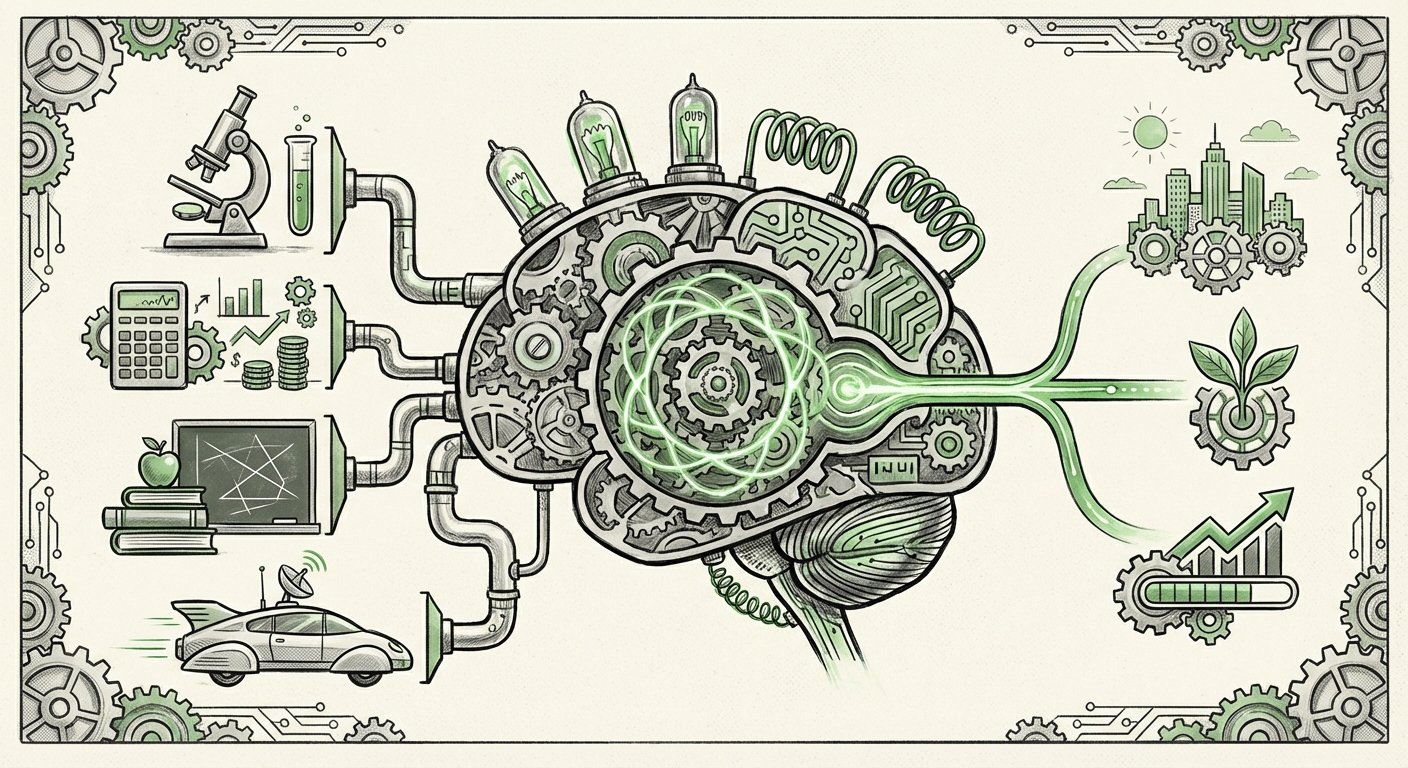
Alibaba's Qwen Algorithm: Unleashing Deeper Thinking in AI Models
Artificial intelligence is constantly evolving, pushing the boundaries of what machines can do. One of the most exciting advancements comes from Alibaba's Qwen team, who have developed a new algorithm designed to make AI models "think" more deeply. This breakthrough promises to revolutionize numerous industries and reshape how we interact with technology.
What is the Qwen Algorithm and Why Does It Matter?
The Qwen algorithm is a novel approach to enhancing the cognitive capabilities of AI models. In simple terms, it helps AI systems process information more thoroughly and make more informed decisions. Instead of just recognizing patterns, these models can now analyze and understand the underlying context, leading to more accurate and reliable outcomes.
This is a significant step forward because traditional AI models often struggle with complex tasks that require reasoning and critical thinking. The Qwen algorithm addresses this limitation, paving the way for AI to tackle more challenging problems in fields like healthcare, finance, and education.
How Does It Work?
While the specifics of the algorithm are complex, the core idea is to enable AI models to engage in a more nuanced form of analysis. This involves breaking down complex problems into smaller, more manageable parts, and then using a series of logical steps to arrive at a solution. It's like teaching a computer to think step-by-step, just like a human would.
By mimicking human thought processes, the Qwen algorithm allows AI models to:
- Understand context: Instead of just processing data at face value, the models can grasp the surrounding circumstances and make more relevant inferences.
- Identify relationships: The algorithm helps AI systems recognize connections between different pieces of information, leading to a more holistic understanding.
- Reason logically: By applying logical rules and principles, the models can draw conclusions and make predictions with greater accuracy.
The Future Implications of Deeper Thinking AI
The development of the Qwen algorithm has far-reaching implications for the future of AI. Here are some key areas where we can expect to see significant impact:
Healthcare
Imagine AI systems that can analyze medical records, research papers, and patient data to diagnose diseases with greater precision. The Qwen algorithm could enable AI to identify subtle patterns and correlations that might be missed by human doctors, leading to earlier and more effective treatments.
Finance
In the financial world, AI can be used to detect fraud, assess risk, and make investment decisions. With the Qwen algorithm, these systems could become even more sophisticated, capable of identifying complex scams and predicting market trends with greater accuracy.
Education
Personalized learning experiences could become the norm, with AI tutors that adapt to each student's individual needs and learning style. The Qwen algorithm could enable these tutors to understand students' strengths and weaknesses, providing targeted support and guidance.
Autonomous Vehicles
Self-driving cars need to make split-second decisions in complex and unpredictable environments. The Qwen algorithm could enhance their ability to perceive and react to changing conditions, making them safer and more reliable.
Practical Implications for Businesses and Society
For businesses, the Qwen algorithm represents a powerful tool for innovation and efficiency. By implementing AI systems powered by this technology, companies can:
- Automate complex tasks: Free up human employees to focus on more creative and strategic work.
- Improve decision-making: Make better-informed choices based on data-driven insights.
- Enhance customer experiences: Provide personalized services and solutions that meet individual needs.
From a societal perspective, the Qwen algorithm has the potential to address some of the world's most pressing challenges. By enabling AI to tackle complex problems in areas like climate change, poverty, and disease, we can create a more sustainable and equitable future.
Actionable Insights: Preparing for the Future of AI
So, what can businesses and individuals do to prepare for this new era of deeper thinking AI?
- Invest in AI education and training: Equip your workforce with the skills they need to work alongside AI systems.
- Explore potential AI applications: Identify areas where AI can solve problems and create new opportunities.
- Embrace a data-driven culture: Collect and analyze data to gain insights and improve decision-making.
- Stay informed about AI advancements: Keep up-to-date with the latest developments in the field.
The Qwen algorithm is a testament to the incredible progress being made in the field of artificial intelligence. As AI models become more capable of thinking deeply and reasoning logically, they will transform industries, improve lives, and help us solve some of the world's most challenging problems. Embracing this technology and preparing for its widespread adoption is essential for businesses and individuals alike.