AI Benchmarks Flawed? Google Study Reveals Critical Blind Spot in Evaluating AI Performance
Artificial intelligence (AI) is rapidly changing the world, impacting everything from how we work to how we interact with each other. To ensure AI systems are reliable and beneficial, researchers use benchmarks to measure their performance. However, a recent Google study reveals a significant flaw in how these benchmarks are designed: they often ignore the fact that humans themselves frequently disagree.
The Problem: Ignoring Human Disagreement
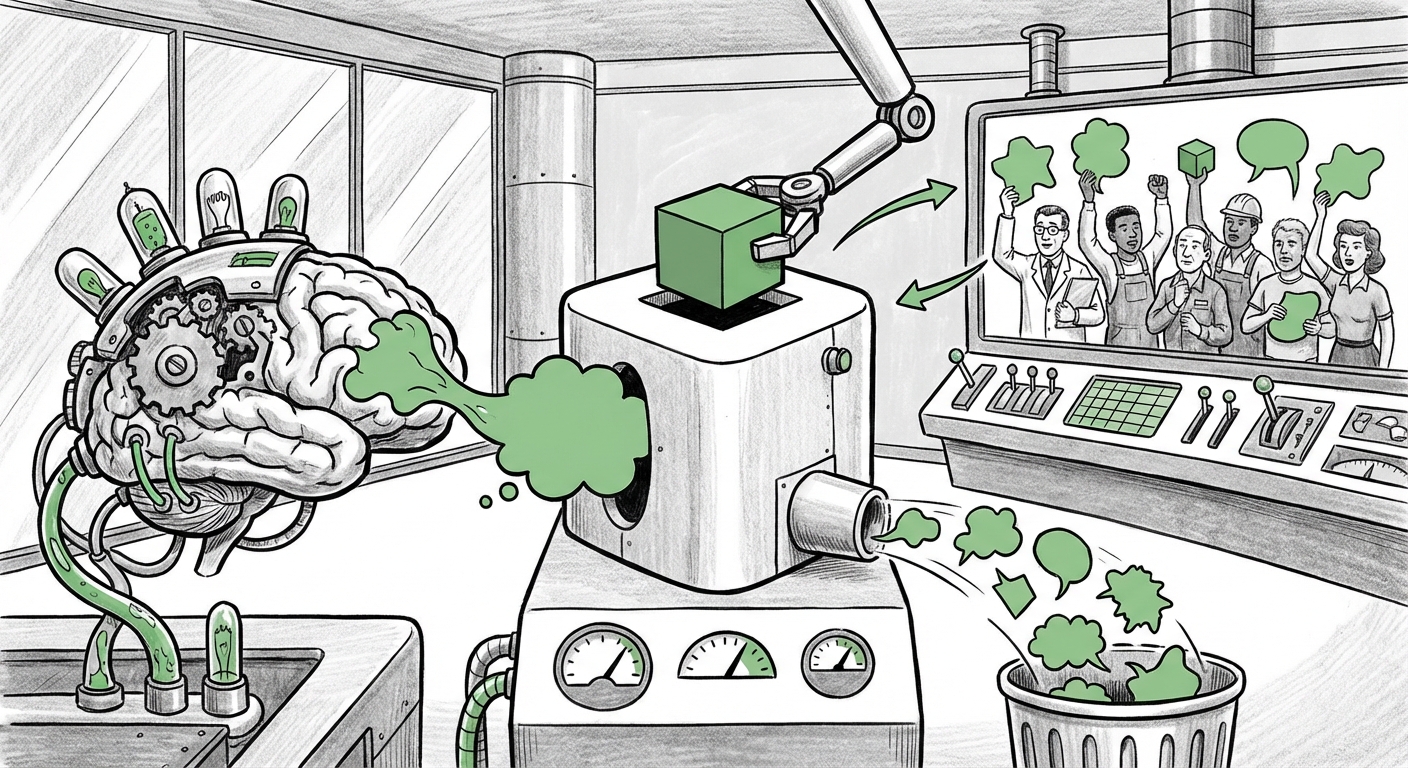
Imagine asking several people whether a movie is good. You'll likely get different opinions. This disagreement is normal and reflects the complexity of human judgment. But when evaluating AI, standard benchmarks often treat human answers as a single, definitive "ground truth." This approach can lead to misleading results, as AI systems might be penalized for disagreeing with a single human opinion, even if other humans would agree with the AI's response.
The Google study highlights that this oversight can systematically skew our understanding of AI capabilities. If benchmarks don't account for the range of human opinions, we risk developing AI systems that are optimized for a narrow, potentially biased, view of the world.
Why This Matters for the Future of AI
The implications of this finding are far-reaching. Here's how it could affect the future of AI:
- Misleading Performance Metrics: Current benchmarks might not accurately reflect how well AI systems perform in real-world scenarios. If AI is judged against a single "correct" answer when multiple answers are valid, we might underestimate its true potential or, conversely, overestimate its reliability.
- Skewed Development: AI developers rely on benchmarks to guide their work. If these benchmarks are flawed, developers might unknowingly optimize AI for the wrong goals, leading to systems that perform well on paper but poorly in practice.
- Limited Applicability: AI trained on benchmarks that ignore human disagreement might struggle to handle the nuances and complexities of human communication and decision-making. This could limit its effectiveness in applications that require understanding diverse perspectives, such as customer service or content moderation.
- Ethical Concerns: If AI systems are trained on biased or incomplete data, they could perpetuate and amplify existing societal biases. This is particularly concerning in areas like criminal justice or loan applications, where AI decisions can have significant consequences.
Practical Implications for Businesses and Society
The realization that current AI benchmarks are flawed has several practical implications for businesses and society:
For Businesses:
- Re-evaluate AI investments: Companies should carefully examine the benchmarks used to evaluate AI solutions. Don't blindly trust "state-of-the-art" claims based on potentially flawed metrics.
- Focus on real-world testing: Supplement benchmark results with real-world testing and user feedback. This will provide a more accurate assessment of AI performance in your specific context.
- Consider diverse perspectives: When developing or deploying AI, make sure to incorporate diverse perspectives and opinions. This can help mitigate biases and ensure that AI systems are fair and equitable.
- Demand transparency: Ask AI vendors to be transparent about the benchmarks they use and how they account for human disagreement.
For Society:
- Rethink AI regulation: Policymakers should consider the limitations of current AI benchmarks when developing regulations. Focus on outcomes and fairness rather than relying solely on standardized tests.
- Promote AI literacy: Educate the public about the potential biases and limitations of AI. This will help people make informed decisions about how they interact with AI systems.
- Support research on better benchmarks: Invest in research to develop more robust and representative AI benchmarks that account for human disagreement and diversity.
Actionable Insights
So, what can we do to address this problem? Here are some actionable insights:
- Develop benchmarks that incorporate multiple human perspectives: Instead of relying on a single "ground truth," benchmarks should include a range of human responses and opinions.
- Use evaluation metrics that account for disagreement: Traditional metrics like accuracy might not be suitable for evaluating AI in situations where humans disagree. Researchers should explore alternative metrics that reward AI for providing reasonable answers, even if they don't perfectly match any single human response.
- Focus on explainability and transparency: It's crucial to understand *why* an AI system makes a particular decision. Explainable AI (XAI) techniques can help shed light on the inner workings of AI models, making it easier to identify and correct biases.
- Embrace adversarial testing: Challenge AI systems with deliberately ambiguous or controversial inputs to see how they respond. This can help uncover hidden weaknesses and biases.
The Path Forward
The Google study serves as a wake-up call for the AI community. By acknowledging and addressing the limitations of current benchmarks, we can pave the way for more reliable, fair, and beneficial AI systems. This requires a collaborative effort involving researchers, developers, policymakers, and the public. Only by working together can we ensure that AI lives up to its full potential to improve our world.