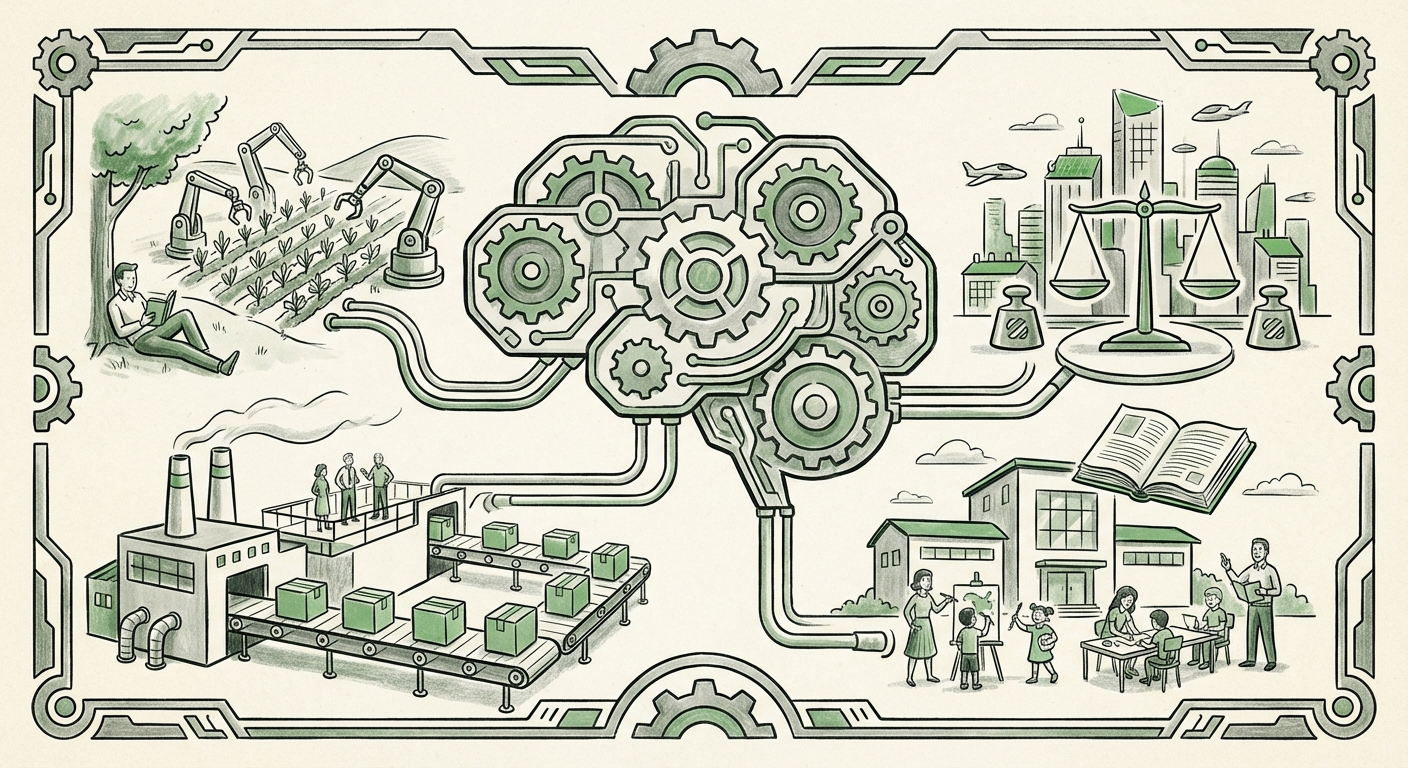
The AI Revolution: Will Superintelligence Mean Less Work and Equal Pay?
Imagine a world where super-smart computers do most of the work, and everyone gets paid the same, no matter how much they work. Sounds like a dream, right? Well, OpenAI has a vision for the future that looks a lot like this. Let's dive into what this could mean for all of us.
OpenAI's Vision for a Superintelligent Future
OpenAI, a leading AI research company, believes that superintelligence – AI that's much smarter than humans – is coming. According to their projections released on April 6, 2026, this superintelligence will change how we work and live. They envision a future where AI handles many tasks currently done by humans, leading to a world with less work and more equal pay.
This isn't just about robots taking over factory jobs. Superintelligence could impact almost every industry, from healthcare and education to art and science. AI could design new medicines, create personalized learning experiences, and even write beautiful music. The possibilities are endless!
What Does "Less Work, Equal Pay" Really Mean?
The idea of "less work, equal pay" is pretty simple: as AI takes over more jobs, people will work fewer hours. But, everyone would still receive a similar income, enough to live comfortably. This concept challenges the traditional link between work and income. Instead of getting paid based on the hours you put in or the specific job you do, your income would be more about being a member of society.
Think about it: if AI can produce goods and services much faster and cheaper than humans, there's less need for people to work long hours. This could free up time for people to pursue their passions, spend time with loved ones, or contribute to their communities in other ways.
Practical Implications for Businesses
For businesses, the rise of superintelligence presents both opportunities and challenges.
- Increased Productivity: AI can automate tasks, optimize processes, and make better decisions, leading to significant gains in productivity.
- New Business Models: Companies will need to adapt their business models to take advantage of AI. This could involve creating new products and services powered by AI, or finding new ways to deliver value to customers.
- Workforce Transformation: Businesses will need to retrain and upskill their workforce to work alongside AI. This could involve teaching employees how to use AI tools, or helping them develop new skills that are complementary to AI.
However, businesses also need to consider the ethical and social implications of AI. For example, they need to ensure that AI systems are fair, transparent, and accountable. They also need to think about how to manage the potential displacement of workers due to AI automation.
Societal Implications: A World Transformed
The shift to a superintelligent, less work, equal pay society could have profound implications for society as a whole.
- Education Reform: Education systems will need to adapt to prepare people for a world where lifelong learning and creativity are more important than rote memorization.
- Social Safety Nets: Governments may need to create new social safety nets to ensure that everyone has access to basic necessities, regardless of their employment status.
- Redefining Purpose: People may need to find new sources of meaning and purpose in their lives, beyond traditional work. This could involve engaging in creative pursuits, volunteering, or spending time with loved ones.
Of course, there are also potential risks. Superintelligence could be used for malicious purposes, or it could exacerbate existing inequalities. It's important to have open and honest conversations about these risks, and to develop safeguards to prevent them from happening.
Actionable Insights: Preparing for the Future
So, how can we prepare for this future? Here are a few actionable insights:
- Embrace Lifelong Learning: The skills that are in demand today may not be in demand tomorrow. Commit to continuous learning and development to stay ahead of the curve.
- Develop "Human" Skills: Focus on developing skills that are difficult for AI to replicate, such as creativity, critical thinking, communication, and emotional intelligence.
- Support Ethical AI Development: Advocate for the responsible development and deployment of AI. Support policies and initiatives that promote fairness, transparency, and accountability in AI systems.
- Experiment with New Economic Models: Explore alternative economic models, such as universal basic income, that could help to create a more equitable and sustainable future.
The Future of AI: A Call to Action
OpenAI's vision is a bold one, and it's not without its challenges. But, it's also a vision that's worth considering. Superintelligence has the potential to solve some of the world's most pressing problems, and to create a more prosperous and equitable future for all. It requires proactive measures from people and businesses.
By embracing lifelong learning, developing "human" skills, and supporting ethical AI development, we can help to shape a future where AI benefits everyone.